Discover precise, nuanced, and powerful alternatives to “make smaller” across formal writing, academic research, and professional business correspondence.
Discombobulate
Definition & Context
“To confuse, upset, or throw someone into a state of total bewilderment or disarray.”
Precise Alternatives: Baffle, fluster, confound, perplex, bewilder.
Grammar Essentials
Fundamental English building blocks explained with simple, real-world examples.
Verb Tenses & Aspects
Master continuous, perfect, and conditional forms without confusion.
Punctuation Mastery
When to use semicolons, em-dashes, and commas to clarify complex thoughts.
Active vs. Passive Voice
Learn how changing voice strengthens your academic writing and essays.
Prepositions in Depth
Demystify in, at, on, by, and tricky prepositional idioms that confuse ESL learners.
Professional Correspondence
Polite openers, respectful follow-ups, and clear requests that get timely answers.
Sentence Structure
Eliminate comma splices, fragments, and dangling modifiers effortlessly.
Latest Writing & Grammar Guides
Elevate your email replies and conversations with thoughtful, professional phrases that express genuine appreciation.
Replace this versatile but repetitive verb with descriptive synonyms suited for storytelling, reporting, and discussion.
Explore subtle synonyms from aloof to callous, and understand the distinct psychological nuance each word brings.
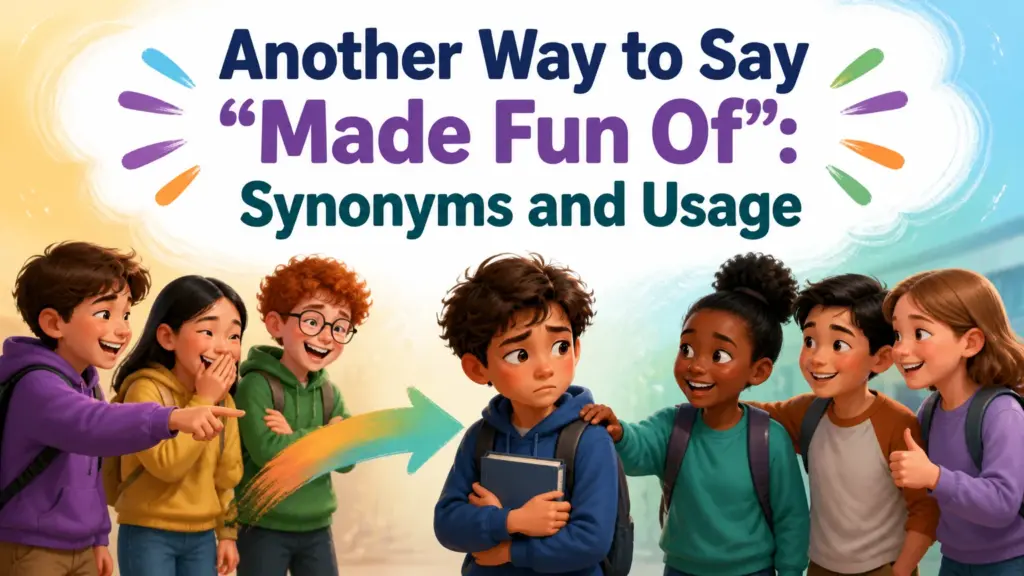
Learn the difference between gentle teasing, witty banter, derision, and malicious mockery in contemporary English.
From whirlwind romances to poignant sagas, expand your vocabulary for portraying intricate human relationships.
Sensory writing techniques and vivid culinary descriptions to tantalize your readers’ taste buds and imagination.
Explore words like relinquish, surrender, yield, and abandon to accurately match the context of your sentence.
Master adverbs and adverbial phrases from occasionally to sporadically to describe frequency with literary flair.
Williams Wordsmith
Helping readers, ESL students, and writers express themselves with clarity, precision, and confidence through bite-sized lessons.
Search Word Guides
Trending Guides
Frequently Confused Word Pairs
Quick rules of thumb to never mix these tricky words up again.
Affect vs. Effect
Affect (Verb): To influence or produce change in something.
Effect (Noun): The result or consequence of a change.
Complement vs. Compliment
Complement: To complete or bring to perfection.
Compliment: An expression of praise or admiration.
Principal vs. Principle
Principal: First in rank or head of a school.
Principle: A fundamental truth or moral standard.
Farther vs. Further
Farther: Physical, measurable distance.
Further: Figurative distance, depth, or time.
Recommended For You
Hand-picked lessons to elevate your everyday English range.
Break out of autopilot greetings with engaging, empathetic, and professional icebreakers.
Professional phrases for tracking market updates, industry trends, and team progress smoothly.
Enhance research reports, white papers, and risk assessments with precise analytical terms.
Action-oriented verbs and decisive idioms that inspire momentum in leadership communication.
Frequently Asked Grammar & Writing Questions
Yes, absolutely. Starting a sentence with a coordinating conjunction like “And” or “But” is widely accepted by modern style guides (including Chicago and AP) to create rhythm and emphasis. Just use it thoughtfully in formal academic papers.
In active voice, the subject performs the action (e.g., “The professor graded the exams”). In passive voice, the subject receives the action (e.g., “The exams were graded by the professor”). Active voice is usually crisper, more engaging, and concise.

Use a semicolon to connect two closely related independent clauses that could each stand alone as separate sentences (e.g., “I love writing essays; my brother prefers coding”). Never use a comma alone to join two independent clauses—that causes a comma splice.
Read diverse writing styles, note unfamiliar words in context, learn root words and prefixes, and practice replacing repetitive filler words with one vivid synonym from our guides each week.
Master English Writing One Lesson at a Time
Join thousands of writers, students, and professionals receiving weekly vocabulary lessons.