YOUR SPACE FOR BETTER ENGLISH

Find better words.
Write with confidence.

Explore English vocabulary, synonyms, alternative expressions, and grammar guides that help you communicate more clearly—one word at a time.

Make every word count
THE WORD STUDIO
Another way to say…
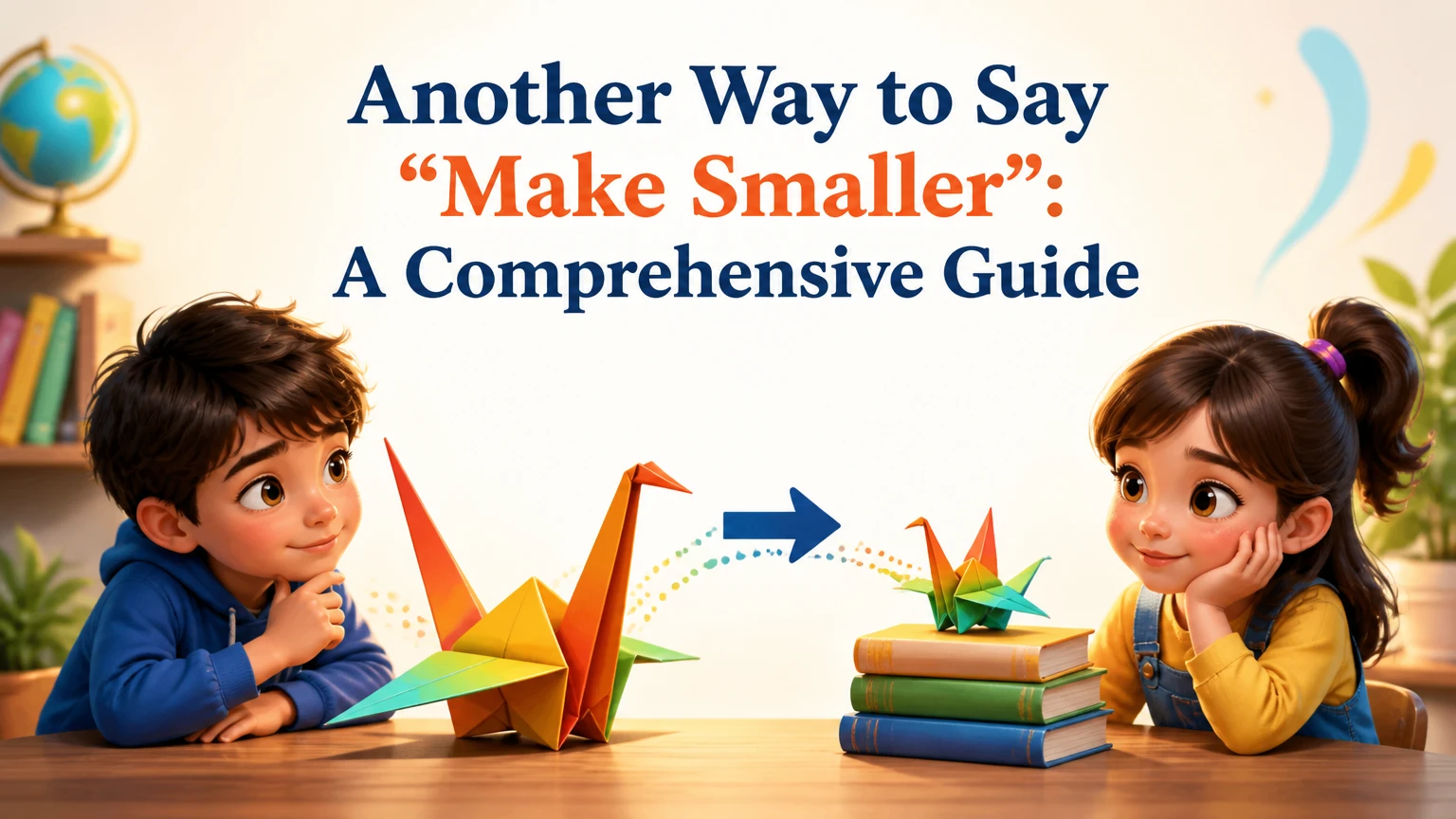
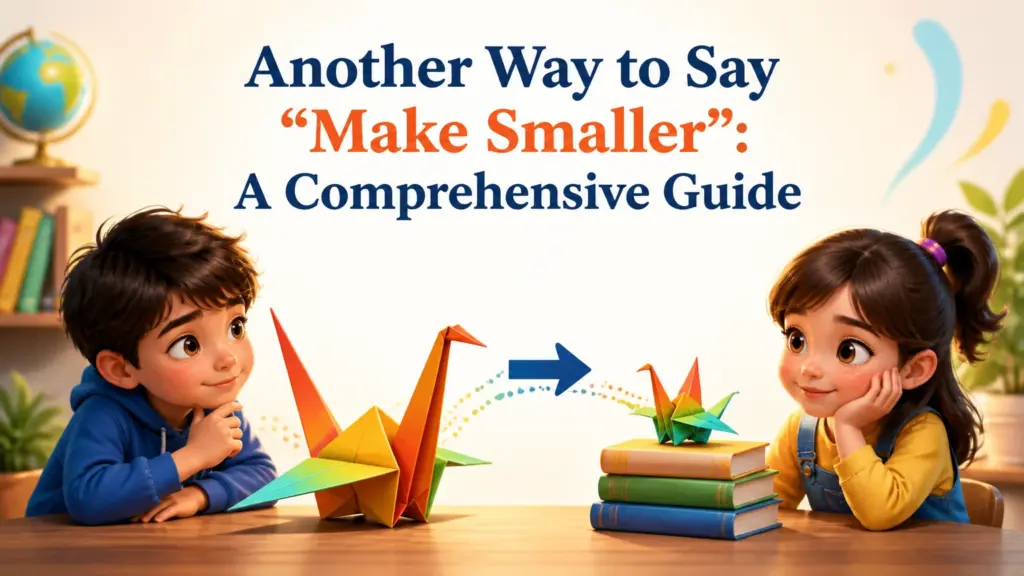
“Make smaller”
Try these instead
ReduceShrinkMinimize
Different words. Better precision.Read the guide →
Clearer words, stronger writing
Know the difference

Frequently Confused Word Pairs

Two words, similar sounds, very different meanings. Learn the difference in seconds.

01 / WORD PAIR

Affect vs. Effect

Affect (verb): Usually means to influence something.

Effect (noun): Usually means the result of a change.

02 / WORD PAIR

Complement vs. Compliment

Complement: Something that completes or enhances.

Compliment: A polite expression of praise.

03 / WORD PAIR

Principal vs. Principle

Principal: Main, most important, or a school head.

Principle: A fundamental rule or belief.

04 / WORD PAIR

Farther vs. Further

Farther: Often used for physical distance.

Further: Often used for additional extent or degree.

Fresh from the blog

Latest Vocabulary & Grammar Guides

Recently published lessons, synonyms, and writing tips from Williams Wordsmith.

Showing recent published guides. Live posts load automatically on your website.

Quick answers

Frequently Asked Questions

Simple answers to common questions about English grammar, vocabulary, and writing.

Explore vocabulary guides →
Can I start a sentence with “And” or “But”?
Yes. Starting a sentence with “And” or “But” is acceptable in modern English, especially when it improves flow or emphasis. Use the technique thoughtfully in formal academic writing.
What is the difference between a synonym and an antonym?
Synonyms have similar meanings (such as “happy” and “joyful”). Antonyms have opposite meanings (such as “happy” and “sad”). Context matters because synonyms are not always interchangeable.
How do active and passive voice differ?
In active voice, the subject performs the action: “The writer edited the article.” In passive voice, the subject receives the action: “The article was edited by the writer.” Both are useful, though active voice is often more direct.
When should I use a semicolon?
Use a semicolon to connect two closely related independent clauses. Example: “I enjoy writing; my sister prefers painting.” It can also separate complex list items that already contain commas.
How can I improve my English vocabulary every day?
Read a little each day, notice unfamiliar words in context, compare close synonyms, and write your own example sentences. Learning usage is often more useful than memorizing a word list alone.
SYNONYMS & VOCABULARY

Discover precise, nuanced, and powerful alternatives to “make smaller” across formal writing, academic research, and professional business correspondence.

WilliamsBy Williams
•September 12, 2026•4 min read
✨ WORD OF THE DAY

Discombobulate

/ˌdɪs.kəmˈbɑː.bjə.leɪt/ • Verb

Definition & Context

“To confuse, upset, or throw someone into a state of total bewilderment or disarray.”

Precise Alternatives: Baffle, fluster, confound, perplex, bewilder.

Grammar Essentials

Fundamental English building blocks explained with simple, real-world examples.

Verb Tenses & Aspects

Master continuous, perfect, and conditional forms without confusion.

Punctuation Mastery

When to use semicolons, em-dashes, and commas to clarify complex thoughts.

Active vs. Passive Voice

Learn how changing voice strengthens your academic writing and essays.

Prepositions in Depth

Demystify in, at, on, by, and tricky prepositional idioms that confuse ESL learners.

Professional Correspondence

Polite openers, respectful follow-ups, and clear requests that get timely answers.

Sentence Structure

Eliminate comma splices, fragments, and dangling modifiers effortlessly.

Latest Writing & Grammar Guides

Freshly published lessons and vocabulary guides from Williams Wordsmith.

EMAIL ETIQUETTE

Elevate your email replies and conversations with thoughtful, professional phrases that express genuine appreciation.

📅 September 7, 2026 • ⏱ 4 min read
PHRASAL VERBS

Replace this versatile but repetitive verb with descriptive synonyms suited for storytelling, reporting, and discussion.

📅 September 6, 2026 • ⏱ 5 min read
EMOTIONAL NUANCES

Explore subtle synonyms from aloof to callous, and understand the distinct psychological nuance each word brings.

📅 September 5, 2026 • ⏱ 5 min read
SOCIAL INTERACTIONS

Learn the difference between gentle teasing, witty banter, derision, and malicious mockery in contemporary English.

📅 September 4, 2026 • ⏱ 4 min read
CREATIVE WRITING

From whirlwind romances to poignant sagas, expand your vocabulary for portraying intricate human relationships.

📅 September 3, 2026 • ⏱ 4 min read
FOOD & SENSORY

Sensory writing techniques and vivid culinary descriptions to tantalize your readers’ taste buds and imagination.

📅 September 2, 2026 • ⏱ 3 min read
SYNONYMS & NUANCE

Explore words like relinquish, surrender, yield, and abandon to accurately match the context of your sentence.

📅 September 1, 2026 • ⏱ 4 min read
TIME & FREQUENCY

Master adverbs and adverbial phrases from occasionally to sporadically to describe frequency with literary flair.

📅 August 31, 2026 • ⏱ 4 min read

Williams Wordsmith

English Language Educator

Helping readers, ESL students, and writers express themselves with clarity, precision, and confidence through bite-sized lessons.

Weekly Word Byte

Receive one fresh vocabulary breakdown and writing tip delivered to your inbox every Sunday morning.

Frequently Confused Word Pairs

Quick rules of thumb to never mix these tricky words up again.

Affect vs. Effect

Affect (Verb): To influence or produce change in something.

Effect (Noun): The result or consequence of a change.

Complement vs. Compliment

Complement: To complete or bring to perfection.

Compliment: An expression of praise or admiration.

Principal vs. Principle

Principal: First in rank or head of a school.

Principle: A fundamental truth or moral standard.

Farther vs. Further

Farther: Physical, measurable distance.

Further: Figurative distance, depth, or time.

Frequently Asked Grammar & Writing Questions

Yes, absolutely. Starting a sentence with a coordinating conjunction like “And” or “But” is widely accepted by modern style guides (including Chicago and AP) to create rhythm and emphasis. Just use it thoughtfully in formal academic papers.

In active voice, the subject performs the action (e.g., “The professor graded the exams”). In passive voice, the subject receives the action (e.g., “The exams were graded by the professor”). Active voice is usually crisper, more engaging, and concise.

Use a semicolon to connect two closely related independent clauses that could each stand alone as separate sentences (e.g., “I love writing essays; my brother prefers coding”). Never use a comma alone to join two independent clauses—that causes a comma splice.

Read diverse writing styles, note unfamiliar words in context, learn root words and prefixes, and practice replacing repetitive filler words with one vivid synonym from our guides each week.

150,000+

Monthly Readers

500+

Word & Grammar Guides

25+

Specialized Topics

100%

Free & Open Access

Master English Writing One Lesson at a Time

Join thousands of writers, students, and professionals receiving weekly vocabulary lessons.

       
Scroll to Top