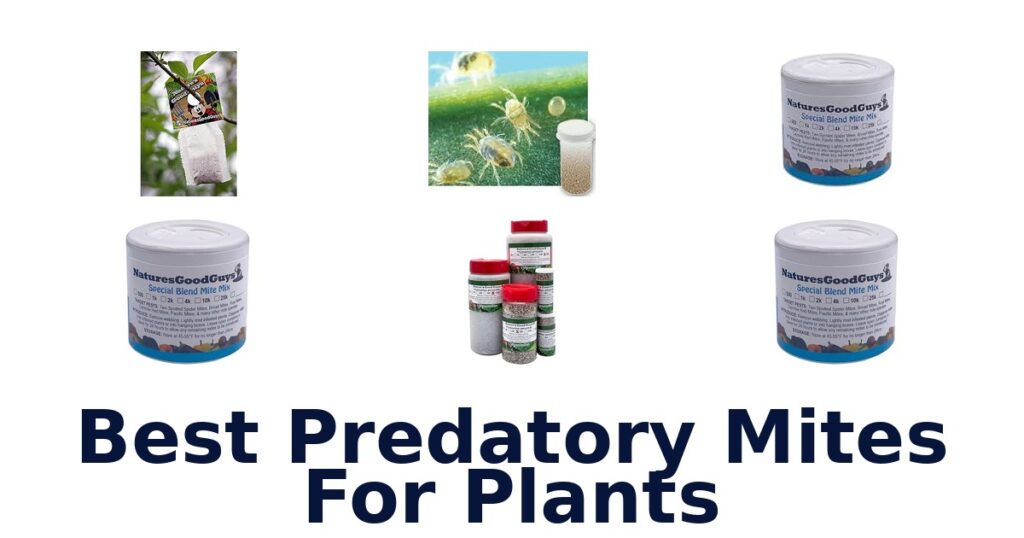

A strong predatory-mite choice matches the pest on your plants with a release format you can use consistently. For broad mite problems, NaturesGoodGuys Special Blend covers several mite species; for an active two-spotted spider mite infestation, its P. persimilis product targets that pest specifically.
The options here range from live adult mixes for direct release to sachets designed to release mites over time, plus soil-dwelling Hypoaspis Miles for pests such as fungus gnats. Check the listed target pests before choosing: products described as generalists or blends do not necessarily address every pest equally.
Also compare the application directions and temperature guidance where supplied, since quantities and conditions differ between products. This roundup helps narrow the options by pest type, format, and intended use.
NaturesGoodGuys Special Blend leads because its live mix is intended for indoor and outdoor use and targets several mite pests, including two-spotted spider, broad, rust, russet hemp, cyclamen, and southern red mites. Its listed blend may include A. cucumeris, N.
californicus, P. persimilis, and A.
swirskii. Choose it for broad mite coverage rather than a single named pest; for a soil pest or a focused two-spotted spider mite problem, a more specialized option may fit better.
Our Top Picks
 Best Overall
The live mix is listed for indoor and outdoor use and targets several mite pests, with a stated rate of four mites per square foot.
View on Amazon Highest Capacity
Its 5,000 live adult mites form a multi-species blend intended for varied growing conditions, with a stated application rate of 5–10 per square foot.
View on Amazon Smaller Live Blend
This 2,000-adult mix lists several mite pests, including two-spotted spider and broad mites, and directs users to release 5–10 mites per square foot.
View on Amazon- Spider Mite Specialist NaturesGoodGuys P. persimilis
- Spider Mite Sachets NaturesGoodGuys Californicus Sachets
Compare the predatory mite options
| # | Product | Buy |
|---|---|---|
| 1 | 1. NaturesGoodGuys Special BlendBest Overall | View on Amazon |
| 2 | 2. Bug Sales 5,000 Mite MixHighest Capacity | View on Amazon |
| 3 | 3. Bug Sales Adult Mite MixSmaller Live Blend | View on Amazon |
| 4 |  4. NaturesGoodGuys P. persimilisSpider Mite Specialist | View on Amazon |
| 5 |  5. NaturesGoodGuys Californicus SachetsSpider Mite Sachets | View on Amazon |
| 6 |  6. NaturesGoodGuys 25 Swirskii SachetsFour-week hanging-bag coverage | View on Amazon |
| 7 |  7. NaturesGoodGuys Swirskii SachetsPreventive hanging-sachet care | View on Amazon |
| 8 |  8. NaturesGoodGuys CucumerisThrips-focused maintenance | View on Amazon |
| 9 | 9. NaturesGoodGuys Special Blend 500Small-quantity mixed predators | View on Amazon |
| 10 |  10. Hypoaspis Miles Soil MitesSoil-pest control programs | View on Amazon |
Detailed Reviews: Best Predatory Mites For Plants
#1 · Best Overall
1. NaturesGoodGuys Special Blend
Best for: Indoor-outdoor mite mix.
Why it ranks #1: The live mix is listed for indoor and outdoor use and targets several mite pests, with a stated rate of four mites per square foot.
A 4,000-mite special blend is listed for both indoor and outdoor use, letting growers apply one mixed-predator approach across different plant settings. The stated assortment normally draws on several species and targets multiple plant-feeding mites, with a listed temperature tolerance up to 105°F.
The indoor-and-outdoor use claim gives this mix flexibility across houseplants and outdoor growing areas. Its normal assortment includes P. persimilis, A. andersoni, A. cucumeris, and A. swirskii, while the title and description identify a special blend. The stated schedule is four mites per square foot every two weeks, for two to three applications, offering a clearer repeat plan than listings without a rate. The product lists several target mites, including two-spotted spider, broad, rust, and cyclamen mites.
- 4,000 live adult predatory mites
- Listed for indoor and outdoor use
- Provides a rate and repeat schedule: four per square foot bi-weekly, two to three times
- States temperature tolerance up to 105°F
- The species assortment is described as a normal mix, not a guaranteed fixed composition.
Skip it if you require a guaranteed species recipe; the stated assortment is normal rather than fixed, while the P. persimilis product names one species.
This is a fit for indoor or outdoor growers who want a mite-focused blend with a stated area rate and repeat schedule. The flexible species mix is a consideration if your plan depends on one named predator.
Full product details
| Brand | NaturesGoodGuys |
|---|---|
| Manufacturer | NaturesGoodGuys |
Listed on Amazon as: 4,000 Live Adult Predatory Mite Mix – Special Blend Mix – Triple Blend Mix
View on Amazon#2 · Highest Capacity
2. Bug Sales 5,000 Mite Mix
Best for: Flexible growing-condition blend.
Why it ranks #2: Its 5,000 live adult mites form a multi-species blend intended for varied growing conditions, with a stated application rate of 5–10 per square foot.
A 5,000-adult special blend removes some of the guesswork of selecting an individual mite species for a garden, greenhouse, or grow room. The listing gives a 5–10-mites-per-square-foot rate and describes the mix as suitable for all growing conditions, with tolerance up to 95°F.
The blend combines predatory mite species, so it offers a generalist route for growers who do not want to choose one species themselves. Its stated 5–10 mites per square foot rate provides a basis for planning releases across a growing area. The description says the mites tolerate temperatures up to 95°F and do best between an incomplete temperature range in the supplied text, so that detail cannot guide a precise climate plan. The product is framed for gardens, greenhouses, and grow rooms.
- Contains 5,000 live adult predatory mites
- Special blend is intended to reduce species-selection guesswork
- Lists a release rate of 5–10 mites per square foot
- States temperature tolerance up to 95°F
- The supplied description cuts off the preferred temperature range, limiting climate-specific guidance.
Skip it if you need the blend's full preferred temperature range before choosing; the supplied listing states only tolerance up to 95°F.
This fits growers who want a multi-species adult blend for a garden, greenhouse, or grow room and can apply mites by square footage. Buyers needing precise temperature guidance should note that the stated preferred range is incomplete.
Full product details
| Brand | Bug Sales |
|---|---|
| Color | Green |
| Manufacturer | Nature's Good Guys |
| Recommended Uses | organic pest management |
| Style | Modern |
| Style Name | Modern |
| Additional Information | Important Information Small parts. Not for children under 3 yrs. |
Listed on Amazon as: 5,000 Live Adult Predatory Mites – A Mix of Predatory Mite Species for Spider Mite Control – Ships Ships Next Business Day AIR!
View on Amazon#3 · Smaller Live Blend
3. Bug Sales Adult Mite Mix
Best for: Rotating multi-species releases.
Why it ranks #3: This 2,000-adult mix lists several mite pests, including two-spotted spider and broad mites, and directs users to release 5–10 mites per square foot.
A mixture of adult predatory mite species gives this 2,000-mite option a multi-species approach to spider and related mite pests. Bug Sales recommends 5–10 mites per square foot and releasing every other week until an infestation subsides, giving growers a defined recurring application schedule.
The stated rate of 5–10 mites per square foot helps growers estimate coverage, while the every-other-week instruction establishes a repeat-release workflow rather than a one-time introduction. The special blend normally includes an assortment of P. persimilis, N. californicus, A. cucumeris, and A. swirskii, subject to availability. Its listed targets include two-spotted spider mites, broad mites, russet mites, and rust mites. Since species availability can vary, buyers should not treat the blend as a fixed recipe.
- 2,000 live adult predatory mites
- Recommended rate is 5–10 mites per square foot
- Instructions call for release every other week until infestation subsides
- Targets several spider and plant-feeding mite types
- The blend's species assortment is subject to availability, so its exact composition can vary.
Skip it if you want a fixed species composition; this assortment is subject to availability, unlike the named P. persimilis listing from NaturesGoodGuys.
Choose this for growers ready to apply adult mites by area and repeat releases every other week against the listed mite pests. Its variable species assortment is a boundary for anyone who needs a specific predator species.
Full product details
| Brand | Bug Sales |
|---|---|
| Manufacturer | Nature's Good Guys |
| Material Feature | Natural |
| Material Features | Natural |
| Additional Information | Important Information Small parts. Not for children under 3 yrs. |
Listed on Amazon as: 2,000 Live Adult Predatory Mites – A Mix of Predatory Mite Speciesl – Ships Next Business Day!l
View on Amazon#4 · Spider Mite Specialist
4. NaturesGoodGuys P. persimilis
Best for: Two-spotted spider-mite specialist.
Why it ranks #4: The 5,000 live P. persimilis specifically targets two-spotted spider mites, with instructions to release 5–10 mites per square foot.
A named species, P. persimilis, makes this 5,000-mite product a focused choice for two-spotted spider mites rather than a variable mixed blend. The listing says these predators consume all stages of that pest, do not feed on plants or spin webs, and are easy to release.
The species-specific listing identifies two-spotted spider mites as the target and says P. persimilis consumes all stages, making the product especially relevant when that pest is the concern. A release rate of 5–10 mites per square foot supports area-based planning, and the stated temperature tolerance reaches 90 degrees. Included instructions and an easy-release description support application, while the plant-safe and non-web-spinning claims help clarify how the predator interacts with vegetation. The supplied information does not identify a broader target-pest list.
- Approximately 5,000 P. persimilis predatory mites
- Targets all stages of two-spotted spider mites
- Release rate is 5–10 mites per square foot
- Listed as harmless to vegetation and non-web-spinning
- Its stated target is two-spotted spider mites, making it a focused rather than broad-pest option.
Skip it if you need a generalist for whiteflies or multiple pest types; the NaturesGoodGuys swirskii sachets list a broader set of targets.
Choose this for growers targeting two-spotted spider mites who want a named specialist, an area-based release rate, and included instructions. Its focused target makes it less suitable when several unrelated pest types need attention.
Full product details
| Brand | NaturesGoodGuys |
|---|---|
| Manufacturer | Nature's Good Guys |
Listed on Amazon as: 5,000 Live Adult Predatory Mites – P. persimilis – Spider Mite Control – Ships Next Business Day!
View on Amazon#5 · Spider Mite Sachets
5. NaturesGoodGuys Californicus Sachets
Best for: Sachets for steady predator supply.
Why it ranks #5: The slow-release sachets target two-spotted spider mites and several other mite pests; the listing contrasts sachets with adult-rich bottles for active infestations.
Neoseiulus californicus sachets combine eggs, immature mites, and adults, offering a steady flow of predators rather than an eggs-only release. The 10 sachets contain 250 mites and target multiple plant pests, while the listing says this species can survive on pollen when prey is absent.
The mix of life stages in each sachet supports a continuing supply of predators, according to the product description. Listed targets include two-spotted spider mites, avocado mites, western flower thrips, onion thrips, cyclamen mites, broad mites, and rust mites. The listing distinguishes sachets from bottled mites, describing bottles as better for active infestations because they have a high percentage of hungry adults. That distinction helps buyers match release format to whether they want steady sachet delivery or adult-heavy intervention.
- 10 slow-release hanging sachets containing 250 mites
- Includes eggs, immature mites, and adults
- Targets a broad set of listed mite pests and thrips
- Can survive on pollen when prey is absent
- The listing identifies bottled mites, not sachets, as the better choice for active infestations.
Skip it if you need a high percentage of hungry adults for an active infestation; the P. persimilis listing offers a named adult-mite option.
This is suited to growers wanting a mixed-life-stage sachet release for ongoing plant-pest management, including when prey may be scarce. For an active infestation, the listing itself points buyers toward bottled mites instead.
Full product details
| Brand | NaturesGoodGuys |
|---|---|
| Manufacturer | Natures Good Guys |
Listed on Amazon as: Natures Good Guys – Neoseiulus californicus – Slow Release Hanging Sachets (10 Sachets with 250 Mites)
View on Amazon#6
6. NaturesGoodGuys 25 Swirskii Sachets
Best for: Four-week hanging-bag coverage.
Why it ranks #6: Twenty-five sachets hatch over four weeks, target thrips, whiteflies, and spider mites, and come with a placement direction of one every six feet.
Twenty-five hanging bags, each containing 250 Amblyseius swirskii, hatch over a four-week period to provide a scheduled release. The placement guidance—one sachet every six feet, potentially one per plant—helps growers plan coverage for crops with different spacing.
The four-week hatch period and instruction to release every four weeks create a recurring maintenance cadence. Hanging one sachet every six feet gives a starting placement rule, while the listing notes that some crops may need one per plant. Swirskii is described as a fast-reproducing generalist that feeds on thrips, whiteflies, spider mites, tarsonemid mites, and pollen. Its stated ideal temperature range is 50–85°F and humidity 65–75%, useful boundaries for deciding whether a growing space matches the product guidance.
- 25 hanging bags with 250 mites in each
- Bags hatch over a four-week period
- Provides spacing guidance of one sachet every six feet
- Lists temperature and humidity ranges
- The stated ideal conditions are limited to 50–85°F and 65–75% humidity.
Skip it if you grow outside the stated ideal temperature or humidity ranges; the listing gives 50–85°F and 65–75% humidity for this sachet system.
This suits greenhouse or indoor growers who can hang bags, follow the spacing guidance, and maintain conditions within the stated ranges. Its four-week release cadence is useful for recurring care, but not a fit for out-of-range environments.
Full product details
| Brand | NaturesGoodGuys |
|---|---|
| Manufacturer | Nature's Good Guys |
| Additional Information | Important information Directions Hang 1 sachet every 6 ft, but may increase to 1 per plant depending on the crop. Hanging Bags hatch out over a 4 weeks period. Release every 4 weeks. |
Listed on Amazon as: Amblyseius swirskii 25 Sachets with 250 Mites
View on Amazon#7
7. NaturesGoodGuys Swirskii Sachets
Best for: Preventive hanging-sachet care.
Why it ranks #7: Ten slow-release sachets containing 250 mites are positioned mainly for prevention and list thrips, whiteflies, and several mite pests as targets.
Egg-based slow-release sachets make this Amblyseius swirskii option a preventive choice for gardeners who want predators introduced gradually. The 10 sachets contain 250 mites and target several common plant pests, including whiteflies and thrips, for use around potted plants, gardens, or greenhouses.
The eggs in the sachets support a slower preventive release rather than an immediate adult-mite application, which suits a maintenance approach. Swirskii is described as a fast-reproducing generalist, and its listed targets include greenhouse whitefly, thrips, broad mites, and two-spotted spider mites. The stick form and sachet count give growers discrete units to introduce at different sites. Its listed introduction settings include gardens, greenhouses, potted plants, and field crops, while the product is stated safe around humans and pets.
- Egg-based sachets are intended mainly for prevention
- Contains 10 sachets with 250 mites
- Targets whiteflies, thrips, and several mite pests
- Listed for gardens, greenhouses, and potted plants
- Egg-based sachets are aimed mainly at prevention, not an adult-heavy release for an active infestation.
Skip it if you need a bottle with a high percentage of hungry adults for an active infestation; Neoseiulus californicus sachets are not that format either.
Choose this for preventive pest management in potted plants, gardens, or greenhouses where a generalist predator and gradual release suit the routine. Its egg-based sachets are a less direct fit when an active infestation calls for hungry adult mites.
Full product details
| Brand | NaturesGoodGuys |
|---|---|
| Item Form | Stick |
| Manufacturer | Natures Good Guys |
Listed on Amazon as: Natures Good Guys – Amblyseius swirskii (10 Sachets with 250 Mites)
View on Amazon#8
8. NaturesGoodGuys Cucumeris
Best for: Thrips-focused maintenance.
Why it ranks #8: The 25,000-mite bottle targets immature thrips and several other pests, while the listing notes sachets are suited to preventive, long-term maintenance.
A 25,000-mite bottle of Amblyseius cucumeris offers a substantial supply of a predator whose listed targets include immature thrips. It also addresses several other pests, and its indoor-and-outdoor use makes it relevant to gardens, greenhouses, potted plants, and field crops.
The product specifically lists larval stages of several thrips, including western flower, onion, greenhouse, and melon thrips, which helps match it to growers focused on immature thrips. It also lists two-spotted spider mites, cyclamen mites, broad mites, whitefly, and other pests. The listing says sachets are best for prevention and long-term maintenance because eggs can take 5–14 days to hatch at 70 degrees. That note describes sachets, so the bottle format should not be confused with that release method.
- Contains 25,000 Amblyseius cucumeris mites per bottle
- Targets larval stages of several thrips species
- Listed for indoor and outdoor use
- Also lists mites, whitefly, psyllids, and aphids as targets
- The supplied hatch-time guidance concerns sachets, not a stated release schedule for this bottle.
Skip it if you need a clearly stated bottle application rate; this listing gives none, while the Bug Sales adult mix specifies mites per square foot.
Choose this for growers seeking Amblyseius cucumeris against listed thrips larvae and other pests across indoor or outdoor sites. The product details do not provide a bottle release rate, so it may not suit rate-led application planning.
Full product details
| Brand | NaturesGoodGuys |
|---|---|
| Manufacturer | Natures Good Guys |
Listed on Amazon as: NaturesGoodGuys – Amblyseius cucumeris (25,000 Mites per Bottle)
View on Amazon#9
9. NaturesGoodGuys Special Blend 500
Best for: Small-quantity mixed predators.
Why it ranks #9: This 500-size blend can include several predatory mite species and is described as safe around people and pets, but supplied target-pest detail is limited.
A 500-size special blend provides a smaller listed quantity of mixed predatory mites for growers who want several species rather than a single named predator. The assortment normally includes up to five species, subject to availability, and the product states the mites do not make webs or harm plants.
The blend normally draws from A. cucumeris, N. californicus, P. persimilis, A. andersoni, and A. swirskii, although the listing says the assortment is subject to availability. That variety suits buyers seeking a mixed-species approach, while the 500 size keeps the listed quantity distinct from larger packs. The product also states that the mites are safe around humans and pets, do not make webs, and do not harm plants. No release rate or target-pest list is supplied in the product details.
- 500-size special blend listing
- Normally includes an assortment of as many as five named mite species
- States mites do not make webs or harm plants
- Safe around humans and pets according to the listing
- The product details provide no release rate or specific target-pest list.
Skip it if you need a stated pest target and application rate; the 4,000-mite NaturesGoodGuys special blend lists both targets and a schedule.
This fits growers seeking a small-quantity mixed-predator option and who value the stated plant-safe, non-web-making behavior. It is less suitable when planning depends on a named target list or measured release rate.
Full product details
| Brand | NaturesGoodGuys |
|---|---|
| Manufacturer | Natures Good Guys |
Listed on Amazon as: Special Blend Predatory Mite (Size: 500)
View on Amazon#10
10. Hypoaspis Miles Soil Mites
Best for: Soil-pest control programs.
Why it ranks #10: These soil-dwelling mites target fungus gnats, root mealybugs, and other soil pests, making them less suitable for leaf-feeding pest problems.
Native, soil-dwelling Hypoaspis miles target pest life stages in the growing medium, making this 12,500-mite quantity relevant to growers addressing fungus gnats or root mealybugs. The product also lists thrips, shore flies, springtails, and other soil-associated pests among its targets.
Because these mites are identified as soil-dwelling, their target area differs from products focused on pests on foliage. The listed targets include fungus gnats, thrips, some shore flies, root mealybugs, and springtails, giving growers a broad set of soil-pest concerns to address with one predator. The description specifies both knockdown and preventative control of soil-dwelling life stages. At 12,500 mites, the quantity supports a larger introduction than a small sachet pack, though no application rate is supplied here.
- 12,500 Hypoaspis miles mites in the product title
- Native, soil-dwelling predatory mite
- Targets fungus gnats and root mealybugs
- Described for both knockdown and preventative control
- No application rate or placement instructions are provided in the supplied product details.
Skip it if you need a stated per-square-foot release rate or hanging sachets; this listing supplies neither, while the Bug Sales adult mix lists a rate.
This suits growers whose priority is fungus gnats, root mealybugs, or other listed soil-dwelling pests and who want a predator described for both knockdown and prevention. It is a poor fit if a specific placement rate is essential.
Full product details
| Brand | NaturesGoodGuys |
|---|---|
| Item Weight | 1.5 pounds |
Listed on Amazon as: 12,500 Live Hypoaspis Miles (Predatory Mites) For Insects – Guaranteed Live Delivery!
View on AmazonWhy a broad mite blend can still miss the problem
A broad blend is not a guarantee that the pest on a plant is covered or controlled. The listed Special Blend compositions vary: some descriptions name A. cucumeris, N.
californicus, P. persimilis, and A.
swirskii, while another may also include A. andersoni; availability can affect the assortment. A blend can reduce the need to select one species, but a named specialist may be a more direct match when the pest is known.
For example, P. persimilis is specifically described as a two-spotted spider mite specialist, while Hypoaspis Miles targets soil-dwelling life stages such as fungus gnats.
A mismatch between where the pest lives and where the predator is released is a practical failure mode: a soil-dwelling mite is not the same choice as a leaf-focused release. Identify the pest and its location before choosing a generalist, blend, or specialist.
Sachets and live adults serve different timing needs
Sachets are designed for a steadier release, while live adult products are positioned for direct release and active infestations. The Swirskii sachet listings describe eggs and gradual hatching; one says bags hatch over four weeks, and another recommends release every four weeks. Californicus sachets contain eggs, immature mites, and adults, while its listing contrasts sachets with bottles that have a higher percentage of hungry adults for active infestations.
This creates a timing trade-off: preventive or maintenance use can suit a sachet, while an established outbreak may favour a live adult product with a stated release rate. Do not assume all sachets work identically: the stated contents and directions differ, and the Cucumeris listing says eggs may take 5–14 days to hatch at 70 degrees.
Follow the particular product’s placement and repeat-release directions rather than transferring rates between species.
How to Choose Predatory Mites for Plants
Match the predator to the pest
Start by matching the named target pests to the problem on your plants. NaturesGoodGuys P. persimilis is specifically described as a specialist for two-spotted spider mites, while Hypoaspis Miles is soil-dwelling and lists fungus gnats, root mealybugs, and springtails.
Swirskii sachets list thrips, whiteflies, and several mite pests; Cucumeris emphasizes immature thrips while also naming other targets. The live blends list multiple mite pests, but their species assortment is subject to availability.
A confirmed single pest favours a specialist with that pest named; uncertain or mixed mite problems may favour a blend. For pests living in the potting medium, choose the soil-targeted option rather than relying on a leaf-oriented product.
Choose release format and timing
Look at whether you need a gradual release or live adults for a current infestation. Swirskii sachets contain eggs and are described mainly for prevention; the 25-sachet listing says they hatch over four weeks and recommends one sachet every six feet, possibly one per plant depending on crop. Californicus sachets combine eggs, immature mites, and adults, while the product description says bottled mites have more hungry adults for active infestations.
Adult mixes give direct release rates, including 5–10 mites per square foot for the Bug Sales blends and P. persimilis.
Preventive maintenance favours a suitable sachet and its repeat schedule; an active outbreak may favour an adult release product. Use the directions for that exact product and crop.
Check temperature and placement directions
Compare the conditions and application details stated for the specific product, rather than assuming every predatory mite tolerates the same environment. The 25-sachet Swirskii listing gives an ideal temperature range of 50–85°F and humidity of 65–75%, while its placement direction is one sachet every six feet, potentially one per plant. The 5,000-adult P.
persimilis listing says it can tolerate temperatures up to 90 degrees; the Special Blend mix says up to 105°F, and another blend description says up to 95 degrees. These figures are not interchangeable guarantees of performance.
A grower whose conditions fit a listed range can use that guidance to shortlist options; anyone outside it should check the full product directions before release. Also distinguish hanging sachets from loose adult mites when planning placement.
Which predatory mites should I choose for my plants?
For broad mite-pest coverage, choose NaturesGoodGuys Special Blend: its live mix is listed for several mite pests and indoor or outdoor use. For a confirmed two-spotted spider mite infestation, NaturesGoodGuys P. persimilis is the targeted specialist, while NaturesGoodGuys Californicus Sachets suit a steadier sachet release against several mite pests.
If you want a broad adult release in a larger quantity, Bug Sales 5,000 Mite Mix lists a multi-species blend and a 5–10 mites-per-square-foot rate. For thrips or whiteflies with preventive maintenance in mind, consider NaturesGoodGuys Swirskii Sachets or the larger 25-sachet pack.
For fungus gnats and other soil pests, select Hypoaspis Miles Soil Mites; its soil-dwelling habit makes it a different solution from the plant-leaf options.
Frequently Asked Questions
How should I introduce predatory mites to indoor plants?
Introduce them according to the product’s directions, matching the release to the pest and where it lives. Leaf-oriented mite options address plant pests, while Hypoaspis miles is intended for soil pests. Check the package for placement and handling instructions, and avoid treating these different product types as interchangeable.
What conditions help predatory mites establish on plants?
Follow the product’s directions for release and care, since the options differ in species and format. Some are supplied as sachets, while others are live mixes or bottles. Match the product to the pest and plant location, and check its instructions for any conditions needed for successful establishment.
How can I tell whether predatory mites are working?
Look for a change in the target pest problem over time rather than relying only on spotting the predators. Check the affected leaves or soil consistently, depending on the pest and product. The listed options address different pests, so assess the specific target named for your chosen mite.
Which option should I choose for a confirmed two-spotted spider mite problem?
For a confirmed two-spotted spider mite infestation, the NaturesGoodGuys P. persimilis option is the targeted specialist. The Special Blend is listed for several mite pests, while Californicus sachets offer a steadier sachet release against several mite pests.
Choose based on whether you need focused control or broader coverage.
Which options suit thrips or whiteflies and preventive maintenance?
The NaturesGoodGuys Swirskii sachets are an option to consider for thrips or whiteflies when preventive maintenance is the goal. The roundup also identifies the larger 25-sachet pack as an option. Check each listing’s directions and intended use before choosing between the pack formats.
Final Words
Choose NaturesGoodGuys Special Blend when you need broad coverage for several listed mite pests and want an option for indoor or outdoor use. For a confirmed two-spotted spider mite problem, the P. persimilis specialist is more focused; for fungus gnats or other soil pests, choose Hypoaspis miles.
Swirskii sachets suit thrips or whiteflies with preventive maintenance in mind. Match the product to the pest and follow its directions.