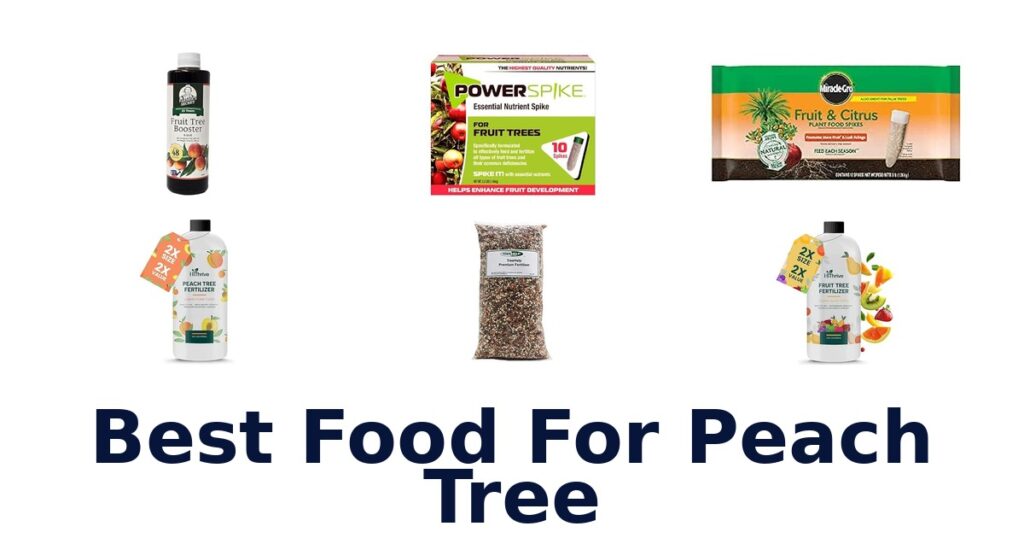

A strong peach-tree fertilizer should match the tree’s growth stage and your preferred application method, with peach-specific formulas offering the closest fit. This roundup compares 10 options, from slow-release powder made for peach trees to liquid concentrates, organic soil blends, and root-zone spikes. TreeHelp Premium Fertilizer for Peach leads for its peach-specific formulation, slow-release nitrogen, and stated coverage for one large tree or two to three smaller trees.
Other choices may suit growers looking for flowering support, a large liquid yield, or organic-listed ingredients. Check the label directions and your tree’s needs before applying: these products differ in form, nutrient profile, coverage, and feeding schedule, and the listing data does not establish one universal application rate.
TreeHelp Premium Fertilizer for Peach is the strongest overall match because it is specifically formulated for peach trees, uses slow-release nitrogen throughout the growing season, and states coverage of one large tree or two to three smaller or newly planted trees. For a liquid alternative aimed at flowering and fruit development, TPS Nutrients Peach Tree Fertilizer is a focused option. Choose based on the product’s directions, your tree size, and whether powder, liquid, granules, or spikes best fits your routine.
Our Top Picks
 Best Overall
Made specifically for peach trees, it supplies slow-release nitrogen through the growing season and treats one large tree or two to three smaller trees.
View on Amazon Best Liquid Formula
TPS Nutrients Peach Fertilizer
This liquid is formulated specifically for peach trees and targets flowering, fruit development, healthy leaves, and balanced growth.
View on Amazon Highest Liquid Yield
The 16-ounce bottle makes 16 gallons and combines macronutrients with micronutrients for foliage, roots, and fruit quality on peach trees.
View on Amazon- Early-Season Feed Farmer's Secret Fruit Tree Booster
- Organic Soil Blend Down To Earth Fruit Tree
Compare peach tree fertilizer options
| # | Product | Form | Weight | Buy |
|---|---|---|---|---|
| 1 | 1. TreeHelp Peach FertilizerBest Overall | Powder | 1.5 kg | View on Amazon |
| 2 | 2. TPS Nutrients Peach FertilizerBest Liquid Formula | Liquid | 8 oz | View on Amazon |
| 3 | 3. HiThrive Peach FertilizerHighest Liquid Yield | Liquid | — | View on Amazon |
| 4 |  4. Farmer's Secret Fruit Tree BoosterEarly-Season Feed | Liquid | 8 oz | View on Amazon |
| 5 |  5. Down To Earth Fruit TreeOrganic Soil Blend | Powder | 5 lb | View on Amazon |
| 6 |  6. HiThrive Fruit Tree FertilizerMulti-fruit liquid concentrate | Liquid | 1.3 lb | View on Amazon |
| 7 |  7. Power Spike Fruit Tree NutrientRoot-zone fruit-tree spike feeding | Sticks | 3.2 lb | View on Amazon |
| 8 | 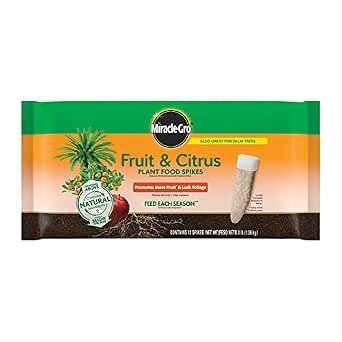 8. Miracle-Gro Fruit and Citrus SpikesTwice-yearly spike feeding | Sticks | 3.8 lb | View on Amazon |
| 9 |  9. Jobe's Organics Granular FertilizerOrganic granular fruit-tree feeding | Granules | 4 lb | View on Amazon |
| 10 |  10. Ferti-lome Fruit Tree FoodLarge-orchard granular feeding | Granules | 15.7 lb | View on Amazon |
Detailed Reviews: Best Food For Peach Tree
#1 · Best Overall
1. TreeHelp Peach Fertilizer
- Form: Powder
- Weight: 1.5 kg
Best for: Slow-release peach-tree feeding.
Why it ranks #1: Made specifically for peach trees, it supplies slow-release nitrogen through the growing season and treats one large tree or two to three smaller trees.
Slow-release nitrogen that continues feeding through the growing season is the defining feature of TreeHelp Premium Fertilizer for Peach. The powder is specially formulated for peach trees and promotes long-term vitality through robust root development, making it a focused option for seasonal peach care.
The 1.5-kilogram quantity is stated to treat one large tree or two to three smaller or newly planted trees, helping buyers gauge coverage by tree size. Slow-release nitrogen continues feeding during the growing season, reducing the need to treat it as a one-time nutrient dose. Its powder form is supplied with complete instructions, so application can follow the included guidance. The product information also states it is not available for sale in Washington, which is a key location consideration before choosing it.
- Specially formulated for peach trees
- Slow-release nitrogen feeds through the growing season
- Promotes robust root development and long-term vitality
- Treats one large or two to three smaller or newly planted trees
- Not available for sale in Washington state.
Skip it if you live in Washington; HiThrive Peach Plant Fertilizer is another peach-focused liquid option.
This fits peach growers seeking slow-release nitrogen and stated coverage for one large tree or several smaller ones. It is not available for sale in Washington, and its powder application should follow the included instructions.
Full product details
| Brand | TreeHelp |
|---|---|
| Item Form | Powder |
| Item Weight | 1.5 kg |
| Manufacturer | TreeHelp |
| Model Number | TR-F-PEA |
| Additional Information | Important information Directions Instructions included with the product |
Listed on Amazon as: TreeHelp Premium Fertilizer for Peach
View on Amazon#2 · Best Liquid Formula
2. TPS Nutrients Peach Fertilizer
- Form: Liquid
- Weight: 8 oz
Best for: Peach-specific liquid nutrition.
Why it ranks #2: This liquid is formulated specifically for peach trees and targets flowering, fruit development, healthy leaves, and balanced growth.
Formulated specifically for peach trees, this TPS Nutrients liquid focuses its nutrition on flowering, fruit development, and overall tree health. That targeted scope suits growers who want a peach-oriented plant food rather than a broad fruit-tree blend, with healthy foliage and balanced growth also named among its aims.
Its stated support for blooms and fruit set connects feeding to the stages that matter for a peach harvest, while support for healthy leaves addresses foliage through the growing season. The formula is also described for stone fruit trees, so its intended use extends beyond peaches within that group. The 8-ounce liquid format provides a compact option for application, though the supplied product information does not establish a dilution rate or schedule; follow the product directions for use and safety.
- Formulated specifically for peach trees
- Supports flowering and fruit development
- Aims to promote healthy leaves and balanced growth
- Also intended for peach and stone fruit trees
- The supplied product details do not specify a dilution rate or feeding schedule.
Skip it if you need a stated mix ratio and repeat schedule; Farmer’s Secret Fruit Tree Booster lists one teaspoon per gallon and weekly feeding.
This is a fitting choice for peach growers who prioritize a formula explicitly aimed at flowering, fruit set, and foliage. Its described scope includes stone fruits, but the supplied details do not give a mixing rate or application frequency.
Full product details
| Brand | TPS NUTRIENTS |
|---|---|
| Item Form | Liquid |
| Item Weight | 8 ounces |
| Manufacturer | TPS Nutrients |
| Model Number | PEACH8OZ-FBA-UPC-0523 |
Listed on Amazon as: Peach Tree Fertilizer – Liquid Plant Food for Healthy Growth, 8 oz
View on Amazon#3 · Highest Liquid Yield
3. HiThrive Peach Fertilizer
- Form: Liquid
Best for: High-volume peach-tree mixing.
Why it ranks #3: The 16-ounce bottle makes 16 gallons and combines macronutrients with micronutrients for foliage, roots, and fruit quality on peach trees.
One 16-ounce bottle makes 16 gallons of peach-tree fertilizer, giving HiThrive a clear advantage for growers preparing repeated liquid feedings. Its nitrogen, phosphorus, and potassium are tied to foliage, roots, and fruit quality respectively, while micronutrients broaden the formula beyond those three primary nutrients.
The one-gallon-per-ounce stated yield helps a grower plan how much liquid can be mixed from the bottle, rather than relying on a ready-to-use format. Nitrogen supports lush leaves, phosphorus supports strong roots, and potassium is linked to fruit size and sweetness, connecting the formula’s nutrients to different parts of tree growth. The product is described for peach varieties including Belle of Georgia, Redhaven, Elberta, Freestone, Donut, and Nectarine, making its stated peach scope broad.
- 16-ounce bottle makes 16 gallons of spray
- Includes nitrogen, phosphorus, potassium, and micronutrients
- Nutrients are linked to foliage, roots, and fruit quality
- Described for multiple peach varieties
- The liquid must be mixed with water before use.
Skip it if you prefer a dry soil application; Down To Earth Fruit Tree 6-2-4 is a powder applied to the soil surface.
Choose this HiThrive formula if you grow peaches and want a liquid concentrate with a stated 16-gallon yield. It suits growers comfortable mixing water and fertilizer; the listed nutrient benefits focus on foliage, roots, and fruit quality.
Full product details
| Brand | HiThrive |
|---|---|
| Included Components | Bottle |
| Item Form | Liquid |
| Manufacturer | HiThrive |
#4 · Early-Season Feed
4. Farmer's Secret Fruit Tree Booster
- Form: Liquid
- Weight: 8 oz
Best for: Early-season fruit-tree feeding.
Why it ranks #4: Its concentrated liquid is designed for the early growth cycle after dormancy until fruit starts to bud, and its directions specify weekly dilution.
A phosphorus-rich formula for the early growth cycle gives this Farmer’s Secret liquid a specific role: feeding fruit trees after dormancy and before buds appear. Its concentrated dilution lets a small bottle make multiple applications, while peach trees are explicitly included among the intended fruit-tree varieties.
Mix one teaspoon into a gallon of water, then apply weekly along the tree’s drip line; that repeatable routine gives the product a clear place in early-season care. The high phosphorus concentration supports root-system development, helping establish a foundation for drawing nutrients. Because it is formulated for all fruit trees, a gardener can use the same feeding approach for peaches and other listed fruit trees. Keep the bottle away from children and pets and avoid skin or eye contact.
- Formulated for all fruit trees, including peach
- Targets the period after dormancy and before budding
- High phosphorus concentration supports root-system development
- Concentrated; directions call for one teaspoon per gallon
- Weekly dilution and drip-line application require recurring attention.
Skip it if you want a dry soil amendment; Down To Earth Fruit Tree 6-2-4 is a non-water-soluble powder for soil application.
Choose this liquid if you are feeding a peach or other fruit tree during early growth and can follow a weekly dilution routine. Its timing is specifically after dormancy and before budding, so it is not presented as an all-season schedule.
Full product details
| Brand | Farmer's Secret |
|---|---|
| Included Components | Bottle, liquid |
| Item Form | Liquid |
| Item Weight | 8 ounces |
| Manufacturer | Farmer's Secret |
| Model Number | FS-fruittree8 |
| Additional Information | Important information Safety Information Keep out of reach of children and pets. Avoid contact with skin and eyes. Do not ingest. In case of accidental exposure, seek medical advice. Ingredients Nitrogen, Phosphorus, Potassium Directions Dilute one teaspoon of product into one gallon of water and apply weekly along the drip line |
Listed on Amazon as: Farmer's Secret Fruit Tree Booster Fertilizer – Super Concentrated and Phosphorus Rich – Formulated for All Fruit Trees Including Peach, Banana, and Apple (8oz)
View on Amazon#5 · Organic Soil Blend
5. Down To Earth Fruit Tree
- Form: Powder
- Weight: 5 lb
Best for: Organic soil-feeding orchard growers.
Why it ranks #5: This OMRI-listed 6-2-4 powder is intended for soil application, includes calcium, and can be broadcast or worked lightly into the soil.
An OMRI-listed 6-2-4 dry blend gives Down To Earth a soil-application approach for fruit trees, including backyard orchard use. Added calcium is specifically noted for proper fruit development, so this five-pound powder combines primary plant nutrients with a nutrient tied to fruit formation.
Broadcast or hand-apply the blend to the soil surface, then lightly scratch it in or cover it with compost or mulch. That process suits growers who prefer feeding the soil rather than mixing a liquid solution. The powder is not water soluble, so it belongs in a soil-care routine rather than a sprayer. Its shelf-stable dry blend can be stored in a cool, dry place, while the stated 6-2-4 formula and added calcium support a fruit-tree-focused feeding choice.
- OMRI listed for use in organic production
- 6-2-4 fertilizer blend with added calcium
- Can be broadcast or hand-applied to soil
- Shelf-stable when stored in a cool, dry place
- Not water soluble; it is intended for soil application.
Skip it if you want a liquid feed mixed into water; HiThrive Peach Plant Fertilizer makes 16 gallons from its 16-ounce bottle.
This powder fits peach growers who prefer soil feeding and want an OMRI-listed fruit-tree fertilizer with added calcium. It requires surface application and light incorporation or covering, so it is not the choice for liquid feeding.
Full product details
| Brand | Down To Earth All Natural Fertilizers |
|---|---|
| Included Components | only product |
| Item Form | Powder |
| Item Weight | 5 pounds |
| Manufacturer | Central Garden Distribution |
| Model Number | 100532058 |
Listed on Amazon as: Down To Earth All Natural Fertilizers Organic Fruit Tree – 6-2-4, 5 lb
View on Amazon#6
6. HiThrive Fruit Tree Fertilizer
- Form: Liquid
- Weight: 1.3 lb
Best for: Multi-fruit liquid concentrate.
Why it ranks #6: The 16-ounce liquid makes 16 gallons and is listed for peaches among other fruit trees, with nitrogen, phosphorus, potassium, and micronutrients.
One 16-ounce bottle makes 16 gallons of liquid plant food, giving HiThrive’s fruit-tree formula a useful stated yield for ongoing feeding. Its nitrogen, phosphorus, and potassium are connected to foliage, roots, and fruit size, and its listed scope includes peaches alongside several other fruit trees.
The stated one-to-one-ounce-per-gallon yield helps growers estimate how much finished liquid the bottle provides before mixing. Nitrogen supports healthy foliage, phosphorus supports strong roots, and potassium is tied to larger fruit; essential micronutrients add to the listed nutrient blend. The formula is described for apples, oranges, lemons, peaches, pears, and plums, so it can serve mixed fruit-tree plantings. It is a concentrate, however, and requires water and mixing before application rather than direct use from the bottle.
- 16-ounce bottle makes 16 gallons of liquid food
- Nutrients are linked to foliage, roots, and fruit size
- Includes macronutrients and micronutrients
- Listed for peaches and several other fruit trees
- Concentrate requires mixing with water before application.
Skip it if you want peach-only nutrients; TPS NUTRIENTS Peach Tree Fertilizer is formulated specifically for peach trees.
Choose this HiThrive concentrate if you want one liquid fertilizer for peaches and other fruit trees, with a stated 16-gallon yield. It suits growers willing to mix water and concentrate; its listed nutrient aims span foliage, roots, and fruit size.
Full product details
| Brand | HiThrive |
|---|---|
| Included Components | Bottle |
| Item Form | Liquid |
| Item Weight | 1.3 pounds |
| Manufacturer | HiThrive |
Listed on Amazon as: Fruit Tree Fertilizer for Strong Branches & Abundant Harvests, 16oz
View on Amazon#7
7. Power Spike Fruit Tree Nutrient
- Form: Sticks
- Weight: 3.2 lb
Best for: Root-zone fruit-tree spike feeding.
Why it ranks #7: These spikes are formulated for fruit trees including peach and feed the root zone with NPK plus magnesium, iron, zinc, and other elements.
These spikes place a combination of fertilizer and nutrients at the root zone, targeting uptake by feeder roots across fruit-tree types. Peach is explicitly included alongside apple, orange, lemon, and lime, making the product’s stated scope broader than a peach-only formula.
The spike format delivers nutrients at the root zone, which the product describes as supporting effective uptake by feeder roots. Its listed nutrient ingredients include nitrogen, phosphate, potash, magnesium, manganese, iron, zinc, copper, and sulfur, addressing a range of elements commonly deficient in fruit trees. The combination is also stated to help enhance fruit development. A pounding cap is included, and the stick form means application involves placing spikes rather than mixing a liquid; follow the product directions for placement.
- Formulated for all types of fruit trees, including peach
- Feeds at the root zone for feeder-root uptake
- Includes primary nutrients and listed trace elements
- Combination fertilizer and nutrient spike supports fruit development
- Spike placement requires a pounding cap and physical installation.
Skip it if you prefer a dry granular application; Jobe’s Organics Granular Garden Fertilizer uses granules for fruit and nut plants.
Choose Power Spike if you want a spike format that names peach and other fruit trees and targets the root zone. It includes a pounding cap, but its application involves installing spikes rather than broadcasting granules or mixing liquid.
Full product details
| Brand | Power Spike |
|---|---|
| Included Components | Pounding Cap |
| Item Form | Sticks |
| Item Weight | 3.2 pounds |
| Manufacturer | JVH Consumer Products Inc. |
| Model Number | 93308 |
| Additional Information | Important information Ingredients Nitrogen (N), Phosphate (P2O5), Potash (K2O). Magnesium (Mg), Manganese (Mn). Iron (Fe), Zinc (Zn), Copper (Cu). Sulfur (S) |
Listed on Amazon as: for Fruit Trees. Essential Nutrient Spike formulated to Feed All Types of Fruit Trees (Apple, Peach, Orange, Lemon, Lime, etc.) and Address Common Deficiencies (10 Spikes – 3.2 Lbs)
View on Amazon#8
8. Miracle-Gro Fruit and Citrus Spikes
- Form: Sticks
- Weight: 3.8 lb
Best for: Twice-yearly spike feeding.
Why it ranks #8: The spikes are intended for fruit trees and applied around the drip line, but the listed examples focus on citrus, apple, and avocado.
Twelve plant-food spikes make this Miracle-Gro option a defined, twice-yearly feeding routine for fruit and citrus trees. Rather than mixing liquid or spreading granules, the grower places spikes around the tree’s drip line, where they are driven fully below the soil surface.
The instructions call for watering the soil until softened, spacing spikes at least three feet apart around the drip line, and driving each one below the surface. Those steps make placement the main task and avoid preparing a liquid mixture. Feeding is scheduled once in early spring and once during the growing season. The product is identified for several fruit and citrus trees, including apple, orange, lemon, lime, and avocado; peach is not named in the supplied examples, so check the label’s listed uses.
- Spikes provide a non-liquid feeding format
- Application is scheduled twice a year
- Placement is around the tree’s drip line
- Product is listed for several fruit and citrus trees
- Installation requires softened soil and driving each spike below the surface.
Skip it if you want a peach-specific formula; TreeHelp Premium Fertilizer for Peach is specially formulated for peach trees.
Consider these spikes if you prefer scheduled, twice-yearly placement around a fruit tree’s drip line over mixing fertilizer. The supplied examples name several fruit and citrus trees but not peach, so check the product label’s use directions for your tree.
Full product details
| Brand | Miracle-Gro |
|---|---|
| Included Components | plant food spikes |
| Item Form | Sticks |
| Item Weight | 3.8 pounds |
| Manufacturer | The Scotts Company LLC |
| Model Number | 4852012 |
Listed on Amazon as: Miracle-Gro Fruit & Citrus Plant Food Spikes, 12 Spikes, 3 lb.
View on Amazon#9
9. Jobe's Organics Granular Fertilizer
- Form: Granules
- Weight: 4 lb
Best for: Organic granular fruit-tree feeding.
Why it ranks #9: Its OMRI-listed 3-5-5 granules serve fruit and nut trees, with application every four to eight weeks, but are not peach-specific.
An OMRI-listed 3-5-5 granular fertilizer gives Jobe’s Organics a straightforward option for fruit and nut trees, with no synthetic chemicals specified. Its granules are described as avoiding wasteful runoff, mess, hazards, and smells, while the stated feeding interval is every four to eight weeks or as needed.
The 3-5-5 formula supplies nutrients for fruit and nut plants and trees, and the product information connects its use with vibrant foliage and fruit production. Granules suit gardeners who want to apply a solid fertilizer rather than prepare a liquid feed. The stated four-to-eight-week interval offers a recurring schedule, while granular fertilizers are described as having slower-to-release components that last longer. Its organic-gardening listing makes it relevant to growers seeking that classification for fruit-tree care.
- OMRI listed for organic gardening
- 3-5-5 formula for fruit and nut plants and trees
- Granular form avoids liquid mixing
- Listed application interval is every four to eight weeks or as needed
- The listed feeding interval means applications recur every four to eight weeks or as needed.
Skip it if you want a longer interval between feedings; Miracle-Gro Fruit & Citrus Plant Food Spikes are applied twice yearly.
Jobe’s suits fruit-tree growers seeking an OMRI-listed granular fertilizer and a repeat application routine. Its stated interval is every four to eight weeks or as needed, so it fits gardeners prepared to revisit feeding through the season.
Full product details
| Brand | Jobe's Organics |
|---|---|
| Included Components | 4lbs Granular Fertilizer |
| Item Form | Granules |
| Item Weight | 4 pounds |
| Manufacturer | Easy Gardener, Inc. |
| Model Number | 9227 |
| Warranty Description | Warranty |
Listed on Amazon as: Jobe’s Organics Granular Garden Fertilizer, Easy Plant Care Fertilizer for Fruit and Nut Plants and Trees, 4 lbs Bag
View on Amazon#10
10. Ferti-lome Fruit Tree Food
- Form: Granules
- Weight: 15.7 lb
Best for: Large-orchard granular feeding.
Why it ranks #10: This 19-10-5 granule is for fruit, citrus, and nut trees and is applied twice yearly, but its listed specialized zinc benefit concerns pecans.
A 19-10-5 granular blend with zinc gives ferti-lome a broad fruit, citrus, and nut-tree scope, with zinc specifically noted for controlling rosette in pecan trees. Its directions call for feeding twice a year, making it a scheduled option for growers managing several tree types.
The product is listed for all kinds of nut, citrus, and fruit trees, so a mixed planting can use one fertilizer across those categories. For tree canopy, the supplied direction is one pound per 100 square feet, applied in early spring and again in late fall. The granular form is broadcast around the tree’s drip line and watered thoroughly in the provided apple example. Application varies by plant type and size, so consult the label’s directions for the specific tree.
- 19-10-5 granular formula
- Listed for fruit, citrus, and nut trees
- Contains zinc noted for pecan rosette control
- Directions specify early-spring and late-fall applications
- Application amount varies by plant type and size.
Skip it if you want a peach-specific liquid with a stated mixing yield; HiThrive Peach Plant Fertilizer makes 16 gallons from 16 ounces.
This is suited to growers feeding multiple fruit, citrus, or nut trees with a twice-yearly granular routine. Because directions and amounts vary by tree type and size, it calls for checking the label before applying to a peach tree.
Full product details
| Brand | ferti-lome |
|---|---|
| Included Components | Fertilome (13822) Fruit, Citrus and Pecan Tree Food 19-10-5 (16 lbs.) |
| Item Form | Granules |
| Item Weight | 15.7 pounds |
| Manufacturer | Voluntary Purchasing Groups Inc |
| Model Number | 13822 |
| Warranty Description | Warranty |
Listed on Amazon as: Fertilome (13822) Fruit, Citrus & Pecan Tree Food 19-10-5, 16 lbs
View on AmazonAvoid overfeeding a peach tree
Overfeeding can be a concern when growers treat a fertilizer’s general fruit-production claims as a reason to apply more than its label directs. These products have different concentrations and schedules: Farmer’s Secret Fruit Tree Booster calls for one teaspoon per gallon applied weekly, while Ferti-lome Fruit Tree Food specifies twice-yearly feeding and TreeHelp Peach Fertilizer describes slow-release nitrogen across the growing season. Those directions are not interchangeable.
Excessive or poorly timed feeding can also encourage unwanted leafy growth rather than the balance of growth and fruiting a gardener wants; the supplied listings do not provide a universal rate for every tree. Use the package directions for the exact product, account for the tree’s size and planting situation, and avoid combining products without guidance.
If the tree shows a problem, first consider whether water, soil conditions, or disease may be involved instead of automatically increasing fertilizer.
Match fertilizer coverage to tree size
Coverage claims matter because bottle volume, product weight, and the number of trees treated do not describe the same thing. TreeHelp Peach Fertilizer states that 1.5 kilograms treats one large tree or two to three smaller or newly planted trees. HiThrive Peach Fertilizer instead gives a dilution yield: its 16-ounce bottle makes 16 gallons, without specifying how many trees that volume covers.
Farmer’s Secret Fruit Tree Booster says its concentrate is diluted at one teaspoon per gallon and describes one 32-ounce bottle lasting a mature tree a full season, but that claim is not a universal comparison for other products. For dry blends and spikes, use the label’s tree-size directions rather than estimating from package weight.
A common trap is assuming that the product with more ounces feeds more trees; concentration, application rate, canopy size, and schedule all affect actual coverage.
How to Choose Peach Tree Fertilizer
Peach-specific or general fruit-tree formula
Look first for a formula explicitly intended for peach trees if you want the closest match to the search. TreeHelp Peach Fertilizer and TPS Nutrients Peach Fertilizer are peach-specific, while HiThrive Peach Fertilizer names peach trees and multiple peach varieties. Farmer’s Secret Fruit Tree Booster serves all fruit trees and is aimed at the early growth cycle; several other options cover fruit trees more broadly.
The peach-specific end suits growers who want the product’s stated use to match their tree directly. A general fruit-tree formula may suit a mixed orchard or gardener feeding several kinds of trees, but confirm its label includes peaches and follow its particular directions rather than assuming formulas are interchangeable.
Application form and routine
Choose a form you can apply consistently, since these products range from liquids and powders to granules and spikes. Liquid options include TPS Nutrients Peach Fertilizer and Farmer’s Secret Fruit Tree Booster; the latter specifies weekly application after dilution. Down To Earth Fruit Tree is a dry powder for broadcasting or hand application to soil, while Jobe’s Organics Granular Fertilizer recommends application every four to eight weeks.
Miracle-Gro Fruit and Citrus Spikes and Power Spike Fruit Tree Nutrient are driven into the soil at the root zone. Liquids suit people comfortable measuring and mixing, whereas soil blends and spikes avoid routine dilution.
The right end of this range depends on your preferred task and ability to follow the product’s timing and placement directions.
Nutrient profile and release
Compare the listed nutrient profile and release style rather than assuming every fruit-tree fertilizer works the same way. Down To Earth Fruit Tree gives a 6-2-4 formula and includes calcium; Jobe’s Organics Granular Fertilizer lists 3-5-5; and Ferti-lome Fruit Tree Food lists 19-10-5 with zinc. TreeHelp Peach Fertilizer highlights slow-release nitrogen, while Farmer’s Secret Fruit Tree Booster emphasizes high phosphorus for root development.
Choose the peach-specific slow-release option if extended feeding is the priority, or a product with stated NPK values when you want to compare a declared ratio. These listings do not provide enough information to prescribe a ratio for every peach tree, so use label instructions and avoid selecting a product solely because one nutrient number is higher.
Which food should I choose for my peach tree?
For a peach-specific powder with stated tree coverage and slow-release nitrogen, choose TreeHelp Peach Fertilizer. If you prefer a liquid formulated around peach flowering and fruit development, TPS Nutrients Peach Fertilizer is the closest fit; choose HiThrive Peach Fertilizer when a 16-ounce bottle yielding 16 gallons is useful. For early-cycle feeding across fruit trees, Farmer’s Secret Fruit Tree Booster gives a specific dilution and weekly schedule.
Organic-minded growers can consider Down To Earth Fruit Tree, an OMRI-listed soil blend, or Jobe’s Organics Granular Fertilizer, an OMRI-listed granule. For spike application, Power Spike Fruit Tree Nutrient covers peach among fruit trees.
Match the choice to tree size, label directions, and the feeding routine you can follow.
Related Buying Guides
Frequently Asked Questions
When should I fertilize a peach tree during the growing season?
Apply fertilizer according to the product label and your tree’s needs; the listed products differ in form and schedule, so one timing does not fit every option. Farmer’s Secret specifies a weekly schedule for early-cycle feeding. Do not assume that schedule applies to other products; follow their individual directions.
How can I tell whether my peach tree needs fertilizer or has a nutrient deficiency?
Leaf or growth changes alone may not identify the cause or confirm a nutrient deficiency. Consider the tree’s condition and growing context, and use a soil test or qualified local advice when the diagnosis is unclear. Avoid adding fertilizer as a remedy without checking its label and suitability for peach trees.
How should I adjust fertilizer application for a newly planted peach tree?
Check the fertilizer label before applying it to a newly planted tree, and use directions that account for tree size. TreeHelp states that its peach fertilizer covers one large tree or two to three smaller or newly planted trees. That coverage is specific to this product; do not transfer it to other fertilizers.
Should I choose powder, liquid, granules, or spikes?
Choose the form that fits your feeding routine and follow its label directions. The roundup includes peach-specific powder, liquid options aimed at flowering and fruit development, organic granules, and fruit-tree spikes. These forms are not interchangeable by application method, so confirm how each product should be used before buying.
What should I compare on fertilizer labels before choosing?
Compare whether the product is formulated for peach or broader fruit-tree use, its application directions, and any stated coverage or dilution. For example, TreeHelp gives tree coverage, while HiThrive states that its 16-ounce bottle yields 16 gallons. Choose based on your tree size and the directions you can follow.
Final Words
For the strongest peach-specific match, choose TreeHelp Premium Fertilizer for Peach, whose slow-release nitrogen is intended to feed through the growing season and whose stated coverage accounts for tree size. For a liquid focused on flowering and fruit development, consider TPS Nutrients; select another form if it better suits your routine. Compare each label’s directions and stated coverage, then match the product to your tree size and feeding habits.