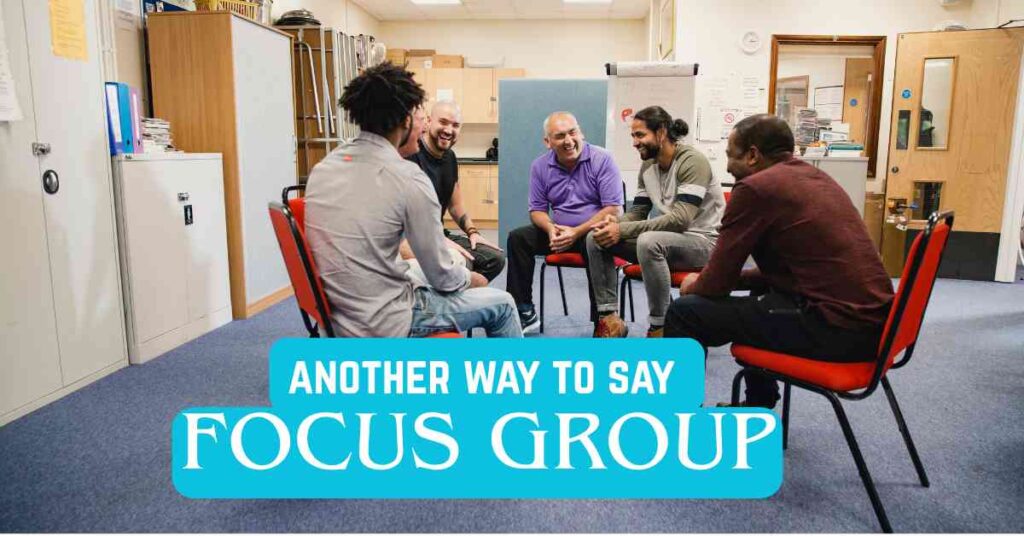

When conducting market research or gathering feedback, a focus group serves as a valuable tool for collecting qualitative data from a selected group of individuals. However, to avoid repetition or to convey subtle nuances in meaning, you might want to explore alternative expressions. Synonyms for “focus group” include terms like group discussion, panel interview, feedback session, consumer panel, roundtable discussion, and brainstorming session. Each of these phrases carries a slightly different connotation, emphasizing various aspects of the data collection process, such as the informal nature of a “group discussion” or the structured format of a “panel interview.” Understanding these alternative terms enhances your communication and allows you to describe the research activity more precisely. This article will delve into the meanings, usages, and implications of these synonymous phrases, equipping you with the knowledge to choose the most appropriate term for your specific context.
Table of Contents
- Definition of Focus Group
- Structural Breakdown of “Focus Group”
- Synonymous Terms for “Focus Group”
- Examples of Synonymous Terms in Sentences
- Usage Rules and Considerations
- Common Mistakes to Avoid
- Practice Exercises
- Advanced Topics: Nuances in Meaning
- Frequently Asked Questions
- Conclusion
Definition of Focus Group
A focus group is a form of qualitative research in which a group of people is asked about their perceptions, opinions, beliefs, and attitudes towards a product, service, concept, advertisement, idea, or packaging. Questions are asked in an interactive group setting where participants are free to talk with other group members openly and naturally. This method relies on the principle that insights emerge through discussion and interaction, providing richer and more nuanced data than individual interviews or surveys might reveal. The primary goal is to gain a deeper understanding of consumer behavior, preferences, and motivations. Focus groups are commonly used in marketing, social sciences, and political science to gather preliminary data, test hypotheses, or explore complex issues.
Structural Breakdown of “Focus Group”
The term “focus group” can be broken down into two key components: “focus” and “group.” The word “focus” indicates that the discussion is centered around a specific topic or subject. This targeted approach ensures that the research remains relevant and efficient. The word “group” signifies that the data is collected from a collective of individuals, allowing for interaction, diverse perspectives, and a dynamic exchange of ideas. Together, these components highlight the essence of the method: a concentrated discussion among a selected group of people. Understanding this structural breakdown helps to appreciate the inherent characteristics and benefits of using focus groups in research. The moderator plays a very important role in keeping the focus group on track.
Synonymous Terms for “Focus Group”
While “focus group” is a widely recognized term, several synonyms can be used to describe similar research methodologies. These alternative phrases often emphasize different aspects of the process, allowing for more precise communication. Let’s explore some of the most common synonymous terms in detail.
Group Discussion
A group discussion is a general term referring to any conversation or deliberation among a group of people. While it can encompass a focus group, it is broader in scope and may not always have a specific research objective. Group discussions are often less structured and more informal than focus groups, allowing for a wider range of topics and perspectives to emerge organically. For example, a team might have a group discussion to brainstorm new ideas or solve a problem. The key difference is that a focus group is always conducted with a specific research goal, whereas a group discussion can be more open-ended.
Panel Interview
A panel interview typically involves a group of interviewers posing questions to one or more interviewees. However, in the context of market research, “panel interview” can also refer to a setting where a panel of respondents provides their opinions on a particular topic. This format often involves a more structured and formal approach than a typical focus group, with predetermined questions and a clear agenda. Panel interviews are commonly used when seeking expert opinions or when a more formal and controlled environment is desired. The emphasis is on the expertise and insights of the panel members.
Feedback Session
A feedback session is a structured meeting designed to gather input and reactions from participants regarding a specific product, service, or concept. The primary goal is to obtain constructive criticism and suggestions for improvement. Feedback sessions are often used in product development, marketing, and customer service to refine offerings and enhance customer satisfaction. While a feedback session can resemble a focus group, it typically places greater emphasis on eliciting specific feedback rather than exploring broader opinions and attitudes. The focus is on actionable insights and practical recommendations.
Consumer Panel
A consumer panel is a group of consumers who have agreed to participate in ongoing market research activities. These panels are often used to gather data on consumer behavior, preferences, and purchasing habits over an extended period. Consumer panels may participate in surveys, product testing, or focus groups. The term “consumer panel” emphasizes the role of the participants as representatives of the broader consumer base. The data collected from consumer panels is valuable for tracking trends, identifying emerging needs, and evaluating the effectiveness of marketing campaigns.
Roundtable Discussion
A roundtable discussion is a meeting where participants gather around a table to discuss a specific topic in an informal and collaborative manner. This format encourages open communication, shared learning, and the exchange of diverse perspectives. Roundtable discussions are often used in academic, business, and political settings to facilitate dialogue and generate new ideas. While a roundtable discussion can resemble a focus group, it typically involves a more equal distribution of power and a greater emphasis on consensus-building. The focus is on fostering a collaborative environment and promoting shared understanding.
Brainstorming Session
A brainstorming session is a group activity designed to generate a large number of ideas in a short period. The primary goal is to encourage creative thinking and to explore a wide range of potential solutions to a problem. Brainstorming sessions typically involve a facilitator who guides the discussion and encourages participants to build upon each other’s ideas. While a brainstorming session can share some similarities with a focus group, it typically focuses on generating new ideas rather than gathering opinions or feedback. The emphasis is on creativity, innovation, and problem-solving.
Qualitative Research Group
A Qualitative Research Group is a broad term referring to a group of individuals assembled for the purpose of conducting qualitative research. Qualitative research focuses on understanding the ‘why’ behind human behavior, thoughts, and feelings. This approach often involves in-depth interviews, observations, and group discussions to explore complex issues and gain nuanced insights. A qualitative research group may employ various techniques, including focus groups, to gather data. This term emphasizes the broader research methodology and the in-depth nature of the inquiry.
Study Group
While not a direct synonym for “focus group” in the market research sense, a Study Group can sometimes function similarly in academic or professional contexts. It refers to a group of people who come together to learn about a specific subject or prepare for an exam. In some cases, a study group might conduct discussions and share insights in a way that resembles a focus group, particularly when exploring different interpretations of a text or discussing the implications of a theory. The primary goal, however, remains learning and knowledge acquisition, rather than market research or feedback gathering. This term highlights the collaborative aspect of learning and the sharing of knowledge among participants.
Examples of Synonymous Terms in Sentences
To further illustrate the usage of these synonymous terms, consider the following examples. These examples will show you how to use the words in context.
| Synonymous Term | Example Sentence |
|---|---|
| Group Discussion | The marketing team held a group discussion to brainstorm new advertising strategies. |
| Group Discussion | Before making a final decision, the committee engaged in an open group discussion to consider all viewpoints. |
| Group Discussion | The professor facilitated a lively group discussion on the ethical implications of artificial intelligence. |
| Group Discussion | As part of the project planning phase, we conducted a group discussion to identify potential challenges. |
| Group Discussion | The community members participated in a group discussion to address local concerns and propose solutions. |
| Panel Interview | The company conducted a panel interview with potential customers to gather feedback on the new product design. |
| Panel Interview | The research firm organized a panel interview consisting of industry experts to discuss market trends. |
| Panel Interview | During the conference, a panel interview was held to explore the future of renewable energy. |
| Panel Interview | The university invited a panel interview of alumni to share their career experiences with current students. |
| Panel Interview | The government agency convened a panel interview to assess the effectiveness of the new policy. |
| Feedback Session | The software developers organized a feedback session to gather input on the user interface. |
| Feedback Session | After the training workshop, participants attended a feedback session to share their experiences and suggestions. |
| Feedback Session | The design team conducted a feedback session with stakeholders to refine the project’s objectives. |
| Feedback Session | The company scheduled a feedback session with employees to address concerns and improve morale. |
| Feedback Session | The author held a feedback session with early readers to gather opinions on the manuscript. |
| Consumer Panel | The market research company relies on a consumer panel to track purchasing habits and identify emerging trends. |
| Consumer Panel | The food manufacturer uses a consumer panel to test new product flavors and formulations. |
| Consumer Panel | The cosmetics company established a consumer panel to gather feedback on skincare products. |
| Consumer Panel | The automotive company engaged a consumer panel to evaluate the design and features of upcoming models. |
| Consumer Panel | The retail chain utilizes a consumer panel to assess customer satisfaction and improve service quality. |
| Roundtable Discussion | The think tank organized a roundtable discussion to explore potential solutions to climate change. |
| Roundtable Discussion | The business school hosted a roundtable discussion featuring industry leaders and academic experts. |
| Roundtable Discussion | The non-profit organization facilitated a roundtable discussion to address community needs and challenges. |
| Roundtable Discussion | The government agency convened a roundtable discussion to gather input from stakeholders on policy development. |
| Roundtable Discussion | The international forum held a roundtable discussion to promote dialogue and cooperation among nations. |
| Brainstorming Session | The innovation team held a brainstorming session to generate new product ideas. |
| Brainstorming Session | The marketing department organized a brainstorming session to develop creative advertising campaigns. |
| Brainstorming Session | The engineering team participated in a brainstorming session to identify potential solutions to technical challenges. |
| Brainstorming Session | The management team conducted a brainstorming session to explore new business strategies. |
| Brainstorming Session | The project team held a brainstorming session to generate innovative ideas for improving efficiency. |
Usage Rules and Considerations
When choosing a synonym for “focus group,” it is important to consider the specific context and the nuances in meaning. While many of these terms are interchangeable in some situations, others carry distinct connotations that may make them more or less appropriate depending on the research objectives and the target audience. Below are some usage rules and considerations to keep in mind:
- Formality: “Panel interview” suggests a more formal and structured setting than “group discussion.”
- Purpose: “Feedback session” emphasizes the goal of gathering specific input, while “brainstorming session” focuses on generating new ideas.
- Audience: “Consumer panel” highlights the role of participants as consumers, while “roundtable discussion” implies a more collaborative and egalitarian setting.
- Specificity: “Focus group” is a well-defined research methodology, while “group discussion” is a more general term.
- Context: Consider the overall tone and style of your communication. Choose a term that aligns with the intended message and the expectations of your audience.
Think about the specific purpose of your research and the type of interaction you want to encourage among participants. By carefully considering these factors, you can select the most appropriate term to accurately describe your research activity.
Common Mistakes to Avoid
Using the wrong term can lead to miscommunication and confusion. Here are some common mistakes to avoid when choosing a synonym for “focus group”:
| Incorrect | Correct | Explanation |
|---|---|---|
| “We conducted a brainstorming session to gather customer feedback on the new product.” | “We conducted a feedback session to gather customer feedback on the new product.” | Brainstorming sessions are for generating ideas, not gathering feedback. |
| “The company organized a group discussion with industry experts to test the prototype.” | “The company organized a panel interview with industry experts to test the prototype.” | “Panel interview” is more appropriate when the participants are experts. |
| “The marketing team held a consumer panel to brainstorm new advertising strategies.” | “The marketing team held a brainstorming session to develop new advertising strategies.” | Consumer panels are for ongoing research, not brainstorming. |
| “We are holding a roundtable discussion to conduct in-depth interviews with individual participants.” | “We are holding focus groups to conduct in-depth interviews with individual participants.” | Roundtable discussions are for group discussion, not individual interviews. |
| “The feedback session will involve generating new product ideas from all the participants.” | “The brainstorming session will involve generating new product ideas from all the participants.” | Feedback sessions are for gathering opinions on existing products or ideas, not generating new ones. |
Always double-check that the term you are using accurately reflects the purpose and format of your research activity. Pay attention to the nuances in meaning and choose the term that best conveys your intended message.
Practice Exercises
Test your understanding of the synonymous terms for “focus group” with the following exercises.
| Question | Answer |
|---|---|
| 1. Which term is most appropriate for a structured meeting with industry experts to discuss market trends? | Panel Interview |
| 2. Which term is best suited for a collaborative session aimed at generating new product ideas? | Brainstorming Session |
| 3. Which term is most suitable for an informal conversation among a group of people to explore different perspectives on a topic? | Group Discussion |
| 4. Which term is used to describe a group of consumers who participate in ongoing market research activities? | Consumer Panel |
| 5. Which term is best for a meeting to gather constructive criticism and suggestions for improvement on a product? | Feedback Session |
| 6. Which term describes a meeting where participants gather around a table to discuss a specific topic in a collaborative manner to build consensus? | Roundtable Discussion |
| 7. A company wants to gather initial reactions to a new advertisement. What type of session should they hold? | Feedback Session |
| 8. A research team needs to explore innovative solutions to a complex problem. What type of session would be most effective? | Brainstorming Session |
| 9. An organization wants to track consumer preferences over time. What type of group should they establish? | Consumer Panel |
| 10. A professor wants students to share their understanding of a complex theory. What type of discussion should she facilitate? | Group Discussion |
Advanced Topics: Nuances in Meaning
At a more advanced level, understanding the subtle nuances in meaning between these terms can significantly improve your communication and research design. For example, the term “deliberative poll” is sometimes used in political science to describe a type of focus group where participants are provided with balanced information and then asked to discuss and deliberate on a particular issue. This approach aims to promote informed decision-making and to gauge public opinion after careful consideration. Similarly, the term “citizen jury” refers to a group of randomly selected citizens who are convened to hear evidence and to make recommendations on a policy issue. These specialized terms highlight the importance of tailoring the research methodology to the specific objectives of the study.
Furthermore, the choice of terminology can also reflect the underlying theoretical framework guiding the research. For example, a researcher adopting a constructivist approach might prefer the term “group discussion” to emphasize the collaborative construction of meaning, while a researcher using a positivist approach might favor the term “panel interview” to highlight the objective measurement of opinions and attitudes. Understanding these theoretical underpinnings can help you to critically evaluate research findings and to design more effective studies.
Frequently Asked Questions
Here are some frequently asked questions about synonymous terms for “focus group”:
- Is “group discussion” always the same as a “focus group”?
No, a group discussion is a broader term that can refer to any conversation among a group of people. A focus group is a specific type of group discussion with a defined research objective.
- When is it appropriate to use “panel interview” instead of “focus group”?
“Panel interview” is more appropriate when the participants are experts or when a more formal and structured setting is desired.
- What is the difference between a “feedback session” and a “focus group”?
A feedback session emphasizes gathering specific input and suggestions for improvement, while a focus group explores broader opinions and attitudes.
- How does a “consumer panel” differ from a “focus group”?
A consumer panel is a group of consumers who participate in ongoing market research activities, while a focus group is a one-time event.
- What is the main purpose of a “roundtable discussion”?
The main purpose of a roundtable discussion is to facilitate dialogue, promote shared learning, and generate new ideas in a collaborative setting.
- When should I use “brainstorming session” instead of “focus group”?
Use “brainstorming session” when the primary goal is to generate a large number of ideas in a short period.
- Are there any specific ethical considerations when conducting focus groups or similar sessions?
Yes, it is important to obtain informed consent from participants, protect their privacy, and ensure that they are not subjected to undue stress or pressure.
- How do I choose the best term for my specific research context?
Consider the purpose of your research, the type of interaction you want to encourage among participants, and the expectations of your audience. Choose the term that best conveys your intended message.
Conclusion
Understanding the various synonymous terms for “focus group,” including group discussion, panel interview, feedback session, consumer panel, roundtable discussion, and brainstorming session, enhances your ability to communicate effectively and to design more targeted research activities. Each term carries a slightly different connotation, emphasizing various aspects of the data collection process. By carefully considering the context, purpose, and audience, you can select the most appropriate term to accurately describe your research activity. Remember to avoid common mistakes and to pay attention to the nuances in meaning. Mastering these subtle distinctions will improve your communication skills and contribute to more effective research outcomes. Always ensure you are using the correct term for the situation.