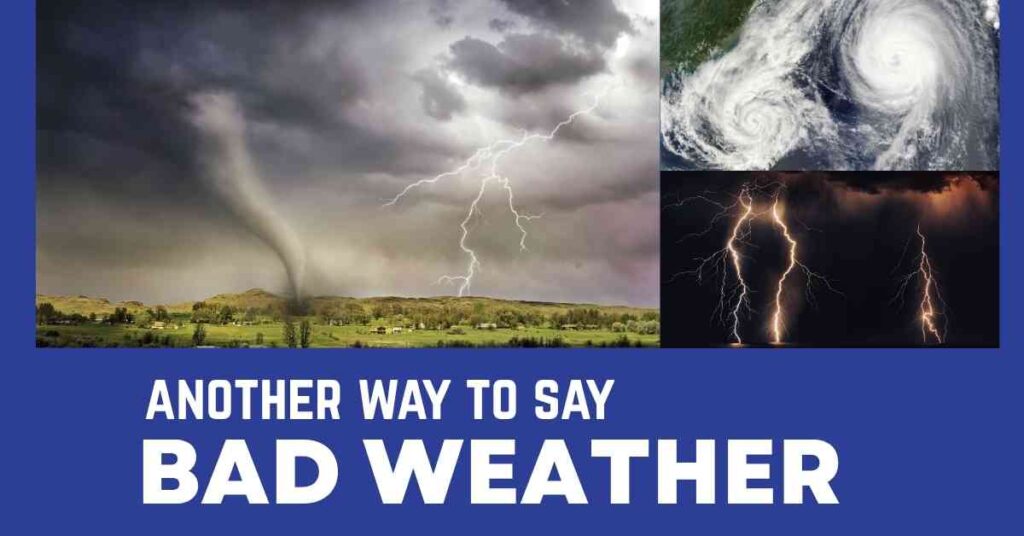

Describing weather goes far beyond simply stating “bad weather.” To enrich your descriptions and convey more specific information, it’s helpful to learn various terms for different types of adverse weather conditions. For example, instead of just saying “bad weather,” you could specify “torrential rain,” “blizzard conditions,” “dense fog,” “hurricane-force winds,” or even “a severe heatwave.” Understanding these nuances allows for more precise and vivid communication, enabling listeners or readers to grasp the exact nature and intensity of the weather being described. Expanding your weather-related vocabulary can significantly enhance both your writing and your everyday conversations.
Table of Contents
- Definition: Beyond “Bad Weather”
- Structural Breakdown: Understanding Weather-Related Terms
- Types of Inclement Weather Descriptions
- Examples of Alternative Weather Descriptions
- Usage Rules: Context and Appropriateness
- Common Mistakes When Describing Weather
- Practice Exercises
- Advanced Topics: Idiomatic Expressions and Figurative Language
- Frequently Asked Questions
- Conclusion
Definition: Beyond “Bad Weather”
The phrase “bad weather” is a general term used to describe atmospheric conditions that are unpleasant, dangerous, or disruptive to normal activities. However, this term lacks specificity. Learning alternative expressions allows you to paint a more detailed picture of the weather, conveying the intensity, type, and potential impact of the conditions. These alternative descriptions can range from simple adjectives modifying “weather” to more complex phrases describing specific meteorological phenomena. For instance, instead of just saying “bad weather,” you could say “inclement weather,” “severe weather,” or describe the specific conditions like “heavy rain,” “snowstorm,” or “heatwave.”
Structural Breakdown: Understanding Weather-Related Terms
Weather descriptions often involve a combination of adjectives, nouns, and adverbs to create a vivid and accurate picture. Adjectives modify nouns (e.g., “heavy rain,” “strong wind”), while adverbs modify verbs or adjectives (e.g., “raining heavily,” “bitterly cold”). Nouns describe the type of weather event (e.g., “hurricane,” “blizzard”). Compound adjectives (e.g., “hurricane-force winds”) combine two or more words to act as a single adjective. Understanding these structural elements allows you to construct your own descriptive phrases and comprehend weather reports more effectively. For example, the phrase “torrential downpour” combines the adjective “torrential” with the noun “downpour” to vividly describe very heavy rain. Similarly, “freezing rain” combines the adjective “freezing” with the noun “rain” to specify the dangerous condition of rain that turns to ice upon contact.
Types of Inclement Weather Descriptions
Inclement weather comes in many forms, each with its own set of descriptive terms. Here, we will explore the different ways you can describe rain, snow, wind, storms, and extreme temperatures.
Describing Rain
Rain can range from a light drizzle to a torrential downpour. Describing the intensity and nature of the rain is crucial for conveying the specific conditions. Words like drizzle, shower, rain, downpour, deluge, and torrential rain can be used to indicate the amount of rainfall. Additional adjectives, such as steady, persistent, intermittent, and heavy, can further refine the description.
Describing Snow and Ice
Snow and ice present their own unique challenges and descriptive needs. Terms like snow, sleet, hail, blizzard, snowstorm, ice storm, and freezing rain are used to describe different forms of frozen precipitation. Adjectives like heavy, light, powdery, wet, and icy can be added to provide more detail. The impact of snow and ice, such as snowdrifts, icy roads, and treacherous conditions, can also be described.
Describing Wind
Wind can range from a gentle breeze to destructive hurricane-force winds. Describing the wind’s strength and direction is essential. Terms like breeze, gust, wind, gale, storm, hurricane, and typhoon are used to describe wind intensity. Adjectives like strong, light, gentle, fierce, and howling can add further detail. Phrases describing the wind’s impact, such as uprooting trees, causing damage, and creating waves, can also be used.
Describing Storms
Storms are complex weather events that combine various elements, such as rain, wind, and lightning. Terms like thunderstorm, lightning storm, hurricane, tornado, cyclone, and blizzard are used to describe different types of storms. Adjectives like severe, intense, violent, and destructive can convey the storm’s severity. The effects of the storm, such as flooding, power outages, and property damage, can also be described.
Describing Extreme Temperatures
Extreme temperatures, both hot and cold, can pose significant risks. Describing the intensity and impact of these temperatures is crucial. Terms like heatwave, cold snap, freezing temperatures, and scorching heat are used to describe extreme temperature events. Adjectives like sweltering, blistering, frigid, and bitter can add detail. The effects of extreme temperatures, such as heatstroke, hypothermia, and frozen pipes, can also be described.
Examples of Alternative Weather Descriptions
Here are some examples of how to describe different types of bad weather using more specific and descriptive language. The following tables categorize the weather types and provide various alternative descriptions, allowing for a more nuanced understanding and communication of weather conditions. Each table will consist of various phrases and sentences that can be used to describe different types of weather.
Rain-Related Descriptors
This table provides example sentences using various terms to describe rain.
| Description | Example Sentence |
|---|---|
| Drizzling rain | A light drizzle was falling, barely enough to wet the pavement. |
| Light showers | We experienced light showers throughout the afternoon. |
| Steady rain | The steady rain continued for hours, making driving difficult. |
| Heavy rain | Heavy rain is expected to cause flooding in low-lying areas. |
| Pouring rain | It was pouring rain, and we were soaked within minutes. |
| Torrential rain | Torrential rain flooded the streets, making them impassable. |
| Driving rain | The driving rain made it impossible to see more than a few feet ahead. |
| Intermittent showers | We had intermittent showers all day, with brief periods of sunshine. |
| A downpour | A sudden downpour caught us by surprise, and we ran for cover. |
| A deluge | The city was hit by a deluge, overwhelming the drainage system. |
| Scattered showers | The forecast predicts scattered showers throughout the region. |
| Showery weather | We had showery weather all week, with brief bursts of rain. |
| Raining cats and dogs | It’s raining cats and dogs; I’m glad I brought my umbrella! |
| Bucketing down | It’s bucketing down outside, so be sure to take a raincoat. |
| Soaking rain | The soaking rain saturated the ground, creating muddy conditions. |
| Persistent rain | The persistent rain showed no signs of stopping, leading to rising river levels. |
| Sprinkling | It’s barely sprinkling, but it’s enough to make the sidewalks damp. |
| Light precipitation | We are expecting light precipitation overnight. |
| Rainy spell | After a long dry summer, we are finally having a rainy spell. |
| Drizzly conditions | Drizzly conditions made the morning commute slow. |
Snow and Ice-Related Descriptors
This table provides example sentences using various terms to describe snow and ice.
| Description | Example Sentence |
|---|---|
| Snowing heavily | It was snowing heavily, and the roads were becoming dangerous. |
| Light snow | We woke up to a dusting of light snow this morning. |
| A blizzard | A blizzard warning has been issued, with heavy snow and strong winds. |
| Icy conditions | Icy conditions made walking treacherous. |
| Freezing rain | Freezing rain is expected to create black ice on the roads. |
| Sleet | The sleet made a tapping sound against the windows. |
| Snowstorm | The snowstorm dumped over a foot of snow on the city. |
| Powdery snow | The powdery snow was perfect for skiing. |
| Wet snow | The wet snow was heavy and difficult to shovel. |
| Snowdrifts | Huge snowdrifts blocked the driveway after the storm. |
| Black ice | Black ice made the highway extremely dangerous. |
| Frosty | The windows were frosty early in the morning. |
| Snow flurries | We are expected snow flurries, but no accumulation. |
| A whiteout | The blizzard created a whiteout conditions. |
| Hard frost | A hard frost killed the flowers in the garden. |
| Icy patches | Icy patches made the sidewalks treacherous. |
| Frozen solid | The birdbath was frozen solid. |
| Glazed with ice | The trees were glazed with ice after the ice storm. |
| Accumulating snow | We are expecting accumulating snow later tonight. |
| Slippery conditions | Slippery conditions are possible due to melting and refreezing snow. |
Wind-Related Descriptors
This table provides example sentences using various terms to describe wind.
| Description | Example Sentence |
|---|---|
| Strong winds | Strong winds knocked down power lines across the city. |
| High winds | High winds made it difficult to keep the car on the road. |
| Gale-force winds | Gale-force winds battered the coastline, causing significant damage. |
| Gusty winds | Gusty winds made it challenging to walk against. |
| A gentle breeze | A gentle breeze rustled the leaves in the trees. |
| A stiff breeze | A stiff breeze made sailing conditions ideal. |
| Howling wind | The howling wind kept us awake all night. |
| Hurricane-force winds | Hurricane-force winds caused widespread destruction. |
| Blustery | It was a blustery day, with strong winds and scattered showers. |
| A whirlwind | A whirlwind kicked up dust and debris in the field. |
| A gust of wind | A sudden gust of wind blew my hat off. |
| Windy conditions | Windy conditions made it difficult to fly a kite. |
| Blowing a gale | The wind was blowing a gale, making it dangerous to be out at sea. |
| A light breeze | A light breeze kept the air fresh on the hot summer day. |
| A strong gust | A strong gust nearly knocked me off my feet. |
| A prevailing wind | The prevailing wind comes from the west. |
| A headwind | We were cycling into a headwind, making the journey slow. |
| A tailwind | We had a tailwind, which made cycling much easier. |
| Crosswinds | Crosswinds can be dangerous for airplanes during landing. |
| Sustained winds | Sustained winds of 40 mph are expected. |
Storm-Related Descriptors
This table provides example sentences using various terms to describe storms.
| Description | Example Sentence |
|---|---|
| Thunderstorm | A thunderstorm rolled in, bringing heavy rain and lightning. |
| Lightning storm | The lightning storm lit up the night sky. |
| Severe thunderstorm | A severe thunderstorm warning has been issued for the area. |
| Hurricane | The hurricane caused widespread flooding and damage. |
| Tornado | A tornado touched down in the rural area, causing destruction. |
| Cyclone | The cyclone brought heavy rain and strong winds to the coastal region. |
| Tropical storm | The tropical storm is expected to strengthen into a hurricane. |
| Nor’easter | The nor’easter brought heavy snow and strong winds to the East Coast. |
| Hailstorm | The hailstorm damaged crops and cars. |
| Ice storm | The ice storm left trees and power lines coated in ice. |
| Storm surge | The storm surge flooded coastal communities. |
| Flash flood | A flash flood warning has been issued for the area. |
| A raging storm | A raging storm kept us indoors all day. |
| A violent storm | A violent storm ripped through the town, causing extensive damage. |
| An approaching storm | We could see an approaching storm on the horizon. |
| A brewing storm | There was a brewing storm in the distance. |
| The height of the storm | We waited out the height of the storm in the basement. |
| The aftermath of the storm | The aftermath of the storm left debris scattered everywhere. |
| A passing storm | The passing storm left a rainbow in its wake. |
| A gathering storm | The dark clouds signaled a gathering storm. |
Extreme Temperature-Related Descriptors
This table provides example sentences using various terms to describe extreme temperatures.
| Description | Example Sentence |
|---|---|
| Heatwave | The heatwave caused temperatures to soar above 100 degrees. |
| Cold snap | The cold snap brought freezing temperatures and icy conditions. |
| Scorching heat | The scorching heat made it unbearable to be outside. |
| Freezing temperatures | Freezing temperatures caused pipes to burst. |
| Bitter cold | The bitter cold made it difficult to stay warm. |
| Sweltering heat | The sweltering heat made everyone seek shelter in air-conditioned spaces. |
| Blistering heat | The blistering heat made the asphalt shimmer. |
| Sub-zero temperatures | Sub-zero temperatures are expected overnight. |
| Extreme heat | An extreme heat warning has been issued for the region. |
| Extreme cold | An extreme cold advisory is in effect. |
| Record-breaking heat | The city experienced record-breaking heat this summer. |
| Record-breaking cold | The state saw record-breaking cold last winter. |
| A heat dome | A heat dome trapped hot air over the region. |
| A deep freeze | A deep freeze is expected to last for several days. |
| Oppressive heat | The oppressive heat made it difficult to breathe. |
| Intense heat | The intense heat dried out the fields. |
| Extreme chill | There was an extreme chill in the air that night. |
| Biting cold | The biting cold made my face numb. |
| Frostbite | There is a risk of frostbite with these temperatures. |
| Hypothermia | Prolonged exposure to cold can lead to hypothermia. |
Usage Rules: Context and Appropriateness
The choice of words to describe weather should depend on the context and the audience. In formal settings, such as weather reports or scientific articles, precise and technical terms are preferred. In informal settings, such as conversations with friends, more descriptive and evocative language can be used. It is important to consider the level of formality and the intended audience when selecting weather-related vocabulary. For example, a meteorologist would use precise terms like “isobar” and “cumulonimbus cloud,” while a novelist might use more figurative language like “the sky wept tears of rain.”
Additionally, cultural and regional variations can influence weather descriptions. Certain terms may be more common or have different connotations in different parts of the world. For example, the term “monsoon” is commonly used in South Asia to describe a seasonal period of heavy rainfall, while the term “nor’easter” is used in the northeastern United States to describe a strong storm with winds from the northeast. Being aware of these variations can help avoid misunderstandings and ensure effective communication.
Common Mistakes When Describing Weather
Several common mistakes can occur when describing weather. One common error is using vague or imprecise language. For instance, saying “it was very cold” is less informative than saying “the temperature was below freezing.” Another common mistake is using incorrect terminology, such as confusing sleet with hail. It is also important to avoid using overly dramatic or exaggerated language, which can undermine the credibility of the description. For example, saying “it was the worst storm in history” may be inaccurate and misleading. Specificity and accuracy are key to effective weather descriptions.
Below are some examples of common mistakes and their corrections:
| Incorrect | Correct | Explanation |
|---|---|---|
| The weather was bad. | There was heavy rain and strong winds. | The corrected sentence provides more specific information. |
| It was freezing cold outside. | The temperature was 20 degrees Fahrenheit. | The corrected sentence provides a precise temperature reading. |
| The storm was huge. | The hurricane had sustained winds of 150 mph. | The corrected sentence provides specific details about the storm’s intensity. |
| It was very wet. | There was a torrential downpour. | The corrected sentence uses a more descriptive term for heavy rain. |
| The sun was very hot. | The temperature reached 105 degrees Fahrenheit. | The corrected sentence provides a specific temperature reading. |
Practice Exercises
Improve your understanding of weather descriptions with the following exercises. Try to rewrite the sentences using more descriptive language. Answers are provided below each exercise.
Exercise 1
Rewrite the following sentences using more descriptive language:
- The weather was bad yesterday.
- It was cold outside.
- The wind was strong.
- It rained a lot.
- The sun was hot.
- There was a storm.
- It was very snowy.
- The ice was slippery.
- It was very foggy.
- The temperature was extreme.
Answers
- Yesterday, we experienced torrential rain and gale-force winds.
- The temperature outside was below freezing, with a biting wind.
- The wind howled through the trees, uprooting branches.
- We had a deluge that flooded the streets.
- The sun beat down with scorching intensity, making it unbearable to be outside.
- A severe thunderstorm brought heavy rain, lightning, and thunder.
- The snowstorm dumped over a foot of powdery snow on the city.
- The icy conditions made walking treacherous and dangerous.
- Dense fog reduced visibility to near zero, making driving hazardous.
- The heatwave brought record-breaking temperatures, posing a risk of heatstroke.
Exercise 2
Fill in the blanks with appropriate weather-related terms:
- The _________ made it difficult to see the road.
- The _________ damaged crops and cars.
- The _________ caused widespread flooding.
- The _________ made the air feel crisp and cool.
- The _________ made it necessary to wear layers of clothing.
- The _________ knocked down power lines.
- The _________ created treacherous driving conditions.
- The _________ made it a perfect day for swimming.
- The _________ made it cozy to stay indoors.
- The _________ made the leaves rustle in the trees.
Answers
- The fog made it difficult to see the road.
- The hailstorm damaged crops and cars.
- The hurricane caused widespread flooding.
- The breeze made the air feel crisp and cool.
- The cold snap made it necessary to wear layers of clothing.
- The strong winds knocked down power lines.
- The icy conditions created treacherous driving conditions.
- The sunshine made it a perfect day for swimming.
- The rain made it cozy to stay indoors.
- The wind made the leaves rustle in the trees.
Advanced Topics: Idiomatic Expressions and Figurative Language
Beyond basic vocabulary, idiomatic expressions and figurative language can add color and depth to weather descriptions. Idioms such as “raining cats and dogs” and “under the weather” are commonly used to describe heavy rain and feeling unwell, respectively. Figurative language, such as metaphors and similes, can create vivid imagery. For example, “the sky wept tears of rain” is a metaphor that personifies the sky and evokes a sense of sadness. “The wind howled like a wolf” is a simile that compares the sound of the wind to the howling of a wolf. Mastering these advanced techniques can significantly enhance your ability to describe weather in a creative and engaging way.
Here are a few more examples of idiomatic expressions and figurative language:
- Idiomatic Expressions
- “Clear as mud” (ironically describing something unclear)
- “Every cloud has a silver lining” (finding something positive in a negative situation)
- “Calm before the storm” (a period of peace before trouble)
- Figurative Language
- “The sun, a molten coin in the sky” (metaphor)
- “The rain fell like tears from heaven” (simile)
- “The wind whispered secrets through the trees” (personification)
Frequently Asked Questions
- What is the difference between sleet and hail?
Sleet is rain that freezes as it falls, resulting in small ice pellets. Hail, on the other hand, is formed in thunderstorms and consists of larger, irregular lumps of ice.
- How can I describe the intensity of rain?
You can use terms like “drizzle,” “light rain,” “moderate rain,” “heavy rain,” “downpour,” and “torrential rain” to describe the intensity of rainfall.
- What are some alternatives to saying “it’s hot”?
You can use terms like “scorching,” “sweltering,” “blistering,” “sizzling,” and “oppressive” to describe hot weather.
- What are some alternatives to saying “it’s cold”?
You can use terms like “freezing,” “frigid,” “bitter,” “icy,” and “frosty” to describe cold weather.
- How do I describe strong winds?
You can use terms like “gale-force winds,” “hurricane-force winds,” “gusty winds,” “strong breeze,” and “howling wind” to describe the strength of the wind.
- What is the difference between a hurricane and a tornado?
A hurricane is a large, rotating storm that forms over warm ocean waters, while a tornado is a violent, rotating column of air that touches the ground, usually associated with thunderstorms.
- What does “humidity” mean?
Humidity refers to the amount of moisture in the air. High humidity can make the air feel hotter than the actual temperature, while low humidity can make the air feel drier.
- How can I describe the sky during bad weather?
You could say “the sky was overcast,” “dark clouds loomed overhead,” or “the sky was a menacing gray.” You can also describe the movement or appearance of the clouds, such as “storm clouds gathered on the horizon” or “the clouds swirled ominously.”
Conclusion
Mastering alternative ways to describe bad weather enhances your communication skills and allows you to paint vivid pictures with your words. By understanding the nuances of different weather conditions and expanding your vocabulary, you can convey more precise and engaging descriptions. Remember to consider the context, audience, and regional variations when choosing your words. Practice using the various descriptive terms and phrases in your writing and conversations to solidify your understanding. With continued effort, you can become a master of weather description, bringing your stories and reports to life.