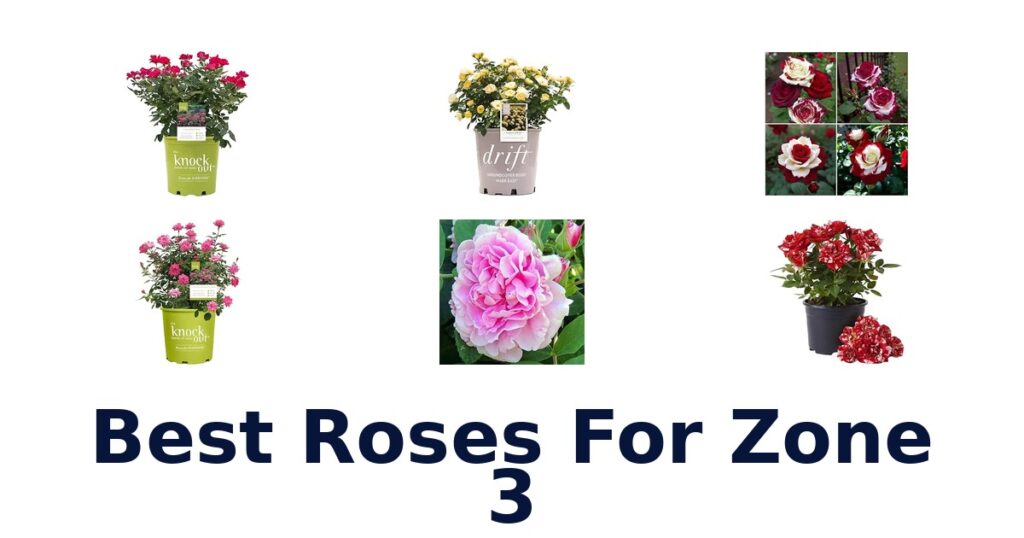

A strong rose for zone 3 needs a listed hardiness range that includes zone 3, and the best fit here is a live plant rather than seed with unverified cold tolerance. Heirloom Roses Long John Silver is rated for zones 2–9, while Heirloom Roses Thérèse Bugnet is rated for zones 3–10 and repeats its blooms. Those are the clearest matches for gardeners facing severe winters.
Other entries begin at zone 4 or 5, so they may suit milder sites or gardeners willing to assess local conditions, but they are not equally reliable matches for zone This roundup compares hardiness claims, growth habits, bloom patterns, and plant formats so you can narrow the list to a rose suited to your space and climate.
Heirloom Roses Long John Silver is the strongest listed match for zone 3 because its stated hardiness range starts at zone 2 and extends through zone It is a live own-root climbing rose in a one-gallon container, suited to gardeners who want vertical growth and can accept one flowering flush during the growing season. For a repeat-blooming shrub instead, Heirloom Roses Thérèse Bugnet is rated for zones 3–10 and is the most direct match with repeated seasonal blooms.
Our Top Picks
 Best Overall
Heirloom Roses Long John Silver
Its listed zones 2–9 explicitly include zone 3, and the live own-root plant arrives in a one-gallon container for a climbing-rose planting.
View on Amazon Best Repeat Bloomer
Rated for zones 3–10, this live own-root rugosa rose blooms in flushes throughout the growing season and arrives in a one-gallon container.
View on Amazon Best Zone 4 Drift
Its stated zones 4–11 are closer to zone 3 than the zone 5 listings, and the rooted nursery plant is a compact, reblooming yellow Drift rose.
View on Amazon- Most Compact Generic Red White Miniature Rose
Compare these rose options by type and stated zone fit
| # | Product | Material Feature | Material Features | Buy |
|---|---|---|---|---|
| 1 | 1. Heirloom Roses Long John SilverBest Overall | — | — | View on Amazon |
| 2 | 2. Heirloom Roses Thérèse BugnetBest Repeat Bloomer | Heirloom | Heirloom | View on Amazon |
| 3 |  3. Green Promise Farms Knock OutSunny reblooming shrub gardens | — | — | View on Amazon |
| 4 | 4. Perfect Plants Lemon DriftBest Zone 4 Drift | — | — | View on Amazon |
| 5 |  5. Seeds Of Strength Pink Climbing RoseTrellis growers starting from seed | Heirloom | Heirloom | View on Amazon |
| 6 |  6. Perfect Plants Peach DriftSunny low-growing landscape color | — | — | View on Amazon |
| 7 |  7. Knock Out Double Pink ShrubDouble-pink established gardens | Organic | Organic | View on Amazon |
| 8 |  8. Generic Red White Miniature RoseMost Compact | — | — | View on Amazon |
| 9 |  9. CZ Grain Amber Inferno PlugsThree sunny-space starter plugs | Heirloom | Heirloom | View on Amazon |
| 10 |  10. BuggyBeds Twin Red White SeedsRed-white climbing seed project | GMO Free, Heirloom | GMO Free, Heirloom | View on Amazon |
Detailed Reviews: Best Roses For Zone 3
#1 · Best Overall
1. Heirloom Roses Long John Silver
Best for: Zone 3 climbing rose choice.
Why it ranks #1: Its listed zones 2–9 explicitly include zone 3, and the live own-root plant arrives in a one-gallon container for a climbing-rose planting.
Hardiness zones 2–9 include Zone 3, making Long John Silver a climber option for colder gardens. This own-root rose arrives in a one-gallon container with rich soil and produces one moderately fragrant flush during the growing season, suiting gardeners who value a seasonal climbing display over continuous rebloom.
The own-root plant keeps root, stems, and flowers from the same variety, a useful point for buyers selecting a named rose. A 12–16-month-old plant in a one-gallon pot with rich soil provides an established starting point for planting rather than a seed-growing project. Its climbing habit offers a vertical-use option, while the single bloom flush means the main flower display is concentrated in one part of the growing season, not repeated throughout it.
- Listed hardiness range of zones 2–9 includes Zone 3
- Own-root plant has root, stems, and flowers from the same variety
- Arrives as a 12–16-month-old plant in a one-gallon container
- Moderately fragrant flowers bloom in a seasonal flush
- Flowers once in one flush rather than reblooming through the season.
Skip it if you want repeated flowering rather than a single seasonal flush; Heirloom Roses Thérèse Bugnet is listed as repeat blooming.
A fitting pick for Zone 3 gardeners who want an own-root climbing rose and accept a single flowering flush. Plan around its climbing habit and seasonal bloom rather than expecting repeated flowers.
Full product details
| Brand | Heirloom Roses |
|---|---|
| Color | Long John Silver |
| Manufacturer | Heirloom Roses |
| Manufacturer Warranty Description | Subject to Amazon's 30 day warranty. Void if granular fertilizer has been used. |
Listed on Amazon as: Heirloom Climbing Roses, Live Own Root Plant, Long John Silver
View on Amazon#2 · Best Repeat Bloomer
2. Heirloom Roses Thérèse Bugnet
- Material Feature: Heirloom
- Material Features: Heirloom
Best for: Zone 3 fragrant repeat blooms.
Why it ranks #2: Rated for zones 3–10, this live own-root rugosa rose blooms in flushes throughout the growing season and arrives in a one-gallon container.
A listed hardiness range of zones 3–10 makes Thérèse Bugnet a direct candidate for Zone 3 gardens, while its fragrant flowers return in flushes through the growing season. This own-root rose arrives in a one-gallon container with rich soil, giving gardeners an established plant rather than seed to raise.
The own-root construction means root, stems, and flowers come from the same variety, and the listing says this produces more blooms. Its 12–16-month age and one-gallon pot with rich soil offer a rooted starting point for planting, while repeat flushes extend seasonal flowering beyond a single display. Moderate the expectations around bloom timing: the supplied facts say it flowers in flushes, but do not give a specific planting location, mature size, or bloom schedule.
- Listed hardiness range includes zones 3–10
- Own-root plant keeps root, stems, and flowers from the same variety
- Fragrant flowers bloom in repeated flushes
- Arrives in a one-gallon container with rich soil
- No mature height or spread is supplied for planning its garden footprint.
Skip it if you need a stated mature size before choosing a planting spot; CZ Grain Amber Inferno supplies starter plugs for beds, planters, or patio containers.
A strong fit for Zone 3 gardeners seeking a fragrant, own-root rose with repeat flushes and an established potted start. Allow for the missing mature-size information when choosing its permanent location.
Full product details
| Brand | Heirloom Roses |
|---|---|
| Color | Lilac pink |
| Manufacturer | Heirloom Roses |
| Manufacturer Warranty Description | Subject to Amazon's 30 day warranty. Void if granular fertilizer has been used. |
| Material Feature | Heirloom |
| Material Features | Heirloom |
Listed on Amazon as: Heirloom Rugosa Roses, Live Own Root Plant, Thérèse Bugnet
View on Amazon#3
3. Green Promise Farms Knock Out
Best for: Sunny reblooming shrub gardens.
Why it ranks #3: This rooted shrub is rated for zones 4–8, just outside zone 3, and offers cherry-red to hot-pink reblooming flowers in a compact 2–3-foot height.
Cherry-red to hot-pink blooms return throughout the season, giving sunny beds repeated color from a fully rooted shrub that can be planted on arrival when weather permits. The original member of the Knock Out family grows 2–3 feet tall and spreads 3–4 feet; its listed USDA range is zones 4–8.
Its fully rooted condition and included planting and care instructions support a direct move into the garden when weather allows, rather than starting from seed. The compact 2–3-foot height and 3–4-foot spread make it suitable for grouping in a sunny landscape. Self-cleaning blooms drop spent petals, helping keep the planting neater, while reblooming extends the color display. The listing specifies zones 4–8, so that range—not the reblooming trait—sets the key boundary for a Zone 3 buyer.
- Fully rooted plant can be planted upon arrival when weather permits
- Cherry-red/hot-pink blooms rebloom throughout the season
- Mature size is listed as 2–3 feet tall by 3–4 feet wide
- Self-cleaning petals help keep grouped landscape plantings neater
- Listed for USDA zones 4–8, not Zone 3.
Skip it if you need a rose explicitly listed for Zone 3; Heirloom Roses Long John Silver is listed for zones 2–9.
Choose this for a sunny landscape where a compact, self-cleaning shrub can repeat its cherry-red to hot-pink display. Its listed zones 4–8 make it a poor match for a Zone 3 planting.
Full product details
| Brand | Green Promise Farms |
|---|---|
| Color | red flower |
| Included Components | shrub-plants |
| Item Weight | 12 pounds |
| Manufacturer | Knockout |
| Part Number | KOROSKO3 |
| Model Number | Rosa `Knock Out` |
| Care Instructions | Plant In Usda Zones |
| Style Name | Red |
Listed on Amazon as: Green Promise Farms Rosa `Knock Out` (Reblooming) Rose, #3 Size Container, red flower
View on Amazon#4 · Best Zone 4 Drift
4. Perfect Plants Lemon Drift
Best for: Yellow drift rose for Zone 4+.
Why it ranks #4: Its stated zones 4–11 are closer to zone 3 than the zone 5 listings, and the rooted nursery plant is a compact, reblooming yellow Drift rose.
Bright yellow flowers and compact, bushy growth make Lemon Drift suited to garden beds or a container, with the supplied hardiness range spanning zones 4–11. Its rooted nursery-pot condition is ready for repotting, but the lowest listed zone is still warmer than Zone 3.
The rooted nursery-pot plant is described as ready to repot, giving buyers a direct next step for a container or garden placement. Its compact, bushy form can work as a solo plant or in a garden bed, while the listing names extended bloom time, fragrance, pollinator attraction, deer resistance, and drought tolerance as features. These traits support a flexible landscape role, but the zones 4–11 rating does not confirm suitability for a Zone 3 winter.
- Listed hardiness range of zones 4–11
- Rooted in a nursery pot and ready to be repotted
- Compact, bushy growth suits beds or individual planting
- Features include extended bloom time, fragrance, and pollinator attraction
- The listed hardiness range begins at zone 4, not Zone 3.
Skip it if you need a rose whose listed range includes Zone 3; Heirloom Roses Long John Silver is rated for zones 2–9.
Consider Lemon Drift for a yellow, compact rose in its listed zones, whether planted in a bed or repotted for a container. The zone 4 lower limit makes it unsuitable as a confirmed Zone 3 choice.
Full product details
| Brand | PERFECT PLANTS |
|---|---|
| Color | Bright Yellow Blooming Shrubs |
| Item Weight | 10 pounds |
| Manufacturer | Perfect Plants |
| Manufacturer Warranty Description | 1 month warranty |
| Model Number | Lemon Drift Rose Bush 3 Gallon |
| Special Features | Attracts Pollinators, Deer Resistant, Drought Tolerant, Extended Bloom Time, Fragrant |
| Special Feature | Attracts Pollinators, Deer Resistant, Drought Tolerant, Extended Bloom Time, Fragrant |
Listed on Amazon as: Perfect Plants Lemon Drift Rose Live Plant, 1 Gallon, Yellow Bush
View on Amazon#5
5. Seeds Of Strength Pink Climbing Rose
- Material Feature: Heirloom
- Material Features: Heirloom
Best for: Trellis growers starting from seed.
Why it ranks #5: The listed zones 4–9 are close to the target climate, with an 8–12-foot climbing habit; however, this is seed requiring cold treatment.
A mature height of 8–12 feet and spread of 3–5 feet give these pink climbing rose seeds a vertical garden role, with first blooms listed 90–120 days after transplanting. The stated USDA range is zones 4–9, so the listing does not establish Zone 3 suitability for this seed-grown option.
The climbing growth and stated mature dimensions can help buyers plan for a trellis or other vertical garden space, while the 90–120-day bloom timing is measured from transplanting. Starting requires cold treatment: the supplied instructions call cold stratification critical for breaking dormancy and describe refrigerator stratification with damp vermiculite, sand, or peat moss. That additional preparation makes these seeds a different workflow from buying a rooted rose, and the zones 4–9 range excludes Zone 3.
- More than 100 pink climbing rose seeds are listed
- Mature height is listed as 8–12 feet with 3–5-foot spread
- First blooms are listed 90–120 days after transplanting
- Cold stratification instructions describe refrigerator preparation
- Listed USDA zones 4–9 do not include Zone 3.
Skip it if you want an established rose rather than seeds needing cold treatment; Heirloom Roses Long John Silver is a rooted plant listed for zones 2–9.
Best for gardeners prepared to cold-stratify seeds and plan a tall climbing rose in its listed zones. The zone 4–9 range and seed-starting steps make it a poor direct fit for Zone 3.
Full product details
| Brand | Seeds Of Strength |
|---|---|
| Color | pink |
| Manufacturer | Seeds Of Strength |
| Material Feature | Heirloom |
| Material Features | Heirloom |
| Special Features | High Germination Rate |
| Special Feature | High Germination Rate |
Listed on Amazon as: 100+ Pink Climbing Rose Flowers Seeds Home Landscape Rosa Bush Vine
View on Amazon#6
6. Perfect Plants Peach Drift
Best for: Sunny low-growing landscape color.
Why it ranks #6: This live groundcover-style rose is rated for zones 5–10, so it is a weaker zone 3 match, though its low growth and repeat blooms suit borders.
Low, groundcover-style growth gives Peach Drift a spreading role in sunny landscape beds, with peach petals and blooms listed for 8–9 months of the year. Its hardiness range is zones 5–10, so the long flowering season does not make it a listed Zone 3 rose.
The low-growing, outward growth pattern can create an even spread close to the soil, useful for landscape coverage rather than a tall climbing display. Full-day sunlight is the recommended site, and the supplied plant food offers a ready care component with the live plant. The Drift collection is described as disease resistant, low maintenance, and repeatedly blooming; nevertheless, the specific Peach Drift range is zones 5–10, which limits its fit for colder Zone 3 gardens.
- Low-growing groundcover-style growth spreads close to the soil
- Peach petals are listed with blooms for 8–9 months of the year
- Recommended for a site receiving sunlight all day
- Comes with easy-to-use plant food
- Hardiness zones 5–10 exclude Zone 3.
Skip it if you need a rose listed for Zone 3; Heirloom Roses Long John Silver is rated for zones 2–9 and offers a climbing habit.
A suitable landscape choice for buyers in zones 5–10 who want low, outward growth and an extended peach-colored display in full sun. Its listed hardiness range excludes Zone 3.
Full product details
| Brand | PERFECT PLANTS |
|---|---|
| Color | Dark Green |
| Manufacturer | PERFECT PLANTS |
| Part Number | Peach Drift |
| Model Number | Peach Drift |
| Special Features | Easy To Use |
| Special Feature | Easy To Use |
Listed on Amazon as: Perfect Plants Peach Drift Rose Live Plant, 3 Gallon, Outdoor Flower Bush
View on Amazon#7
7. Knock Out Double Pink Shrub
- Material Feature: Organic
- Material Features: Organic
Best for: Double-pink established gardens.
Why it ranks #7: The double pink shrub is listed for zones 5–11, beyond zone 3, and its description notes drought tolerance once established and repeated flowers.
Large double pink blooms give this Knock Out shrub a bold flower display, and its description says the flowers continually return and clean themselves. It is listed for USDA zones 5–11, however, so its stated range does not include Zone 3 despite the perennial shrub format and landscape appeal.
The self-cleaning flowers drop spent blooms, reducing the need to remove each flower by hand, while continual flowering keeps color coming through the season according to the description. Once established, the plant is described as drought tolerant; the care details call for watering twice weekly until establishment and once weekly afterward. Those features may suit a lower-maintenance sunny garden, but the listed zone range of 5–11 is the decisive constraint for cold-climate buyers.
- Large double pink blooms
- Description says flowers continually return
- Self-cleaning flowers reduce spent-bloom cleanup
- Watering guidance changes to once weekly after establishment
- Listed USDA zones 5–11 exclude Zone 3.
Skip it if you garden in Zone 3 and need a rose listed for that range; Heirloom Roses Long John Silver is listed for zones 2–9.
This shrub suits buyers in its listed zones who want large pink double flowers, self-cleaning blooms, and reduced watering after establishment. Its zone 5–11 rating rules it out for Zone 3.
Full product details
| Brand | Generic |
|---|---|
| Color | Pink Blooms |
| Manufacturer | Knockout |
| Part Number | Double Pink |
| Material Feature | Organic |
| Material Features | Organic |
| Model Number | Double Pink |
| Care Instructions | Water,Well-drained |
Listed on Amazon as: Knock Out 2 Gal. Rose Pink Shrub
View on Amazon#8 · Most Compact
8. Generic Red White Miniature Rose
Best for: Compact rose for small spaces.
Why it ranks #8: Its stated outdoor perennial range begins at zone 5, not zone 3, but the 12–24-inch mature size fits small patios and garden spaces.
A mature height of about 12–24 inches gives this miniature rose a compact footprint for patios, balconies, windowsills, tabletops, and small gardens. It is described as suitable for indoor and outdoor spaces with bright light or suitable sunlight, but the supplied approximate USDA range begins at zone 5, not Zone 3.
The small mature size can fit where a larger shrub would take too much room, including containers and windowsills named in the listing. Bright light or suitable sunlight and regular watering are the stated care needs, giving the plant a straightforward routine across indoor and outdoor placements. The listing identifies an approximate USDA range of zones 5–16, which does not establish suitability for Zone 3; its compactness does not change that hardiness boundary.
- Compact mature height of about 12–24 inches
- Listed for patios, balconies, windowsills, tabletops, and small gardens
- Can be grown in indoor or outdoor spaces
- Care guidance calls for bright light or suitable sunlight and regular watering
- The stated approximate USDA range begins at zone 5, outside Zone 3.
Skip it if you need an explicitly Zone 3-rated rose; Heirloom Roses Long John Silver is listed for zones 2–9 and grows as a climber.
Choose this miniature for a bright indoor spot or a small patio, balcony, or garden where its 12–24-inch mature height fits. Its stated zone range does not support outdoor Zone 3 use.
Full product details
| Brand | Generic |
|---|---|
| Color | Red White |
| Manufacturer | Generic |
| Special Features | Compact, Extended Bloom Time |
| Special Feature | Compact, Extended Bloom Time |
Listed on Amazon as: Red White Miniature Rose Plant Live, Mini Rose Plant, 3-5'' Tall
View on Amazon#9
9. CZ Grain Amber Inferno Plugs
- Material Feature: Heirloom
- Material Features: Heirloom
Best for: Three sunny-space starter plugs.
Why it ranks #9: The three rooted starter plugs are ready to transplant, but the listing provides no hardiness-zone range to confirm suitability for zone 3.
Three rooted starter plants arrive ready to transplant, allowing gardeners to place Amber Inferno roses in beds, raised planters, or patio containers. The listing describes full double blooms and repeat flowering through the growing season, making this a multi-plant option for sunny spaces, though it does not provide a hardiness-zone range.
Established roots support transplanting into several listed settings, from garden beds to raised planters and patio containers, so buyers can choose a placement that suits their available space. Full sun and well-draining soil are the specified growing conditions, with regular watering part of care; that guidance helps define the ongoing site and maintenance needs. The repeat-blooming description promises flowering through the season, but no zone range is supplied to verify performance in Zone 3.
- Includes three live rooted starter plants
- Plugs are described as ready for transplanting
- Can be planted in beds, raised planters, or patio containers
- Full double blooms are described as repeat flowering through the season
- The listing provides no hardiness-zone range to establish Zone 3 suitability.
Skip it if you require a stated Zone 3 rating before buying; Heirloom Roses Thérèse Bugnet is listed for zones 3–10.
Consider these plugs if you want three rooted roses for sunny beds, planters, or containers and can provide regular watering. For a Zone 3 garden, the missing hardiness range is an important uncertainty.
Full product details
| Brand | CZ Grain |
|---|---|
| Color | pink |
| Item Weight | 2 pounds |
| Manufacturer | CZ Grain |
| Material Feature | Heirloom |
| Material Features | Heirloom |
| Care Instructions | Plant In Well-draining Soil, Water Regularly, And Provide Full Sun Exposure |
| Style Name | 3 Rose Bush Starter Plugs |
Listed on Amazon as: 3 Amber Inferno Rose Starter Plants Live | Rooted Rose Plugs for Outdoor Planting | Reblooming Bush Roses | Hardy Live Flowering Garden Plants
View on Amazon#10
10. BuggyBeds Twin Red White Seeds
- Material Feature: GMO Free, Heirloom
- Material Features: GMO Free, Heirloom
Best for: Red-white climbing seed project.
Why it ranks #10: These seeds offer no stated hardiness-zone range or established plant, leaving their ability to survive a zone 3 winter unsubstantiated.
Red-and-white petals give these heirloom rose seeds a two-color flower goal, and the listing allows growth as either a climbing vine or a bush. The 100-piece seed offering suits gardeners ready to start from seed, but no hardiness-zone range is supplied to confirm Zone 3 suitability.
The climbing-or-bush growth description gives gardeners flexibility to train the eventual plants on fences or trellises or use them as a garden backdrop. Starting from 100 seeds is a different commitment from transplanting a rooted plant, and the listing identifies them as heirloom and non-GMO. It describes adaptable, resilient plants but supplies no specific hardiness zones or growing instructions, so buyers cannot use the provided facts to establish outdoor Zone 3 performance.
- Listing includes 100 seeds
- Described as suitable for climbing or bush growth
- Red-and-white petals are the stated flower color
- Seeds are identified as heirloom and non-GMO
- No hardiness-zone range is supplied to verify Zone 3 suitability.
Skip it if you require a stated Zone 3 rating before starting seeds; Heirloom Roses Thérèse Bugnet is a rooted plant listed for zones 3–10.
This seed pack suits gardeners seeking red-and-white roses and willing to grow plants from seed for a trellis, fence, or garden backdrop. The missing hardiness range leaves Zone 3 fit unverified.
Full product details
| Brand | BuggyBeds |
|---|---|
| Color | colorful |
| Item Weight | 13.61 g |
| Manufacturer | BuggyBeds |
| Material Feature | GMO Free, Heirloom |
| Material Features | GMO Free, Heirloom |
| Special Features | High Germination Rate |
| Special Feature | High Germination Rate |
Listed on Amazon as: 100pcs Rare Twin Red White Rose Seeds for Planting – Heirloom Perennial Climbing Roses, Fragrant Garden Flowers, Non-GMO, Ideal for Outdoor Gardens and Trellises
View on AmazonWhy a zone rating does not guarantee winter survival
A rose’s listed hardiness range is a useful starting point, not a promise that every plant will survive every zone 3 winter. These listings show why checking the lower end matters: Long John Silver starts at zone 2 and Thérèse Bugnet at zone 3, while several other roses begin at zone 4 or A plant rated from zone 4 should not be treated as a zone 3 choice simply because it is described as hardy or low-maintenance.
Winter exposure, drainage, snow cover, and the time a plant has had to establish can all affect its outcome, but the supplied product details do not quantify those effects. Treat a missing hardiness range as unknown, not as evidence of cold tolerance.
In particular, the Amber Inferno plugs and Twin Red White seeds provide no zone rating in the supplied data. Favor a live plant with a range that explicitly includes your zone when winter survival is the priority.
Choose the plant format before choosing the bloom
A live, rooted rose and a packet or set of seeds are not interchangeable starting points for a cold-climate garden. Long John Silver and Thérèse Bugnet are own-root live plants shipped in one-gallon containers, while Knock Out is fully rooted and described as ready to plant when weather permits. Amber Inferno arrives as three rooted plugs, but its listing does not state a hardiness range.
By contrast, the pink climbing rose seeds require cold treatment, and the twin-color seeds provide no verified zone range. That creates a meaningful trade-off: seeds can offer a climbing form or unusual colors, but they add germination steps and leave cold suitability less certain.
Also match mature habit to the site. Long John Silver is a climber, whereas Drift roses spread low and Knock Out is a shrub. A trellis and an open border call for different growth forms, regardless of flower color.
How to Choose a Rose for Zone 3
Hardiness range
Look for a stated lower hardiness limit at or below zone 3 before considering bloom color or form. Long John Silver is listed for zones 2–9, and Thérèse Bugnet for zones 3–10; both explicitly include the target zone. Knock Out and the pink climbing rose seeds start at zone 4, while Peach Drift, Double Pink Knock Out, and the miniature rose start at zone 5.
The Lemon Drift listing gives zones 4–For a garden where cold survival is the main concern, favor the first two.
If your planting site is milder or you can accept more uncertainty, the zone 4 options may be worth considering. The two seed listings without a zone range cannot be confirmed for zone 3 from the supplied information.
Growth habit and available space
Choose a rose whose mature form fits the space and support you can provide. Long John Silver is a climbing rose, while Seeds Of Strength describes an 8–12-foot climber but sells seeds and lists zones 4–Knock Out grows 2–3 feet tall and spreads 3–4 feet; the miniature rose reaches about 12–24 inches.
Peach Drift is a low-growing groundcover type, and Lemon Drift is described as compact and bushy. A gardener with a trellis and vertical room may prefer a climber, while a narrow bed or patio favors a compact plant.
For a zone 3 site, let hardiness take priority: Long John Silver is the climber with a stated range that includes zone 3, whereas the seed-based climber does not.
Bloom pattern and plant format
Decide whether you want a live rooted plant now or are prepared to start from seed, then compare how often it is listed to flower. Thérèse Bugnet is a live own-root rose that blooms in flushes through the growing season; Long John Silver is also live and own-root but flowers once in one flush. Knock Out is a rooted shrub described as reblooming, and Drift roses are described as flowering repeatedly.
The climbing rose seeds require cold treatment, while the Amber Inferno offering supplies three rooted plugs but gives no hardiness range. For the clearest zone 3 combination of a live plant and repeat blooms, Thérèse Bugnet fits the supplied facts.
Choose Long John Silver when a zone 2-rated climber matters more than repeated flowering.
Which Rose Should a Zone 3 Gardener Choose?
For the clearest zone 3 match, choose Heirloom Roses Long John Silver: its listed zones 2–9 include a margin below zone 3, and it is a live own-root climber. If repeat blooms matter more than climbing habit, Heirloom Roses Thérèse Bugnet is the direct alternative, with zones 3–10 and seasonal flushes. For a compact shrub, Green Promise Farms Knock Out is rooted and reblooms, but its zone 4–8 rating does not include zone 3.
Gardeners considering Lemon Drift or the pink climbing rose seeds should likewise note their zone 4 starting point. Treat the remaining zone 5 roses and listings without a stated hardiness range as less certain choices for a zone 3 winter; their color, size, or seed count cannot replace a verified zone fit.
Related Buying Guides
- Best Roses For Zone 5
- Best Roses For Zone 10
- Best Roses For Zone 9
- Best Roses For Zone 8
- Best Hydrangeas For Zone 3
Frequently Asked Questions
How should I protect a newly planted rose during its first zone 3 winter?
Protect the plant’s root area with a generous layer of mulch after the ground begins to cool, and avoid encouraging tender new growth late in the season. Follow care guidance for the specific rose, keep the planting site well drained, and check the plant in spring before removing winter protection.
When is the safest time to plant roses in a zone 3 garden?
Plant in spring once the soil is workable and the danger of severe frost has passed, giving the rose time to establish before winter. Avoid planting so late that the plant has little time to settle in. Check local conditions, since the timing of spring frost varies by garden.
How much sun and winter protection do climbing roses need in cold climates?
Choose a sunny site and provide winter protection suited to the rose’s hardiness and your exposure. A climbing habit does not by itself indicate cold tolerance: Long John Silver is listed for zones 2–9, while the pink climbing rose seeds are listed as starting at zone Verify the range before choosing.
How should I weigh a stated hardiness range against a listing with no range?
Give priority to a stated hardiness range that includes zone 3, and treat a listing without a range as less certain for a zone 3 winter. In this selection, Long John Silver is rated for zones 2–9 and Thérèse Bugnet for zones 3–10; color or size cannot establish winter suitability.
What should I consider when choosing between a live rose and rose seeds?
Choose a live rose when you want an established plant to put into the garden, and consider seeds if you are willing to grow plants from seed. Check the listing for a stated hardiness range before relying on either option in zone 3; the pink climbing rose seeds listed here start at zone 4.
Final Words
For the clearest zone 3 choice, select Long John Silver: its stated zones 2–9 include a margin below zone 3, and it offers a climbing habit with one seasonal flowering flush. If repeated blooms in a shrub matter more, Thérèse Bugnet is rated for zones 3–Treat zone 4 and zone 5 listings, and options without a stated range, as less certain for a zone 3 winter.