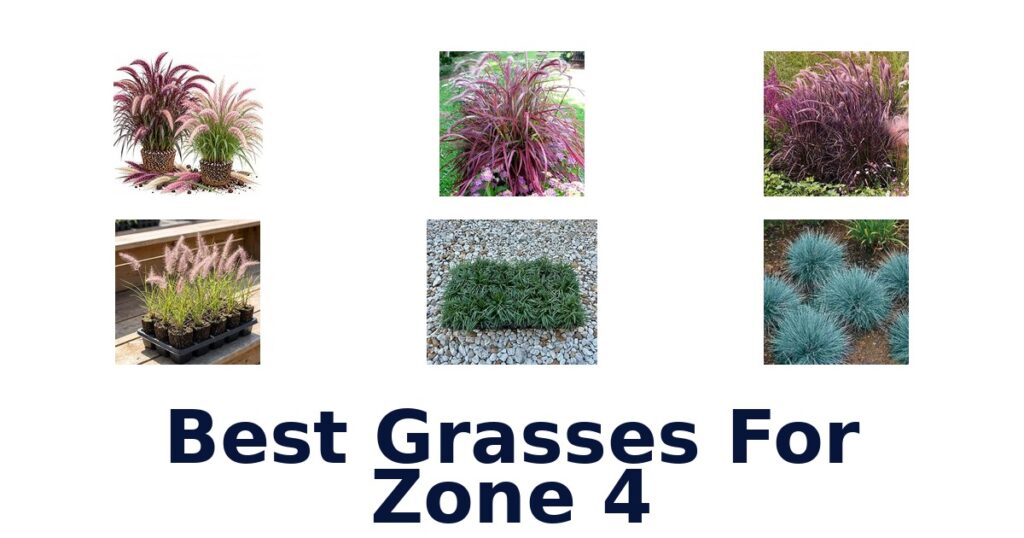

A strong grass for zone 4 needs a stated hardiness range that includes zone 4 and a form suited to your space, whether that means a live clump, groundcover, or seed. Calamagrostis a. ‘Overdam’ Feather Reed Grass is the clearest all-around match here: its listed zones are 4–9, and it grows in full sun to part shade.
Little bluestem seed also covers zone 4, while live blue fescue is listed for zones 4–Several purple fountain grass listings are limited to zones 5–9, so they are weaker choices for exposed zone 4 gardens despite their ornamental appeal.
Use the comparisons below to separate genuine zone matches from products better suited to warmer climates or temporary lawn work.
Calamagrostis a. ‘Overdam’ Feather Reed Grass is the strongest overall choice because its listed hardiness range explicitly includes USDA zone 4 and extends through zone It also tolerates full sun to part shade and produces upright stems with gold tassels, making it useful for specimens or groupings.
For a native seed-grown option, Little Bluestem Grass Seeds cover zones 3–Blue Fescue Live Plant is another direct match, listed for zones 4–8 and supplied in a 4-inch pot.
Our Top Picks
 Best Overall
Its stated zones 4–9 directly cover zone 4, and it tolerates full sun to part shade with upright 36-inch stems and June gold tassels.
View on Amazon Best Native Seed
The native prairie bunchgrass is adapted to zones 3–9, reaches 3 feet, and offers drought tolerance plus copper fall color once established.
View on Amazon Best Live Fescue
This live plant is explicitly hardy in zones 4–8 and arrives in a 4-inch pot for borders, rock gardens, edging, or containers.
View on Amazon- Best Zone-4 Pair AVERAR Purple Ornamental Grass
- Best Shade Groundcover Dwarf Mondo Grass
Compare These Grasses by Type and Growing Use
| # | Product | Care Instructions | Buy |
|---|---|---|---|
| 1 | 1. Overdam Feather Reed GrassBest Overall | Full Sun, Part Shade. Moderate Watering…. | View on Amazon |
| 2 | 2. Little Bluestem SeedsBest Native Seed | Direct sow late fall to early spring. Cold… | View on Amazon |
| 3 | 3. Blue Fescue Live PlantBest Live Fescue | — | View on Amazon |
| 4 |  4. AVERAR Purple Ornamental GrassBest Zone-4 Pair | — | View on Amazon |
| 5 |  5. Dwarf Mondo GrassBest Shade Groundcover | Plant 4 to 6 in apart in partial shade to… | View on Amazon |
| 6 |  6. Cheryl's Blue Fescue SeedsBlue fescue seed for flexible exposure | Water | View on Amazon |
| 7 |  7. KLTHD Purple Fountain GrassSunny purple fountain grass borders | — | View on Amazon |
| 8 |  8. KLTHD Purple Fountain GrassPurple grass for sunny containers | — | View on Amazon |
| 9 |  9. TANKDA Mixed Fountain GrassSunny container and border gardens | — | View on Amazon |
| 10 |  10. Pennington Annual RyegrassTemporary lawn overseeding and repair | Water | View on Amazon |
Detailed Reviews: Best Grasses For Zone 4
#1 · Best Overall
1. Overdam Feather Reed Grass
- Care Instructions: Full Sun, Part Shade. Moderate Watering….
Best for: Zone 4 upright garden structure.
Why it ranks #1: Its stated zones 4–9 directly cover zone 4, and it tolerates full sun to part shade with upright 36-inch stems and June gold tassels.
Overdam combines narrow foliage with white variegation and rigidly erect stems bearing gold tassels in June, giving zone 4 gardens a defined vertical accent. Its listed hardiness spans zones 4–9, and its full-sun to part-shade tolerance offers more placement flexibility than a full-sun-only grass.
The foliage reaches about 12 inches, while the flower stems rise to 36 inches, creating a clear height contrast for a specimen planting or grouped display. Gold tassels appear in June, adding seasonal interest without requiring the grass to serve as a groundcover. Planting 30 inches apart gives the upright clumps room in borders, and the full-sun to part-shade guidance accommodates more than one exposure. Moderate watering is listed for care; the product is also described as deer resistant.
- Hardy in USDA zones 4–9
- White-variegated foliage and gold tassels
- Erect stems reach 36 inches, with tassels appearing in June
- Grows in full sun to part shade and is listed as deer resistant
- Requires 30 inches between plants, so dense spacing is not the listed plan.
Skip it if you need a very low, evergreen carpet for shade; Generic Dwarf Mondo Grass stays 2–4 inches tall and suits partial shade.
A good fit for zone 4 gardeners seeking upright structure, variegated leaves, and June flowers in a specimen or grouped planting. Allow the listed 30-inch spacing, and choose a sunnier or partly shaded site.
Full product details
| Brand | Perennial Farm Marketplace |
|---|---|
| Color | Variegated Foliage Yellow Spikes |
| Manufacturer | Perennial Farm Marketplace |
| Material Feature | Organic |
| Material Features | Organic |
| Model Number | Calamagrostis a. 'Overdam' |
| Special Features | Deer Resistant |
| Care Instructions | Full Sun, Part Shade. Moderate Watering. Plant 30 inches apart. |
| Special Feature | Deer Resistant |
Listed on Amazon as: Calamagrostis a.‘Overdam’ (Feather Reed Grass) Live Perennial, Size-#1 Container, Golden Summer Flower Spikes with Variegated Foliage, Zones 4-9
View on Amazon#2 · Best Native Seed
2. Little Bluestem Seeds
- Care Instructions: Direct sow late fall to early spring. Cold…
Best for: Native prairie seed for sunny sites.
Why it ranks #2: The native prairie bunchgrass is adapted to zones 3–9, reaches 3 feet, and offers drought tolerance plus copper fall color once established.
Little bluestem seed brings a North American native bunchgrass into gardens across zones 3–9, including zone 4. It offers blue-green summer foliage, copper fall color, and a mature height of about 3 feet, giving seed growers seasonal interest alongside a listed benefit for pollinators and grassland birds.
The product is a seed pack, so it suits gardeners prepared to sow and establish plants rather than those seeking an immediate live clump. Direct sowing is advised from late fall to early spring, with 30 days of cold stratification listed in the care instructions. Once established, the grass is described as drought-tolerant and able to thrive in extreme heat and poor soils. Its approximately 3-foot height and copper fall color can add seasonal structure, while the listing identifies support for native bees, butterflies, and grassland birds.
- Adapted to USDA zones 3–9, including zone 4
- North American native ornamental bunchgrass
- Blue-green summer foliage and copper fall color; reaches about 3 feet
- Listed as drought-tolerant and pollinator-friendly once established
- Requires 30 days of cold stratification according to the care instructions.
Skip it if you want an established live plant rather than seed; Generic Blue Fescue arrives as a live plant in a 4-inch pot.
A fit for zone 4 gardeners who want to grow native bunchgrass from seed and can follow the listed sowing and stratification steps. Leave room for a grass reaching about 3 feet and expect its benefits after establishment.
Full product details
| Brand | SURVIVAL GARDEN SEEDS |
|---|---|
| Color | Multicolor |
| Manufacturer | JD Hardware LLC |
| Part Number | SGSBunchgrassLittleBluestem-1 |
| Material Feature | GMO Free, Heirloom |
| Material Features | GMO Free, Heirloom |
| Special Features | Attracts Pollinators, Deer Resistant, Disease Resistant, Drought Tolerant, Low Maintenance |
| Care Instructions | Direct sow late fall to early spring. Cold stratify for 30 days by mixing with moist sand and refrigerating. Sow 1/4 inch deep. Keep moist until sprouted, then thin to 12-24". Our professionally designed packets provide precise instructions for planting depth, soil temperature, sunlight requirements |
| Special Feature | Attracts Pollinators, Deer Resistant, Disease Resistant, Drought Tolerant, Low Maintenance |
Listed on Amazon as: Little Bluestem Grass Seeds (1 Pack) – Survival Garden Seeds
View on Amazon#3 · Best Live Fescue
3. Blue Fescue Live Plant
Best for: Compact blue-fescue garden accents.
Why it ranks #3: This live plant is explicitly hardy in zones 4–8 and arrives in a 4-inch pot for borders, rock gardens, edging, or containers.
This live blue fescue arrives in a 4-inch pot, making it a practical starting size for edging, rock gardens, and containers. Its listed USDA range of zones 4–8 includes zone 4, while full sun to partial shade allows placement across a range of garden exposures.
The 4-inch pot provides a contained live plant to position along an edge or among rocks, rather than a packet of seed to sow. Blue foliage supplies the listed color, and the plant is suited to borders, edging, rock gardens, and containers. It prefers well-draining soil and tolerates full sun to partial shade, giving buyers clear placement guidance. Once established, the listing says it needs minimal watering and very little care, which supports a lower-maintenance planting routine.
- Live blue fescue in a 4-inch pot
- Listed hardy in USDA zones 4–8
- Suitable for borders, rock gardens, edging, and containers
- Needs minimal watering and little care once established
- Requires well-draining soil, which limits suitability for persistently wet planting spots.
Skip it if you want seed rather than a potted live plant; CHERYL'S UNIQUE FLOWER SEEDS Blue Fescue is sold as seeds.
Choose this potted blue fescue for zone 4 edging, rock gardens, or containers when a live, compact start suits your project. Its preference for well-draining soil matters; avoid placing it where soil stays wet.
Full product details
| Brand | Generic |
|---|---|
| Color | Blue |
| Manufacturer | Generic |
| Part Number | Be-SM1-nancy-bluegrass |
| Special Features | Low Maintenance |
| Special Feature | Low Maintenance |
Listed on Amazon as: Blue Fescue Live Plant, Outdoor Landscape Grass, 4 Inch Pot
View on Amazon#4 · Best Zone-4 Pair
4. AVERAR Purple Ornamental Grass
Best for: Two purple starts for zone 4 gardens.
Why it ranks #4: The listing describes two live purple ornamental grass plants as hardy for zones 4–9, although it provides fewer growing details than higher-ranked options.
AVERAR supplies two live purple fountain grass seedlings, each about 5–9 inches tall, and lists them as hardy in zones 4–9. That stated range includes zone 4, making this a relevant option for gardeners seeking live ornamental grass starts rather than seed.
With two live seedlings included, buyers can plan a small grouping or place plants in separate garden areas, subject to their available space. The listed 5–9-inch starting height provides a sense of their arrival size, while the purple fountain style identifies the ornamental look. Most notably for this roundup, the supplied facts state hardiness in zones 4–9. The listing does not provide specific light, soil, watering, or spacing instructions, so placement and care planning have less supplied guidance than for some alternatives.
- Includes two live ornamental grass seedlings
- Purple Fountain style
- Plants are about 5–9 inches tall
- Listed as hardy in zones 4–9, including zone 4
- Specific light, soil, watering, and spacing guidance is not provided in the supplied details.
Skip it if you need detailed care and spacing instructions; Perennial Farm Marketplace Overdam lists light, watering, and 30-inch spacing guidance.
Consider this pair if zone 4 hardiness and purple fountain-style live starts are your main criteria. The listing gives a height and hardiness range but little care guidance, so gardeners seeking detailed placement instructions may prefer a better-specified option.
Full product details
| Brand | AVERAR |
|---|---|
| Color | Mix |
| Manufacturer | Averar |
| Style | Purple Fountain |
| Style Name | Purple Fountain |
Listed on Amazon as: 2 Purple Ornamental Grass Perennial Live Plants, Grass Plant, 5-9 Inch Tall
View on Amazon#5 · Best Shade Groundcover
5. Dwarf Mondo Grass
- Care Instructions: Plant 4 to 6 in apart in partial shade to…
Best for: Low evergreen cover for shady paths.
Why it ranks #5: Eighteen 3-inch pots form a tidy, evergreen 2–4-inch groundcover for partial shade, but the listing does not state a USDA hardiness range.
Eighteen dwarf mondo grass plants arrive in 3-inch pots, ready for a low planting between stepping stones, along walkways, or around trees. Their dark green leaves form a 2–4-inch-tall evergreen carpet that needs no mowing, offering a tidy groundcover option for partial shade.
The 18 live plants are supplied together in a tray, giving buyers multiple starts for a groundcover layout rather than a single specimen. Planting them 4–6 inches apart supports the listed use between pavers and along borders as the slow-spreading clumps fill in. The plants stay green all year and reach only 2–4 inches tall, so they suit low-cover areas without mowing. Partial shade to morning sun and well-drained soil are specified, with shade-loving and drought-tolerant traits also listed.
- Includes 18 live plants in 3-inch pots
- Evergreen dark green foliage stays 2–4 inches tall
- Suitable between pavers, along walkways, and in shady areas
- No mowing; listed as deer resistant and drought tolerant
- Slow-spreading, so filling a groundcover area takes time.
Skip it if you need a grass that quickly fills a large area; slow-spreading dwarf mondo is not the listed fast-fill option.
Choose this pack for a low, evergreen planting between pavers, along paths, or in partial shade. It suits gardeners who can use the 4–6-inch spacing and allow slow-spreading clumps time to fill in.
Full product details
| Brand | Generic |
|---|---|
| Color | Dark Green |
| Item Weight | 10 pounds |
| Manufacturer | Roger's Plant Nursery |
| Material Feature | Deer Resistant, Drought Tolerant, Evergreen, Shade Loving |
| Material Features | Deer Resistant, Drought Tolerant, Evergreen, Shade Loving |
| Special Features | Deer Resistant, Drought Tolerant, Evergreen, Low Maintenance, Shade Resistant |
| Care Instructions | Plant 4 to 6 inches apart in partial shade to morning sun, in well-drained soil. Water regularly the first season until roots are established, then water during dry spells. No mowing needed. |
| Special Feature | Deer Resistant, Drought Tolerant, Evergreen, Low Maintenance, Shade Resistant |
Listed on Amazon as: Dwarf Mondo Grass, 18 Pack of 3 Inch Pots, 2-4 Inches Tall
View on Amazon#6
6. Cheryl's Blue Fescue Seeds
- Care Instructions: Water
Best for: Blue fescue seed for flexible exposure.
Why it ranks #6: This perennial blue fescue seed is described as drought tolerant and 10–12 inches tall, but its listing gives no USDA zone range.
This listing offers 50 or more blue fescue seeds for gardeners who want to raise perennial grass rather than start with a live plant. The supplied features describe drought tolerance and suitability for full sun or full shade, with mature plants growing about 10–12 inches tall.
A seed format gives growers control over where to sow, while the listed 10–12-inch mature height helps with planning borders or smaller ornamental groupings. The product describes the perennial as drought-tolerant and low maintenance, and says it thrives on neglect. Its stated exposure range spans full sun to full shade, offering flexibility for garden placement. The care instruction is simply to water, but the supplied details do not specify a USDA hardiness zone, so zone 4 suitability is not confirmed here.
- 50 or more blue fescue seeds
- Perennial and listed as drought tolerant
- Stated to grow in full sun or full shade
- Listed mature height is 10–12 inches
- No USDA hardiness zone is specified in the supplied product details.
Skip it if you need a stated zone 4 hardiness range; Generic Blue Fescue in a 4-inch pot is listed for zones 4–8.
A fit for seed growers seeking blue fescue with flexible sun-or-shade placement and a modest listed height. Because no USDA zone is supplied, zone 4 gardeners should treat hardiness as unconfirmed rather than assume it.
Full product details
| Brand | CHERYL'S UNIQUE FLOWER SEEDS |
|---|---|
| Color | Blue, Green |
| Manufacturer | CHERYL'S UNIQUE FLOWER SEEDS |
| Care Instructions | Water |
Listed on Amazon as: 50+ Blue Fescue Ornamental Grass/Perennial Festuca/Drought Tolerant/Sun or Shade
View on Amazon#7
7. KLTHD Purple Fountain Grass
Best for: Sunny purple fountain grass borders.
Why it ranks #7: The live plant is 4–8 inches tall and suited to sunny borders, but its stated zones 5–9 exclude zone 4.
This single purple fountain grass plant arrives 4–8 inches tall, offering a live start for a sunny border or walkway. Its care guidance specifies at least six hours of direct sun daily and regular watering during the first growing season, while its listed USDA range is zones 5–9.
The compact live plant is suited to borders and walkway landscaping, where its listed purple color can provide an ornamental accent as it grows. A site receiving at least six hours of direct sunlight daily is specified for maintaining its fountain shape. Well-draining soil is preferred, and regular watering during the first growing season supports establishment of the root system. The USDA range is zones 5–9, however, so the supplied facts do not establish zone 4 hardiness for this plant.
- One live plant, about 4–8 inches tall
- Purple ornamental grass for sunny borders and walkways
- At least six hours of direct sun specified daily
- Care guidance calls for well-draining soil and regular first-season watering
- Listed for USDA zones 5–9, not zone 4.
Skip it if you need a fountain grass listed for zone 4; AVERAR Purple Fountain is stated to suit zones 4–9.
This is an option for a sunny border or walkway where a small purple live start fits the plan. Its zone 5–9 listing excludes zone 4, so gardeners in zone 4 should account for that limitation.
Full product details
| Brand | KLTHD |
|---|---|
| Color | Purple |
| Manufacturer | KLTHD |
| Special Features | Low Maintenance |
| Special Feature | Low Maintenance |
Listed on Amazon as: Live Purple Fountain Grass Plant, Ornamental Grasses, 4-8 Inches Tall
View on Amazon#8
8. KLTHD Purple Fountain Grass
Best for: Purple grass for sunny containers.
Why it ranks #8: It suits sunny beds and containers and grows in well-drained soil, but the listed USDA zones 5–9 do not include zone 4.
KLTHD’s purple fountain grass is listed for garden beds, borders, rock gardens, patio containers, and raised planters, providing several ways to use a compact 4–6-inch live start. It calls for full sun and USDA zones 5–9, so its stated hardiness does not include zone 4.
The varied planting uses let gardeners place this live grass in a border, raised planter, or patio container, provided the site receives six to eight hours of direct sunlight daily. It grows in well-draining sandy, loamy, or rocky planting areas, which gives buyers more than one listed soil texture to work with. Water regularly during establishment; once established, allow the soil to dry slightly between watering sessions. Its zones 5–9 rating is a material limitation for a zone 4 roundup.
- Live purple fountain grass plant, about 4–6 inches tall
- Listed for beds, borders, rock gardens, containers, and raised planters
- Grows in sandy, loamy, or rocky well-draining soil
- Water regularly during establishment, then let soil dry slightly
- Listed for USDA zones 5–9, outside zone 4.
Skip it if you need a listed zone 4 fountain grass; AVERAR Purple Fountain is rated for zones 4–9.
This suits sunny containers, raised planters, or borders in locations within its listed hardiness range. The specified six to eight hours of sun and zone 5–9 rating are important boundaries for deciding whether it fits your garden.
Full product details
| Brand | KLTHD |
|---|---|
| Color | Purple Fountain Grass |
| Manufacturer | KLTHD |
| Special Features | Low Maintenance |
| Special Feature | Low Maintenance |
Listed on Amazon as: Purple Fountain Grass Plants, Perennial Ornamental Grasses, 4-6 Inch Tall
View on Amazon#9
9. TANKDA Mixed Fountain Grass
Best for: Sunny container and border gardens.
Why it ranks #9: Two live plants are supplied, but the stated zones 5–9 exclude zone 4 and the listing gives little additional detail for cold-climate selection.
Two mixed fountain grass plants arrive as live clumps about 4–9 inches tall, giving gardeners a ready-to-grow starting point for containers, borders, or mass plantings. Their compact size suits smaller spaces, while the listing identifies drought tolerance and low maintenance as useful traits once established in a sunny garden.
TANKDA lists these plants for full sun and regular watering, a straightforward combination for a bright border or patio container. Their compact, 4–9-inch starting height makes them easier to place among existing flowers than a mature, tall grass. The listing also describes them as drought-tolerant and low maintenance, which may reduce ongoing attention after establishment. However, their stated USDA range is zones 5–9, so zone 4 gardeners are outside the listed hardiness range.
- Includes two live mixed fountain grass plants
- Compact starting height of about 4–9 inches
- Suitable for borders, flower beds, mass plantings, or containers
- Listed as drought-tolerant and low maintenance
- Listed for USDA zones 5–9, outside zone 4.
Skip it if you need a grass explicitly listed for zone 4; Perennial Farm Marketplace Overdam is rated for zones 4–9.
Choose this two-plant set for sunny containers or groupings when compact live starts are the priority. Its stated zone 5–9 range is a key boundary: it does not list zone 4 hardiness, so that fit should guide selection.
Full product details
| Brand | TANKDA |
|---|---|
| Color | Mixed Foutain Grass |
| Manufacturer | TANKDA |
| Special Features | Low Maintenance |
| Special Feature | Low Maintenance |
Listed on Amazon as: 2 Mix Fountain Grass Plants, Ornamental Fast Growing Grasses, 4-8'' Tall
View on Amazon#10
10. Pennington Annual Ryegrass
- Care Instructions: Water
Best for: Temporary lawn overseeding and repair.
Why it ranks #10: This 10-pound seed is intended for temporary lawn support and winter overseeding, not a zone-rated ornamental grass for a zone 4 garden.
Pennington Annual Ryegrass is a 10-pound seed pack for fast temporary lawn cover, with listed germination in 3–7 days. Its stated uses include winter overseeding of southern warm-season lawns, bare-spot repair, and thin-lawn support, rather than a permanent ornamental grass planting.
Annual ryegrass is presented as a temporary turf option, which makes it distinct from perennial ornamental grasses in this roundup. Its quick establishment and 3–7-day germination claim support use when repairing bare spots or adding temporary cover. The listing recommends winter overseeding for southern lawns and names Bermuda, Zoysia, and other warm-season grasses as targets. It specifies 6–8 hours of full sun. For permanent northern lawns, the described role is thin-grass support, not a permanent replacement.
- 10-pound pack of annual ryegrass seed
- Listed germination time is 3–7 days
- Suitable for bare-spot repair and temporary thin-lawn support
- For winter overseeding Bermuda, Zoysia, and other warm-season lawns
- Annual ryegrass is described as temporary cover, not a permanent lawn grass.
Skip it if you want permanent ornamental bunchgrass rather than temporary turf; SURVIVAL GARDEN SEEDS Little Bluestem is a perennial seed option.
Choose this seed for temporary overseeding, bare patches, or thin-lawn support where its listed sun exposure and annual role fit. It is not a permanent ornamental grass, so consider the intended duration before sowing.
Full product details
| Brand | Pennington |
|---|---|
| Color | Green |
| Container Material | Plastic |
| Item Weight | 10 pounds |
| Manufacturer | Central Garden & Pet |
| Part Number | 100082632 |
| Material Feature | Grass Seed |
| Material Features | Grass Seed |
| Model Number | 100082632 |
| Special Features | Annual Ryegrass |
| Care Instructions | Water |
| Special Feature | Annual Ryegrass |
Listed on Amazon as: Pennington Annual Ryegrass, Grass Seeds for Lawn, 10 Lb
View on AmazonA zone label does not guarantee winter survival
A zone range that includes zone 4 is the best evidence in these listings, but it is not a promise that every planting will overwinter. The products offer very different kinds of evidence: Overdam Feather Reed Grass and Blue Fescue Live Plant state zone ranges that include 4, while Little Bluestem Seeds are listed for zones 3–The purple fountain grass products from KLTHD specify zones 5–9, so their ornamental appeal does not make them equivalent zone 4 choices.
AVERAR gives a zone 4–9 claim for its two purple plants, but provides fewer care details. Treat a missing zone range, as with Dwarf Mondo Grass and Cheryl’s Blue Fescue Seeds, as uncertainty rather than proof of hardiness.
Local exposure, drainage, and winter conditions can still affect whether a listed match succeeds.
Seed packets and small plants have different timelines
Seed and live-plant listings are not interchangeable when planning a finished garden. Little Bluestem Grass Seeds require sowing and establishment, while Blue Fescue Live Plant arrives in a 4-inch pot and the Overdam listing describes a #1 container perennial. The small fountain grass plants are only about 4–9 inches tall, so their listed mature display should not be confused with their shipped size.
Dwarf Mondo arrives as 18 small pots and is described as slow-spreading, which suits gradual filling between pavers but is not an instant continuous carpet. A further trap is treating Pennington Annual Ryegrass as an ornamental perennial: it is explicitly annual and intended for overseeding or temporary lawn support.
Choose seeds when you accept establishment time; choose live plants when you want a head start, while still accounting for spacing and growth.
How to Choose Grasses for Zone 4
Confirm the hardiness range
Look first for a stated USDA range that includes zone 4, rather than relying on a product name or appearance. Overdam Feather Reed Grass is listed for zones 4–9, Blue Fescue Live Plant for zones 4–8, and Little Bluestem Seeds for zones 3–AVERAR Purple Ornamental Grass also claims zones 4–9, while the KLTHD and TANKDA fountain grasses are listed for zones 5–9.
Dwarf Mondo Grass and Cheryl’s Blue Fescue Seeds do not state a zone range in the supplied details. Buyers prioritizing a clearly documented cold-climate match should favor the first three; those considering a product without a range should seek local growing guidance before planting.
Match sun and moisture to the site
Choose a grass whose listed light and watering needs fit the actual planting spot. Overdam Feather Reed Grass suits full sun to part shade and calls for moderate watering; Blue Fescue Live Plant prefers full sun to partial shade and well-draining soil. The purple fountain grass listings ask for full sun, with one specifying at least six hours daily and another 6–8 hours.
Little Bluestem is described as drought tolerant once established and suited to poor soils, while Dwarf Mondo is intended for partial shade to morning sun. A sunny, dry border points toward Little Bluestem or fescue; a partly shaded planting favors Overdam or Dwarf Mondo, though the latter has no stated zone range.
Decide between seed, single plants, and multiples
The supplied quantity and form determine how quickly and broadly you can plant. Little Bluestem and Cheryl’s Blue Fescue are seed options, so they require sowing and establishment rather than providing an already-rooted clump. Blue Fescue Live Plant comes in one 4-inch pot, Overdam is listed in a #1 container, and several fountain grass products are small live plants around 4–9 inches tall.
Dwarf Mondo supplies 18 plants in 3-inch pots, intended for planting 4–6 inches apart. A buyer creating a dense low edge may prefer the multiple Mondo pots, while someone filling a smaller specimen spot may prefer a single live fescue.
Seed suits gardeners willing to grow from the start.
Which Zone 4 Grass Should You Choose?
Choose Overdam Feather Reed Grass if you want the strongest documented match: its zones 4–9 range, part-shade tolerance, and upright gold-tasseled stems suit a specimen or grouped planting. For a native, drought-tolerant option started from seed, choose Little Bluestem Seeds, listed for zones 3–9 and reaching 3 feet. Blue Fescue Live Plant is the straightforward choice for a smaller, ready-to-plant border or rock garden, with a stated 4–8 range.
AVERAR Purple Ornamental Grass offers two plants and a stated 4–9 range, but less growing guidance. For shady stepping-stone gaps, Dwarf Mondo Grass supplies 18 low plants, though its zone range is unspecified.
Avoid the zone 5–9 fountain grasses for an unprotected zone 4 planting, and reserve Pennington Annual Ryegrass for temporary lawn use.
Frequently Asked Questions
Will ornamental grasses survive winter in zone 4 without extra protection?
Some listed grasses have a stated range that includes zone 4, including Overdam Feather Reed Grass, Blue Fescue Live Plant, Little Bluestem Seeds, and AVERAR Purple Ornamental Grass. That range is the clearest guide here, but winter survival can vary by plant and site. The listed zone 5–9 fountain grasses are not suitable for an unprotected zone 4 planting.
When should I plant ornamental grass seeds or live plants in zone 4?
Plant live grasses after the ground is workable and severe frost is no longer expected; this gives them time to establish before winter. For seed, follow the packet’s sowing directions and local frost timing. The listed products do not provide specific planting dates, so check the seed instructions and choose a suitable local planting window.
How far apart should I space ornamental grasses for a finished border?
Use the plant’s expected mature width to set spacing, leaving enough room for each clump while allowing foliage to meet as it fills in. The supplied listings do not give mature widths or spacing directions, so check the selected plant’s care information before planting; avoid assuming that pot size indicates finished spacing.
Which listed grasses are direct matches for zone 4?
The clearest stated matches are Overdam Feather Reed Grass, listed for zones 4–9; Blue Fescue Live Plant, listed for zones 4–8; Little Bluestem Seeds, listed for zones 3–9; and AVERAR Purple Ornamental Grass, listed for zones 4–The Dwarf Mondo listing does not specify a zone range.
Should I choose seeds or a live grass plant?
Choose Little Bluestem Seeds if you want a native, drought-tolerant option started from seed; its stated range is zones 3–9 and it can reach 3 feet. Choose a live plant for a ready-to-plant option, such as Blue Fescue for a smaller border or rock garden. The listings do not provide seed germination details.
Final Words
For the strongest documented zone 4 choice, select Overdam Feather Reed Grass: its stated zones 4–9 range, part-shade tolerance, and upright gold-tasseled stems suit a specimen or grouping. Choose Little Bluestem Seeds for a native, drought-tolerant seed-grown planting, or Blue Fescue Live Plant for a smaller ready-to-plant border or rock garden. Treat zone 5–9 fountain grasses as unsuitable for unprotected zone 4 use, and reserve annual ryegrass for temporary lawn use.