
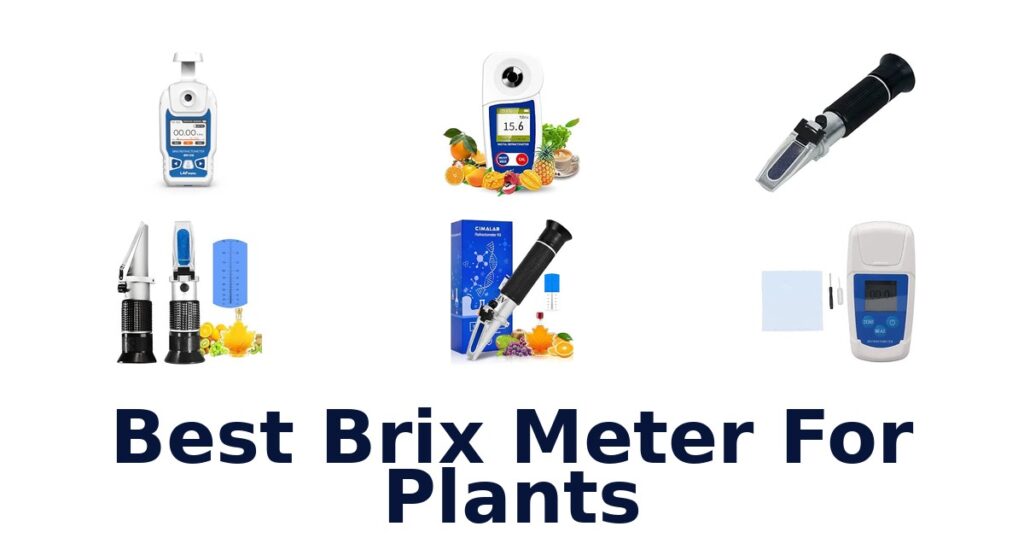

A strong Brix meter for plants should measure the sugar concentration relevant to your samples, with a range and reading format that suit your routine. The TEKCOPLUS 0–32% model is a focused choice for checking growing-plant ripeness, while the Gavigain digital meter specifically names plants and offers a wider stated range. Other options extend to 80% or 90% Brix for varied fruit, crop, and sugary-liquid testing.
This roundup compares all 10 products using their stated plant or agricultural fit, Brix range, temperature compensation, and form factor. A key distinction is whether you want a simple handheld optical tool or a digital display: the data provided supports both formats, but does not establish that one is more accurate in practice.
The TEKCOPLUS 0–32% Brix Refractometer is the leading choice for plant ripeness checks because its product title specifically identifies growing-plant ripeness and its 0–32% range targets lower-to-moderate Brix readings. It also lists ATC and 0.2% division. If you prefer a digital display or need a broader range, consider the Gavigain Digital Brix Refractometer, which names plants and lists a 0–55% range, or the CIMALAB 0–90% Refractometer for wider crop and plant applications.
Our Top Picks
 Best Overall
Its title specifically mentions checking growing-plant ripeness, and the 0–32% Brix range, ATC, and 0.2% division suit focused readings.
View on Amazon Best Digital Option
Gavigain Digital Refractometer
It explicitly names plants and offers a digital display, automatic calibration, temperature compensation, and a stated 0–55% Brix range.
View on Amazon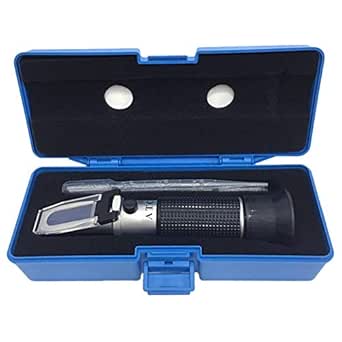 Best Gardening Fit
aichose Dual-Scale Refractometer
Its listed uses include agriculture and gardening, while the 0–32% Brix scale and 1.000–1.120 specific-gravity scale add versatility.
View on Amazon- Widest Plant Range CIMALAB 0–90% Refractometer
- Data Export LAFMATE Digital Brix Meter
Compare Brix Refractometers for Plant and Crop Readings
| # | Product | Weight | Buy |
|---|---|---|---|
| 1 | 1. TEKCOPLUS 0–32% RefractometerBest Overall | 11.3 oz | View on Amazon |
| 2 | 2. Gavigain Digital RefractometerBest Digital Option | — | View on Amazon |
| 3 | 3. aichose Dual-Scale RefractometerBest Gardening Fit | 3.7 oz | View on Amazon |
| 4 |  4. CIMALAB 0–90% RefractometerWidest Plant Range | 9.1 oz | View on Amazon |
| 5 |  5. LAFMATE Digital Brix MeterData Export | 3.84 oz | View on Amazon |
| 6 |  6. aichose 0–80% RefractometerWide-range garden sample checks | 8.8 oz | View on Amazon |
| 7 |  7. V·RESOURCING 0–90% RefractometerPortable wide-range field checks | 6.4 oz | View on Amazon |
| 8 |  8. NANBEI 0–80% RefractometerHigh-range sugar-content testing | 11.5 oz | View on Amazon |
| 9 |  9. Flagfront Digital RefractometerQuick digital crop comparisons | 5.6 oz | View on Amazon |
| 10 |  10. KiyHemo Dual-Scale RefractometerGrowers who also brew | 4.9 oz | View on Amazon |
Detailed Reviews: Best Brix Meter For Plants
#1 · Best Overall
1. TEKCOPLUS 0–32% Refractometer
- Weight: 11.3 oz
Best for: Ripeness checks on a 32% scale.
Why it ranks #1: Its title specifically mentions checking growing-plant ripeness, and the 0–32% Brix range, ATC, and 0.2% division suit focused readings.
A 0–32% Brix range and 0.2% division make this TEKCOPLUS refractometer a focused option for checking growing-plant ripeness. Its title specifically identifies ripeness checks, linking the sugar-content reading to a practical harvest decision rather than only brewing or beverage work.
The 0–32% range keeps the measurement focused on lower-to-moderate Brix samples, while the stated 0.2% division identifies the scale’s increments. ATC is included, which supports readings when sample temperatures differ. The product also names juice, brandy, and beer uses, so it can carry over to processing harvested fruit. Its aluminium material and listed 11.3-ounce weight are relevant when considering handling and portability, though the supplied facts do not specify a case or included sampling accessories.
- 0–32% Brix range
- 0.2% division
- ATC included
- Plant-ripeness checking named as a use
- Its 0.2% division is coarser than a meter specified at 0.1% resolution.
Skip it if you need a digital backlit readout; the Gavigain digital refractometer lists a backlight display and 0.1% Brix resolution.
Choose this for straightforward ripeness comparisons when a 0–32% scale and 0.2% divisions suit your crop samples. Its listed uses extend to juice and brewing, but buyers seeking a digital display should look elsewhere.
Full product details
| Brand | TEKCOPLUS |
|---|---|
| Item Weight | 11.3 ounces |
| Item model number | RETK-78 |
| Manufacturer | TekcoPlus Ltd |
| Material | Aluminium |
| Dimensions | 8.27 x 2.36 x 3.54 inches |
#2 · Best Digital Option
2. Gavigain Digital Refractometer
Best for: Digital readings for garden samples.
Why it ranks #2: It explicitly names plants and offers a digital display, automatic calibration, temperature compensation, and a stated 0–55% Brix range.
A backlit display with three kinds of data display gives this Gavigain digital refractometer a clear-reading approach to plant and fruit samples. Its Brix range is listed as 0–32%/55%, and the product names plants alongside juice, drinks, and beverages.
Automatic calibration and temperature compensation support a simpler measurement routine by handling calibration and temperature-related adjustment within the instrument. The backlight display is intended to make results clearer, while the stated 0.1% Brix resolution provides fine increments for comparing readings. The product also specifies temperature measurement from 10–100°C with 0.1°C resolution, adding temperature information to the workflow. These features suit users who prefer digital readouts, though the supplied range is expressed as 0–32%/55%, not a single unambiguous range.
- Digital backlit display
- Automatic calibration
- Temperature compensation
- 0.1% Brix resolution and temperature measurement
- The listed Brix range, 0–32%/55%, is ambiguous.
Skip it if you want a clearly stated 0–55% range and ±0.1% accuracy; the Flagfront digital meter lists both.
This fits gardeners who favor a digital backlit readout, automatic calibration, and temperature information when comparing plant or fruit samples. Check the range wording against your sample needs, since the supplied specification lists 0–32%/55%.
Full product details
| Brand | Gavigain |
|---|---|
| Manufacturer | Gavigain |
Listed on Amazon as: Digital Brix Refractometer,0-55% Brix Tester for Fruit,Juice,Drink,Beverages,Suger Content Test Measurement for Sugar Solutions Food,Brix Meter for Plants
View on Amazon#3 · Best Gardening Fit
3. aichose Dual-Scale Refractometer
- Weight: 3.7 oz
Best for: Gardeners checking Brix and gravity.
Why it ranks #3: Its listed uses include agriculture and gardening, while the 0–32% Brix scale and 1.000–1.120 specific-gravity scale add versatility.
Dual Brix and specific-gravity scales let gardeners check two measures of liquid sugar content with one instrument. The aichose covers 0–32% Brix and 1.000–1.120 specific gravity, with automatic temperature compensation (ATC) to make readings easier when sample temperatures vary.
The Brix scale supports checks of liquid sugar content, while the specific-gravity scale adds a second reading relevant to brewing and winemaking. ATC helps reduce the temperature effect on testing, so users can take readings without separately accounting for sample temperature. Its lightweight chromium main part and 3.7-ounce listed weight support carrying it between garden and homebrew tasks. The maker also lists gardening and agricultural use, making this a cross-purpose option rather than a plants-only meter.
- Measures 0–32% Brix
- Also measures specific gravity from 1.000 to 1.120
- ATC helps with temperature variation
- Lightweight chromium main part
- The Brix range stops at 32%, limiting tests of more concentrated samples.
Skip it if you need readings above 32% Brix; the aichose SR0028BE covers a wider 0–80% range.
A gardener who also makes wine or beer can use the dual scales for plant-related liquid checks and brewing measurements. Choose another meter if your samples may exceed 32% Brix or you need a digital display.
Full product details
| Brand | aichose |
|---|---|
| Item Weight | 3.7 ounces |
| Item model number | COMINHKPR124469 |
| Manufacturer | Xindacheng |
| Dimensions | 7 x 1.5 x 1.5 inches |
Listed on Amazon as: Brix Refractometer with ATC, Dual Scale – Specific Gravity & Brix, Hydrometer in Wine Making and Beer Brewing, Homebrew Kit
View on Amazon#4 · Widest Plant Range
4. CIMALAB 0–90% Refractometer
- Weight: 9.1 oz
Best for: Broad-range crop and syrup checks.
Why it ranks #4: The product description specifically includes crops and plants, and its 0–90% range accommodates a wider spread of sugar concentrations.
A 0–90% Brix range gives the CIMALAB refractometer room to cover crop samples as well as concentrated liquids such as honey and maple syrup. Its listed uses explicitly include sugar content in crops and plants, making it a broad-range option for growers.
The wide Brix span supports measurements across plant and crop samples alongside fruit juice, soft drinks, wine, and syrup-related liquids named by the product. ATC is included, helping account for temperature changes during use. That combination can suit growers who also process harvests or check sugary liquids outside the garden. The supplied facts do not specify a digital display or a measurement resolution, so buyers focused on readout format or finer increments should weigh those unknowns against the broad range.
- 0–90% Brix range
- Plant and crop sugar testing named
- ATC included
- Also lists fruit juice, wine, and maple syrup uses
- No measurement resolution is stated in the supplied specifications.
Skip it if you need a specific-gravity reading alongside Brix; the KiyHemo KH-RZ lists both Brix and SG.
This suits growers who want one broad-range instrument for crop samples and other sugary liquids, with ATC included. The supplied information does not state resolution, so it may not fit buyers who require a specified increment.
Full product details
| Brand | CIMALAB |
|---|---|
| Item Weight | 9.1 ounces |
| Item model number | Honey refractometer |
| Manufacturer | CIMALAB |
| Package Dimensions | 8.27 x 3.58 x 2.32 inches |
#5 · Data Export
5. LAFMATE Digital Brix Meter
- Weight: 3.84 oz
Best for: Growers keeping digital records.
Why it ranks #5: Its description names agriculture and orchard applications; the digital unit stores up to 200 records and measures from 0–95% Brix.
Storage for up to 200 readings and data-file export make the LAFMATE BM-220 especially relevant to growers who track Brix measurements over time. Its 0–95% range and two-second readings support a wide span of sugar checks with quick results.
The record storage and export functions can help organize repeated orchard or agriculture measurements, while the smart menu includes Brix reference values for dozens of fruits. A 0–95% range, 0.05% resolution, and stated ±0.2% accuracy give buyers specific measurement limits to consider. Readings arrive in two seconds, and the unit is rechargeable with ATC. The manufacturer cautions that pure honey, especially mature or crystallized honey, is too viscous; low-viscosity honey water is the stated suitable form.
- 0–95% Brix range
- Stores up to 200 readings and exports data files
- 0.05% resolution and ±0.2% accuracy
- Rechargeable, with ATC and two-second readings
- Pure, mature, or crystallized honey is too viscous for reliable direct measurement.
Skip it if you need to test pure mature honey directly; the LAFMATE instructions specify low-viscosity honey water instead.
This suits growers and orchard users who want fast Brix readings plus records they can export and review. Its broad range and fruit references support tracking, but direct testing of viscous pure honey is outside its stated fit.
Full product details
| Brand | LAFMATE |
|---|---|
| Item Weight | 3.84 ounces |
| Item model number | BM-220 |
| Manufacturer | LAFMATE |
| Dimensions | 4.8 x 2.4 x 1.5 inches |
Listed on Amazon as: 0–95% Digital Brix Meter, Rechargeable Refractometer with ATC & Data Export
View on Amazon#6
6. aichose 0–80% Refractometer
- Weight: 8.8 oz
Best for: Wide-range garden sample checks.
Why it ranks #6: This handheld ATC model is designed for fruit and other sugary samples, with a broad 0–80% scale and included case and pipettes.
A 0–80% Brix range gives this aichose refractometer room to measure samples beyond the lower ranges common to plant checks. It targets sugar content in fruit and other sugary liquids, while automatic temperature compensation helps minimize temperature’s effect on results.
The broad range can accommodate fruit samples and concentrated sugary liquids, so it suits growers comparing varied crops as well as users measuring honey or maple syrup. The instrument needs no battery, which keeps field use independent of charging or replacement cells. Its included firm case, cleaning cloth, screwdriver, pipettes, and manual provide storage and basic sampling and care accessories. ATC is intended to minimize temperature effects, though the product’s stated purpose is sugar-content measurement, not a dedicated plant-health reading.
- 0–80% Brix measurement range
- ATC minimizes temperature effects
- No battery required
- Includes case, cleaning cloth, screwdriver, and pipettes
- It reports sugar content, not a broader set of plant or soil measurements.
Skip it if you need a specific-gravity scale for brewing; the aichose COMINHKPR124469 includes Brix and specific gravity.
This suits growers who want a portable sugar-content check across fruit samples and other sugary liquids, with no battery-dependent workflow. It is not a general plant diagnostic tool, and the listed measurement is Brix.
Full product details
| Brand | aichose |
|---|---|
| Included Components | Refractometer, Firm Box, Cleaning Cloth, Screwdriver, User Manual, Pipettes |
| Item Weight | 8.8 ounces |
| Manufacturer | XDC Co,.Ltd. |
| Model | SR0028BE |
| Model Number | SR0028BE |
Listed on Amazon as: 0-80% Brix Meter Refractometer for Measuring Sugar Content in Fruit, Honey, Maple Syrup and Other Sugary Drink, with Automatic Temperature Compensation Function
View on Amazon#7
7. V·RESOURCING 0–90% Refractometer
- Weight: 6.4 oz
Best for: Portable wide-range field checks.
Why it ranks #7: Its listed fruit and food uses offer some relevance to plant samples, and the 0–90% range and 10–30°C ATC span are specified.
A 0–90% Brix scale and compact handheld format make the V·RESOURCING refractometer suited to checking sugar content across fruit and other sugary samples. ATC operates over 10–30°C, while the included case supports carrying and storing the instrument.
The wide range covers sugar-density measurements in fruit, food, beverages, and honey, all listed uses that can complement crop checks. Its handheld form and compact listed dimensions of 3.18 x 1.3 x 2.17 inches support portable use, while the plastic case provides a storage option. The supplied pipette, screwdriver, and cloth support sampling and basic upkeep. ATC is specified for 10–30°C, so buyers working outside that temperature interval should account for the stated boundary.
- 0–90% Brix range
- ATC specified for 10–30°C
- Compact handheld format
- Includes case, pipette, screwdriver, and cloth
- ATC is specified only for temperatures from 10°C to 30°C.
Skip it if you need a range extending above 90% Brix; the LAFMATE BM-220 measures up to 95%.
This fits growers who want a portable, broad-range Brix check for fruit and other sugary samples, with storage and sampling accessories included. Its stated ATC interval is 10–30°C, a relevant boundary for field conditions.
Full product details
| Brand | V·RESOURCING |
|---|---|
| Item Weight | 6.4 ounces |
| Item model number | VLT032 |
| Manufacturer | V·RESOURCING |
| Dimensions | 3.18 x 1.3 x 2.17 inches |
Listed on Amazon as: 0-90% Brix Meter Refractometer,V·RESOURCING Portable Hand Held Sugar Content Measurement for Sugar, Food, Fruit, Beverages Honey
View on Amazon#8
8. NANBEI 0–80% Refractometer
- Weight: 11.5 oz
Best for: High-range sugar-content testing.
Why it ranks #8: It supplies a broad 0–80% Brix range, but the provided details do not establish a specific plant, crop, or gardening use.
The listed 0–80% Brix range is the key point for growers considering this NANBEI refractometer for sugar-content checks. That span reaches beyond the 32% range of some plant-oriented meters, offering room for samples with higher measured sugar concentrations.
NANBEI identifies the instrument as a Brix meter and refractometer, with the title specifying sugar measurement and the supplied model number HB-118. The 0–80% range is the only measurement specification supplied, so buyers can judge its span but not a stated resolution, temperature-compensation feature, or digital display. Its listed package dimensions are 8.43 x 3.5 x 2.32 inches and weight is 11.5 ounces, useful details when planning storage or carrying it between sampling locations.
- 0–80% Brix range
- Identified for sugar measurement
- Refractometer format
- Listed model number HB-118
- The supplied specifications do not state resolution or temperature compensation.
Skip it if you require listed ATC for changing sample temperatures; the CIMALAB 0–90% refractometer specifies ATC.
Consider this if the 0–80% range is the main requirement for sugar-content checks and the limited specification detail is acceptable. Buyers who need documented resolution or temperature compensation should choose a meter with those facts stated.
Full product details
| Brand | NANBEI |
|---|---|
| Item Weight | 11.5 ounces |
| Item model number | HB-118 |
| Manufacturer | NANBEI |
| Package Dimensions | 8.43 x 3.5 x 2.32 inches |
Listed on Amazon as: 0-80% Brix Meter Refractometer,brix Meter,Refractometer Sugar
View on Amazon#9
9. Flagfront Digital Refractometer
- Weight: 5.6 oz
Best for: Quick digital crop comparisons.
Why it ranks #9: Its 0–55% range, stated ±0.1% accuracy, and IP58 body are useful specifications, but the supplied description does not mention plant testing.
Readings displayed in about three seconds make the Flagfront digital refractometer a quick option for repeated crop-sample checks. Its 0–55% range and stated ±0.1% accuracy give growers a defined span and accuracy figure for measuring sugar content.
Two-button operation keeps the measurement sequence simple, while the roughly three-second result time helps users move through multiple samples without a lengthy readout process. Automatic temperature compensation is stated to keep the same liquid’s measured value consistent across temperatures. The stainless-steel sample tank is easy to clean, and the sealed body has an IP58 waterproof rating, both useful for routine sample handling and cleanup. This is a digital Brix-focused choice; the supplied facts do not list a specific-gravity scale.
- 0–55% Brix range
- ±0.1% stated accuracy
- Results in about three seconds with two buttons
- IP58 sealed body and easy-clean stainless-steel sample tank
- It provides Brix measurement, with no specific-gravity scale listed.
Skip it if you need Brix and specific gravity together; the aichose COMINHKPR124469 lists both scales.
This fits growers who want quick digital comparisons, a stated accuracy figure, and straightforward sample-tank cleanup. Its 0–55% span suits many crop checks, but it is not the choice when a gravity reading is also needed.
Full product details
| Brand | Flagfront |
|---|---|
| Item Weight | 5.6 ounces |
| Manufacturer | Tianjin Lookout Photoelectric Technology Co., Ltd. |
| Package Dimensions | 5.75 x 3.86 x 2.05 inches |
Listed on Amazon as: Digital Brix Refractometer with 0-55% Range, ±0.1% Accuracy
View on Amazon#10
10. KiyHemo Dual-Scale Refractometer
- Weight: 4.9 oz
Best for: Growers who also brew.
Why it ranks #10: Its 0–32% Brix scale is relevant in isolation, but the listing says it is for Brix and gravity only and not for several other sample types.
Dual readings of 0–32% Brix and 1.000–1.130 specific gravity give the KiyHemo refractometer a useful crossover from plant samples to brewing. ATC and a no-power-required workflow support quick sugar and malt-density checks using just one or two drops.
The Brix scale measures sugar content, while the specific-gravity scale adds a brewing-oriented reading; together, they make this more versatile for growers who also make beer or wine. The stated quick calibration and one-to-two-drop sampling limit the amount of liquid needed for a test. It requires no power, and the cover plate is closed before reading. The maker says to calibrate with distilled water before each use and warns that incorrect operation can cause inaccurate readings, so consistent technique matters.
- 0–32% Brix and 1.000–1.130 SG scales
- ATC included
- No power required
- Uses one or two drops per measurement
- It is explicitly not for salinity, honey, antifreeze, or animal clinical testing.
Skip it if you need readings above 32% Brix; the CIMALAB refractometer spans 0–90% Brix.
Choose this for plant-sample sugar checks when the brewing-specific-gravity scale is also useful. Its small-sample, no-power workflow is practical, but it is restricted to Brix and gravity testing and requires careful calibration.
Full product details
| Brand | KiyHemo |
|---|---|
| Item Weight | 4.9 ounces |
| Item model number | KH-RZ |
| Manufacturer | KiyHemo |
| Package Dimensions | 7.48 x 2.17 x 1.57 inches |
Why plant samples can produce misleading readings
A Brix reading can mislead if the sample is not a suitable liquid or is prepared inconsistently. These products measure sugar concentration in liquids; they do not directly assess overall plant health. The LAFMATE listing, for example, warns that pure, mature or crystallized honey can be too viscous for stable measurement, illustrating how sample texture can affect a refractometer.
Plant material may also need to be expressed into liquid before it can be placed on an optical instrument, but the supplied product details do not prescribe a plant-sampling method. Keep comparisons meaningful by using the same plant part, preparation approach, and sampling conditions each time.
Do not treat a single Brix value as a complete diagnosis. The TEKCOPLUS is explicitly described for checking growing-plant ripeness, but its listing does not claim to measure health or prescribe an ideal reading for any plant species.
Match the scale to your sample, not just the plant label
A wide Brix scale does not automatically make a meter better for every plant sample. The TEKCOPLUS and aichose dual-scale models cover 0–32% Brix, while Gavigain and Flagfront list 0–55%, and several handheld models reach 80% or 90%. LAFMATE lists 0–95%.
These spans matter if you test varied sugary liquids, but the data does not specify the expected Brix level for particular plants. The product titles also reveal a compatibility trap: KiyHemo is specifically for Brix and gravity testing and says it is not for salinity, honey, antifreeze, or animal-clinical use.
A plant user should not assume that every refractometer handles every liquid or sample type. Choose a scale that includes your intended readings, then confirm the device instructions cover the actual sample you plan to test.
How to Choose a Plant Brix Meter
Plant and crop relevance
Look first for a product description that names the plant-related task you actually have. TEKCOPLUS specifically mentions checking growing-plant ripeness; Gavigain identifies its product as a Brix meter for plants; and aichose lists agriculture and gardening among its uses. CIMALAB names crops and plants, while LAFMATE lists agriculture and orchard applications.
By contrast, some listings focus on fruit, honey, brewing, or sugary drinks without explicitly describing plant testing. If your main goal is ripeness checks, favor the products that name plants or growing-plant ripeness.
If you also test harvested fruit or orchard samples, a broader agricultural description may be useful. These listings do not provide species-specific guidance or establish a target reading for any crop.
Brix range and reading detail
Choose a Brix span that includes your likely readings, and compare the stated division or resolution where available. TEKCOPLUS and the aichose dual-scale model cover 0–32%; Gavigain and Flagfront list 0–55%; aichose, NANBEI, and CIMALAB offer ranges reaching 80% or 90%, and LAFMATE reaches 95%. TEKCOPLUS specifies 0.2% division, while Gavigain lists 0.1% Brix resolution and Flagfront states ±0.1% accuracy.
Range and resolution describe different things, so do not treat them as interchangeable. For focused plant readings within a lower span, a 0–32% option may be sufficient.
For varied fruit or highly concentrated samples, a wider-range model may better match the task, provided its instructions support that sample.
Format and temperature features
Decide whether you prefer a handheld optical scale or a digital readout, then consider the stated temperature features. TEKCOPLUS and several other handheld products list ATC; V·RESOURCING specifies automatic temperature compensation from 10°C to 30°C. Gavigain offers an HD backlight display, automatic calibration, and temperature compensation, while Flagfront lists a digital display, a result in about three seconds, and an IP58 waterproof rating.
LAFMATE adds digital records and file export, but that may be unnecessary for occasional checks. A straightforward handheld model suits users who want a portable, no-battery instrument where specified; a digital option can suit those who prefer displayed readings or record management.
Check the full instructions for calibration and operating conditions, since ATC does not remove the need to use the instrument correctly.
Which Brix Meter Should I Choose for Plants?
For a direct plant-ripeness choice, start with the TEKCOPLUS 0–32% Refractometer: it specifically names growing-plant ripeness and lists ATC and 0.2% division. Choose the Gavigain Digital Refractometer if a digital display and a stated 0–55% range better fit your workflow; its listing explicitly names plants. For gardening and agricultural use with an additional specific-gravity scale, consider the aichose Dual-Scale Refractometer.
If you test a wider range of crop or plant-related samples, the CIMALAB 0–90% Refractometer names plants and crops, while the LAFMATE Digital Brix Meter adds orchard use and 200-record storage. Select a high-range model for varied concentrations only when its instructions cover your sample.
These readings indicate sugar concentration, not overall plant health.
Frequently Asked Questions
How do I collect and prepare a plant sample for a Brix reading?
Choose a representative plant part and collect enough material to obtain a small amount of sap or juice. Avoid dirt or surface moisture, and follow the refractometer’s instructions for applying the sample. Test promptly and use the same plant part and sampling method when comparing readings over time.
Does a higher Brix reading prove that a plant is healthier?
No. A Brix reading indicates the concentration of soluble sugars in the tested sap or juice; it does not measure overall plant health. Interpret it alongside the plant’s growth, appearance, growing conditions, and other relevant observations.
Comparisons are most useful when samples are collected consistently.
How often should I calibrate a refractometer when testing plants?
Calibrate it before use and whenever the instrument’s instructions recommend, or if readings seem inconsistent. The appropriate procedure depends on the model, so use its specified calibration method and reference material. Recheck calibration when conditions or handling may have affected the instrument, rather than relying on a universal schedule.
Which Brix range should I choose for plant testing?
Choose a range that covers the readings you expect and the sample types named in the product instructions. The TEKCOPLUS 0–32% model is identified for growing-plant ripeness checks, while the Gavigain 0–55% and CIMALAB 0–90% list broader ranges and plant-related uses. Confirm suitability for your samples.
How should I clean a refractometer between plant samples?
Remove each sample after reading and clean the measuring surface as directed in the instrument’s instructions. Avoid abrasive materials or cleaning methods not approved for the device, and dry or store it as instructed. Cleaning between samples helps prevent residue from affecting later readings or mixing sample material.
Final Words
For a direct plant-ripeness choice, start with the TEKCOPLUS 0–32% refractometer: its title specifically names growing-plant ripeness and lists ATC and 0.2% division. Choose the Gavigain if a digital display and 0–55% range better suit your workflow, or the CIMALAB for a wider listed range. For varied samples, check that the model’s instructions cover them.
Treat every Brix reading as sugar concentration, not a verdict on overall plant health.