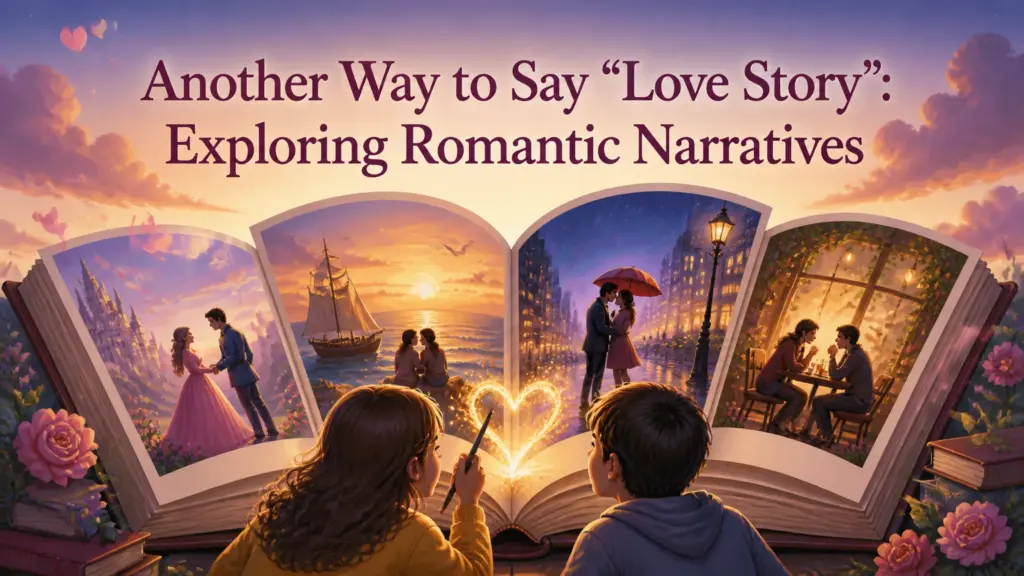

A “love story” is a narrative centered around the development of romantic affection between two or more people. While the term itself is straightforward, the nuances and variations in portraying such relationships are vast. Exploring alternative phrases, such as “romantic entanglement,” “affectionate chronicle,” “heartfelt tale,” “passionate affair,” “tender romance,” and “emotional journey,” can enrich our understanding and appreciation of the diverse ways love manifests in literature, film, and real life. Understanding these alternatives allows writers and readers alike to delve deeper into the complexities of human connection and express the subtleties of love with greater precision and creativity. This article aims to explore the many different ways to describe a ‘love story’ while providing examples and usage rules to enhance your understanding.
Table of Contents
- Definition of “Love Story”
- Structural Breakdown of Romantic Narratives
- Types of Love Stories
- Examples of Alternative Phrases
- Usage Rules and Context
- Common Mistakes
- Practice Exercises
- Advanced Topics: Narrative Techniques in Love Stories
- FAQ
- Conclusion
Definition of “Love Story”
A “love story” is a narrative, whether in literature, film, theater, or other forms of storytelling, that primarily focuses on the development, progression, and resolution of a romantic relationship between individuals. At its core, a love story explores the emotional, psychological, and sometimes physical connections between characters as they navigate the complexities of attraction, affection, commitment, and intimacy. These stories often delve into the challenges and triumphs that arise from these relationships, examining themes such as compatibility, sacrifice, betrayal, and forgiveness. The genre encompasses a wide range of subgenres and styles, from lighthearted romantic comedies to deeply moving tragedies, reflecting the diverse and multifaceted nature of love itself.
The function of a love story extends beyond mere entertainment. It provides a lens through which we can examine our own beliefs and expectations about love, relationships, and human connection. By vicariously experiencing the joys and sorrows of fictional characters, we gain insights into our own emotional responses and develop a greater understanding of the complexities of human relationships. Love stories can also serve as a form of escapism, offering a temporary refuge from the challenges of everyday life and providing hope for the possibility of finding love and happiness.
Structural Breakdown of Romantic Narratives
While the specific plot points and character arcs may vary, most love stories follow a general structural pattern. This structure often includes the following key elements:
- Initial Attraction/Meeting: The story typically begins with the introduction of the main characters and the initial spark of attraction between them. This could be a chance encounter, a pre-arranged meeting, or a gradual development of feelings over time.
- Building Connection: As the characters spend more time together, they begin to develop a deeper connection. They may share personal stories, discover common interests, or experience shared challenges that strengthen their bond.
- Obstacles and Conflicts: Love stories often involve obstacles that threaten to keep the characters apart. These obstacles could be external factors, such as disapproving families, rival suitors, or societal pressures, or internal conflicts, such as personal insecurities, past traumas, or conflicting desires.
- Climax: The climax of the story is the point of highest tension, where the characters must confront the obstacles and make a decision about their relationship. This could involve a dramatic confrontation, a difficult choice, or a moment of self-discovery.
- Resolution: The resolution of the story reveals the outcome of the characters’ relationship. This could be a happy ending, where they overcome the obstacles and commit to each other, or a tragic ending, where they are forced to separate or face a devastating loss.
Understanding this basic structure can help writers craft compelling and engaging love stories, while also allowing readers to appreciate the narrative techniques employed by authors and filmmakers.
Types of Love Stories
The love story genre is incredibly diverse, encompassing a wide range of subgenres and styles. Here are some of the most common types of love stories:
Classic Romance
Classic romances typically feature idealized portrayals of love, with emphasis on grand gestures, passionate declarations, and the triumph of love over adversity. These stories often adhere to traditional gender roles and societal expectations, and they tend to have happy endings.
Tragic Romance
Tragic romances explore the darker side of love, often depicting relationships that are doomed from the start. These stories may involve themes of forbidden love, betrayal, sacrifice, and loss, and they typically end with the death or separation of the main characters. Romeo and Juliet is a quintessential example of a tragic romance.
Forbidden Love
Forbidden love stories center on relationships that are considered taboo or unacceptable by society, family, or other external forces. These stories often explore themes of prejudice, discrimination, and the struggle for individual freedom.
Unrequited Love
Unrequited love stories focus on the experience of loving someone who does not reciprocate those feelings. These stories can be deeply emotional and introspective, exploring themes of longing, rejection, and the search for self-worth.
Contemporary Romance
Contemporary romances reflect modern attitudes and values, often challenging traditional gender roles and exploring diverse relationship dynamics. These stories may address contemporary social issues, such as gender equality, sexual orientation, and cultural diversity.
Examples of Alternative Phrases
While “love story” is a common and widely understood term, there are many alternative phrases that can be used to describe romantic narratives. These alternatives can add nuance, specificity, and stylistic flair to your writing.
Romantic Entanglement
This phrase suggests a complex and potentially complicated relationship, often involving multiple characters or conflicting emotions. It implies a situation where feelings are intertwined and difficult to unravel.
Affectionate Chronicle
This phrase emphasizes the passage of time and the gradual development of a loving relationship. It suggests a detailed and intimate account of the characters’ shared experiences.
Heartfelt Tale
This phrase highlights the emotional depth and sincerity of the story. It suggests a narrative that is filled with genuine feelings and relatable experiences.
Passionate Affair
This phrase emphasizes the intensity and excitement of the relationship. It suggests a story that is driven by strong emotions and physical attraction.
Tender Romance
This phrase suggests a gentle and affectionate relationship, characterized by kindness, understanding, and mutual respect. It implies a story that is heartwarming and emotionally satisfying.
Emotional Journey
This phrase focuses on the personal growth and transformation that the characters experience as a result of their relationship. It suggests a story that is both romantic and psychologically insightful.
The following tables provide examples of alternative phrases to describe ‘love story’ in various contexts, showing how different words can add nuance and specificity to your writing.
| Original Phrase | Alternative Phrase | Context/Nuance |
|---|---|---|
| Love Story | Romantic Saga | Suggests a long, epic love story spanning many years or generations. |
| Love Story | Affectionate Chronicle | Focuses on a detailed, historical account of a loving relationship. |
| Love Story | Heartfelt Tale | Emphasizes the emotional depth and sincerity of the narrative. |
| Love Story | Passionate Affair | Highlights the intensity and excitement of the romantic relationship. |
| Love Story | Tender Romance | Implies a gentle, caring, and heartwarming relationship. |
| Love Story | Whirlwind Romance | Describes a fast-paced, intense, and often short-lived relationship. |
| Love Story | Star-Crossed Romance | Refers to a doomed relationship due to external circumstances. |
| Love Story | Forbidden Love | Indicates a relationship that is opposed by societal norms or family. |
| Love Story | Secret Liaison | Suggests a hidden or clandestine romantic relationship. |
| Love Story | Unrequited Affection | Focuses on one-sided love where feelings are not reciprocated. |
| Love Story | Emotional Entanglement | Implies a complex and potentially messy romantic situation. |
| Love Story | Budding Romance | Describes the early stages of a developing relationship. |
| Love Story | Lasting Love | Highlights a relationship that has endured over a long period. |
| Love Story | Bittersweet Romance | Suggests a love story with both happy and sad elements. |
| Love Story | Coming-of-Age Romance | Focuses on a romantic relationship that coincides with personal growth. |
| Love Story | Second Chance Romance | Describes a relationship that is rekindled after a period of separation. |
| Love Story | Summer Fling | Implies a short-term, casual romantic relationship during the summer. |
| Love Story | Office Romance | Refers to a romantic relationship that develops in the workplace. |
| Love Story | Childhood Sweethearts | Describes a romantic relationship that began in childhood. |
| Love Story | Unexpected Love | Highlights a relationship that develops in surprising circumstances. |
| Love Story | Passionate Encounter | Emphasizes the intense, often brief, physical and emotional connection. |
| Love Story | Affections of the Heart | A more general, slightly poetic term for romantic feelings. |
| Love Story | Devotion | Highlights unwavering loyalty and love. |
| Love Story | Adoration | Implies deep admiration and love. |
| Love Story | Sentimental Journey | Focuses on the emotional and nostalgic aspects of the relationship. |
This table illustrates a variety of alternative ways to express the concept of a “love story,” each with its own unique connotation and application. Choosing the right phrase can significantly enhance the descriptive power of your writing.
| Alternative Phrase | Example Sentence |
|---|---|
| Romantic Saga | “Their romantic saga unfolded over decades, marked by both triumphs and tribulations.” |
| Affectionate Chronicle | “The historian meticulously documented their affectionate chronicle, revealing the depths of their bond.” |
| Heartfelt Tale | “The film presented a heartfelt tale of two souls finding solace in each other’s company.” |
| Passionate Affair | “Her passionate affair with the artist was the subject of much speculation.” |
| Tender Romance | “The novel depicted a tender romance between two elderly neighbors.” |
| Whirlwind Romance | “Their whirlwind romance captivated everyone, but it ended as quickly as it began.” |
| Star-Crossed Romance | “Their star-crossed romance was doomed from the moment they met, due to their feuding families.” |
| Forbidden Love | “The play explored the theme of forbidden love in a society rife with prejudice.” |
| Secret Liaison | “Their secret liaison was kept hidden from the prying eyes of the public.” |
| Unrequited Affection | “His unrequited affection for her fueled his poetry, filled with longing and sorrow.” |
| Emotional Entanglement | “Their emotional entanglement led to a series of dramatic confrontations.” |
| Budding Romance | “The budding romance between the two colleagues was evident to everyone in the office.” |
| Lasting Love | “Their lasting love was a testament to their commitment and understanding.” |
| Bittersweet Romance | “The film portrayed a bittersweet romance, filled with moments of joy and profound sadness.” |
| Coming-of-Age Romance | “The novel was a coming-of-age romance, exploring themes of identity and self-discovery.” |
| Second Chance Romance | “Their second chance romance proved that love can sometimes find its way back.” |
| Summer Fling | “Their summer fling was a brief but memorable chapter in their lives.” |
| Office Romance | “The office romance created tension among the coworkers.” |
| Childhood Sweethearts | “They were childhood sweethearts who eventually married and built a life together.” |
| Unexpected Love | “Their unexpected love blossomed during a chance encounter on vacation.” |
This table illustrates each alternative phrase used in a sentence, providing context and demonstrating how to incorporate these terms into your writing. The examples help clarify the specific situations where each phrase is most appropriate.
| Feature | Romantic Saga | Affectionate Chronicle | Heartfelt Tale | Passionate Affair | Tender Romance |
|---|---|---|---|---|---|
| Time Span | Long, spanning years | Historical perspective | Any duration | Can be short or long | Often long-term |
| Emotion | Epic, sweeping | Nostalgic, fond | Sincere, deep | Intense, fiery | Gentle, caring |
| Complexity | Complex plotlines | Detailed account | Emotionally rich | Often dramatic | Simple, sweet |
| Typical Themes | Destiny, legacy | Memory, history | Connection, empathy | Lust, obsession | Commitment, trust |
| Narrative Style | Grand, expansive | Documentary, factual | Personal, intimate | Sensual, provocative | Soothing, comforting |
This comparative table provides a detailed breakdown of each alternative phrase, highlighting key features such as time span, emotion, complexity, typical themes, and narrative style. This allows for a clearer understanding of the nuances and appropriate usage of each phrase.
Usage Rules and Context
The choice of phrase to describe a “love story” depends heavily on the context and the specific aspects of the relationship you want to emphasize. For instance, “romantic entanglement” might be suitable for a story involving complex, interwoven relationships, while “tender romance” would be more appropriate for a gentle and affectionate narrative. Consider the following guidelines:
- Consider the tone: Is the story lighthearted and humorous, or serious and dramatic? Choose a phrase that reflects the overall tone of the narrative.
- Identify the key themes: What are the central themes of the story? Choose a phrase that highlights those themes. For example, if the story is about overcoming obstacles, you might use “triumphant love story.”
- Think about the characters: What are the personalities and motivations of the main characters? Choose a phrase that reflects their relationship dynamics.
- Consider the audience: Who are you writing for? Choose a phrase that will resonate with your target audience.
By carefully considering these factors, you can select the most appropriate and effective phrase to describe your love story.
Common Mistakes
One common mistake is using phrases interchangeably without considering their specific connotations. For example, using “passionate affair” to describe a gentle, innocent romance would be inappropriate and misleading. Another mistake is using clichés or overused phrases, which can make your writing sound unoriginal and uninspired. Instead, strive to find fresh and creative ways to describe love stories that capture the unique essence of each narrative.
Here are some examples of common mistakes and their corrections:
| Incorrect | Correct | Explanation |
|---|---|---|
| “Their passionate affair was a quiet, gentle romance.” | “Their tender romance was a quiet, gentle story of companionship.” | “Passionate affair” implies intensity, which contradicts “quiet, gentle.” |
| “It was just another love story.” | “It was a heartfelt tale of resilience and devotion.” | “Another love story” is generic; the corrected version is more descriptive. |
| “Their romantic entanglement was simple and straightforward.” | “Their simple romance unfolded without complications.” | “Romantic entanglement” suggests complexity, which contradicts “simple and straightforward.” |
| “The affair was a love story for the ages.” | “The lasting love became a romantic saga, remembered for generations.” | “Love story for the ages” is a cliché; the corrected version is more evocative. |
| “It was a love story, plain and simple.” | “It was a tender romance, characterized by mutual respect and affection.” | “Love story, plain and simple” lacks detail; the corrected version adds depth. |
This table highlights common errors in describing love stories and provides corrected versions with explanations, helping writers avoid these pitfalls and choose more appropriate and descriptive phrases.
Practice Exercises
Test your understanding of alternative phrases for “love story” with these exercises.
| Question | Answer |
|---|---|
| 1. Which phrase best describes a long, epic love story spanning generations? | Romantic Saga |
| 2. What phrase emphasizes the emotional depth and sincerity of a romantic narrative? | Heartfelt Tale |
| 3. Which phrase highlights the intensity and excitement of a romantic relationship? | Passionate Affair |
| 4. What phrase implies a gentle, caring, and heartwarming relationship? | Tender Romance |
| 5. Which phrase describes a fast-paced, intense, and often short-lived relationship? | Whirlwind Romance |
| 6. What phrase refers to a doomed relationship due to external circumstances? | Star-Crossed Romance |
| 7. Which phrase indicates a relationship opposed by societal norms or family? | Forbidden Love |
| 8. What phrase suggests a hidden or clandestine romantic relationship? | Secret Liaison |
| 9. Which phrase focuses on one-sided love where feelings are not reciprocated? | Unrequited Affection |
| 10. What phrase implies a complex and potentially messy romantic situation? | Emotional Entanglement |
These exercises are designed to reinforce your understanding of the different nuances and contexts in which each alternative phrase can be used. By testing your knowledge, you can improve your ability to choose the most appropriate and effective phrase for your writing.
| Exercise | Instructions |
|---|---|
| 1 | Rewrite the following sentences, replacing “love story” with a more descriptive phrase: “Their love story was a simple tale of two people finding happiness together.” |
| 2 | Rewrite the following sentences, replacing “love story” with a more descriptive phrase: “The film depicted a love story that spanned several decades and continents.” |
| 3 | Rewrite the following sentences, replacing “love story” with a more descriptive phrase: “Their love story was filled with obstacles and challenges, but they never gave up on each other.” |
| 4 | Rewrite the following sentences, replacing “love story” with a more descriptive phrase: “The novel told the love story of two people from different worlds who fell deeply in love.” |
| 5 | Rewrite the following sentences, replacing “love story” with a more descriptive phrase: “The play portrayed a love story that was both passionate and tragic.” |
| 6 | Rewrite the following sentences, replacing “love story” with a more descriptive phrase: “Their love story was a whirlwind romance that took them by surprise.” |
| 7 | Rewrite the following sentences, replacing “love story” with a more descriptive phrase: “The documentary chronicled the love story of two activists who fought for social justice.” |
| 8 | Rewrite the following sentences, replacing “love story” with a more descriptive phrase: “Their love story was a secret liaison that they kept hidden from the world.” |
| 9 | Rewrite the following sentences, replacing “love story” with a more descriptive phrase: “The poem expressed the love story of someone who longed for a love that was never returned.” |
| 10 | Rewrite the following sentences, replacing “love story” with a more descriptive phrase: “Their love story was a complex emotional entanglement that tested their limits.” |
Answers:
| Exercise | Answer |
|---|---|
| 1 | “Their tender romance was a simple tale of two people finding happiness together.” |
| 2 | “The film depicted a romantic saga that spanned several decades and continents.” |
| 3 | “Their heartfelt tale was filled with obstacles and challenges, but they never gave up on each other.” |
| 4 | “The novel told the story of forbidden love between two people from different worlds who fell deeply in love.” |
| 5 | “The play portrayed a passionate affair that was both intense and tragic.” |
| 6 | “Their whirlwind romance took them by surprise.” |
| 7 | “The documentary chronicled the affectionate chronicle of two activists who fought for social justice.” |
| 8 | “Their secret liaison was kept hidden from the world.” |
| 9 | “The poem expressed the unrequited affection of someone who longed for a love that was never returned.” |
| 10 | “Their emotional entanglement tested their limits.” |
These exercises provide practical application of the concepts discussed, allowing you to actively engage with the material and improve your writing skills.
Advanced Topics: Narrative Techniques in Love Stories
Beyond simply choosing the right phrase to describe a love story, advanced writers can explore various narrative techniques to enhance the emotional impact and thematic depth of their stories. These techniques include:
- Foreshadowing: Hinting at future events or conflicts can create suspense and anticipation.
- Symbolism: Using objects, characters, or settings to represent abstract concepts or emotions can add layers of meaning to the story.
- Point of View: Choosing the right point of view (first-person, third-person limited, third-person omniscient) can influence how the reader experiences the story.
- Imagery: Using vivid and descriptive language can create a strong emotional connection with the reader.
- Dialogue: Crafting realistic and engaging dialogue can reveal character traits and advance the plot.
Mastering these narrative techniques can elevate your love stories from simple romances to complex and compelling works of art.
FAQ
- What is the difference between a “romantic comedy” and a “love story”?
A “love story” is a broad term that encompasses any narrative centered around a romantic relationship. A “romantic comedy” is a specific subgenre that combines elements of romance and comedy, typically featuring lighthearted humor and a happy ending.
- Can a “love story” be tragic?
Yes, many love stories are tragic, exploring themes of loss, sacrifice, and unfulfilled desires. These stories often end with the death or separation of the main characters.
- What are some common themes in love stories?
Common themes include attraction, affection, commitment, intimacy, sacrifice, betrayal, forgiveness, and the search for self-worth.
- How important is character development in a love story?
Character development is crucial. Readers need to connect with the characters and understand their motivations in order to invest in their relationship.
- What makes a love story compelling?
A compelling love story typically features relatable characters, believable conflicts, emotional depth, and a satisfying resolution (whether happy or tragic).
- Is it necessary for a love story to have a happy ending?
No, a happy ending is not essential. Some of the most memorable love stories are tragic, exploring the complexities and heartbreaks of human relationships.
- How can I make my love story unique?
Focus on creating original characters, exploring unconventional relationship dynamics, and addressing contemporary social issues. Avoid clichés and strive for authenticity.
- What role does setting play in a love story?
Setting can play a significant role, influencing the characters’ interactions and shaping the overall mood of the story. A well-chosen setting can enhance the emotional impact of the narrative.
Conclusion
Understanding the nuances of language allows us to express ourselves with greater precision and creativity. When describing a “love story,” moving beyond the generic term and exploring alternative phrases such as “affectionate chronicle,” “heartfelt tale,” or “passionate affair” can add depth and nuance to your writing. By considering the context, tone, themes, and characters of your story, you can choose the most appropriate and effective phrase to capture the essence of the romantic narrative. Remember to avoid clichés and strive for originality, crafting love stories that are both emotionally resonant and intellectually stimulating. Ultimately, the goal is to create stories that explore the complexities of human connection and leave a lasting impression on the reader.