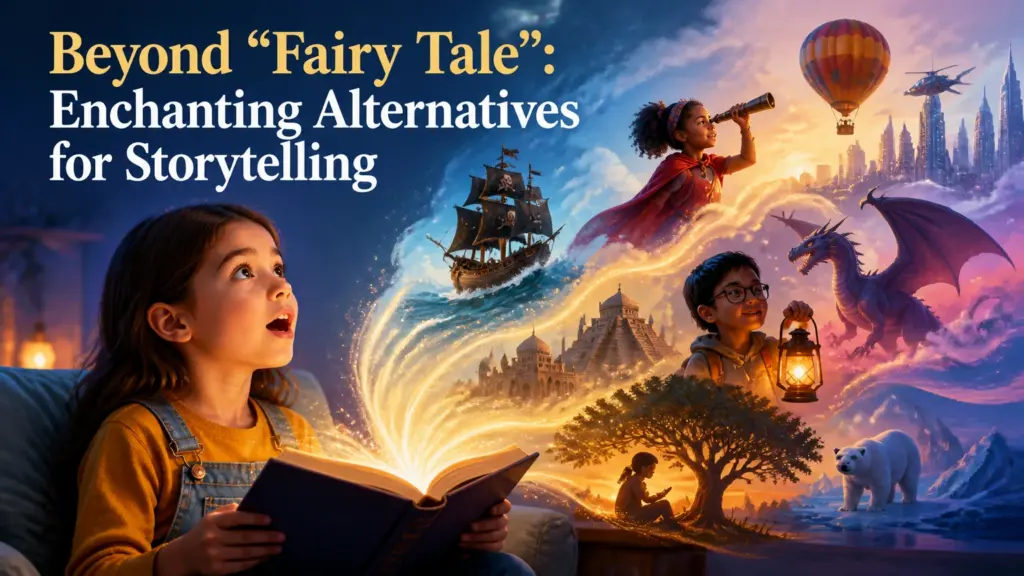

The term “fairy tale” often conjures images of magical kingdoms, brave knights, and wicked witches. However, limiting ourselves to this single phrase can diminish the rich diversity of storytelling traditions across cultures. Exploring alternative terms, including myth, legend, fable, and folktale, allows for a more nuanced understanding and appreciation of narrative forms. Each of these terms, such as myth, legend, fable, and folktale, carries its own specific connotations and cultural context, enriching our ability to categorize and analyze stories. Understanding these distinctions enhances our appreciation of both classic and contemporary narratives, and broadens our literary horizons.
This article delves into the various ways to express the concept of a “fairy tale,” examining the subtle differences and overlaps between related terms. Whether you are a writer seeking the perfect descriptor, a student analyzing literary genres, or simply a lover of stories, this guide will equip you with the vocabulary and knowledge to navigate the enchanting world of storytelling with greater precision and insight.
Table of Contents
- Definition: What is a Fairy Tale?
- Related Terms and Their Nuances
- Key Characteristics of Fairy Tales
- Examples of Fairy Tales and Their Alternatives
- Usage in Different Contexts
- Common Mistakes and Misconceptions
- Practice Exercises
- Advanced Topics: Exploring Archetypes and Motifs
- Frequently Asked Questions
- Conclusion
Definition: What is a Fairy Tale?
A fairy tale is a type of short story that typically features folkloric fantasy characters, such as fairies, goblins, elves, trolls, witches, giants, and talking animals, and enchantments, often involving a faraway land, a prince or princess, and a moral lesson. These stories are often intended for children, although many originate from adult storytelling traditions. Fairy tales often involve a struggle between good and evil, with a clear resolution that rewards virtue and punishes vice.
The defining characteristic of a fairy tale is its reliance on fantastical elements and magical occurrences. These elements are not merely decorative; they are integral to the plot and often serve symbolic purposes. The presence of magic, talking animals, and supernatural beings distinguishes fairy tales from other types of stories. Moreover, fairy tales frequently contain recurring motifs and archetypes, such as the wicked stepmother, the heroic prince, and the magical object that grants wishes.
Related Terms and Their Nuances
While “fairy tale” is a common term, several related terms offer more precise or nuanced descriptions of similar narratives. Understanding these nuances allows for a more sophisticated appreciation of different storytelling traditions.
Myth
A myth is a traditional story, especially one concerning the early history of a people or explaining some natural or social phenomenon, and typically involving supernatural beings or events. Myths often serve to explain the origins of the world, the creation of humanity, or the actions of gods and goddesses. Unlike fairy tales, myths are often considered sacred narratives within a particular culture.
Myths, such as the Greek myths about Zeus, Hera, and Poseidon, explain natural phenomena and cultural practices. They often feature gods, demigods, and epic heroes who embody a culture’s values and beliefs. Unlike fairy tales, myths are often considered to be true accounts, at least within the context of the culture that created them.
Legend
A legend is a traditional story or myth popularly regarded as historical but not authenticated. Legends often recount the deeds of historical figures, albeit with embellishments and exaggerations. While legends may contain elements of truth, they are often passed down through oral tradition and subject to alteration over time.
Legends, such as the story of King Arthur or Robin Hood, are often based on real people or events, but they become embellished over time. They emphasize heroic feats and moral virtues, inspiring people and shaping cultural identity. Legends often blur the line between history and fiction.
Fable
A fable is a short story, typically with animals as characters, conveying a moral. Fables are designed to teach a specific lesson or convey a particular truth about human nature. The characters in fables often embody specific traits or vices, such as cunning, greed, or foolishness.
Fables, such as Aesop’s fables, use animals to represent human characteristics and teach moral lessons. The Tortoise and the Hare, for example, teaches the importance of perseverance. Fables are typically short and straightforward, with a clear moral message.
Folktale
A folktale is a story originating in popular culture, typically passed on by word of mouth. Folktales encompass a wide range of narratives, including fairy tales, legends, and myths. They often reflect the values, beliefs, and customs of a particular community or region.
Folktales, such as the stories of Anansi the Spider or the tales of Paul Bunyan, reflect the culture and traditions of a specific community. They are often passed down orally and can vary significantly depending on the storyteller and the audience. Folktales serve as a form of entertainment, education, and cultural preservation.
Wonder Tale
A wonder tale is a type of folktale characterized by its emphasis on magic, enchantment, and extraordinary events. Wonder tales often feature supernatural creatures, impossible quests, and miraculous transformations. This term is often used interchangeably with “fairy tale,” but it emphasizes the element of wonder and enchantment.
Wonder tales, such as “Cinderella” or “Beauty and the Beast,” transport readers to magical realms filled with fantastical creatures and extraordinary events. They emphasize the transformative power of love, kindness, and courage. Wonder tales often explore universal themes of good versus evil, hope versus despair, and the triumph of the underdog.
Fantasy
Fantasy is a genre of fiction that uses magic or other supernatural elements as a main plot element, theme, or setting. While fairy tales often incorporate fantasy elements, the term “fantasy” is broader and encompasses a wider range of stories, including those set in entirely fictional worlds with complex magic systems and intricate political structures.
Fantasy novels, such as “The Lord of the Rings” or “Harry Potter,” create immersive worlds with their own rules, histories, and cultures. They often explore complex themes of power, morality, and identity. While fantasy can include elements of fairy tales, it typically involves more elaborate world-building and character development.
Children’s Story
A children’s story is any narrative intended for a young audience. While many fairy tales are considered children’s stories, not all children’s stories are fairy tales. Children’s stories can encompass a wide range of genres, including realistic fiction, historical fiction, and science fiction.
Children’s stories, such as “Goodnight Moon” or “The Very Hungry Caterpillar,” are designed to entertain and educate young readers. They often feature simple language, engaging illustrations, and relatable characters. While some children’s stories may incorporate elements of fantasy, they are not necessarily fairy tales.
Parable
A parable is a simple story used to illustrate a moral or spiritual lesson. Parables often employ realistic settings and characters, but they are designed to convey a deeper meaning. Unlike fairy tales, parables typically lack fantastical elements and focus on conveying a specific message.
Parables, such as the Parable of the Good Samaritan, use relatable situations to teach important moral and spiritual lessons. They are often found in religious texts and are designed to inspire reflection and ethical behavior. Parables emphasize clarity and simplicity in conveying their message.
Key Characteristics of Fairy Tales
Fairy tales possess several distinctive characteristics that set them apart from other types of stories. These characteristics include:
- Magical Elements: The presence of magic, talking animals, and supernatural beings.
- Clear Moral: A distinct lesson or message about right and wrong.
- Recurring Motifs: Common themes and symbols, such as the wicked stepmother or the enchanted forest.
- Archetypal Characters: Characters that represent universal human traits, such as the hero, the villain, and the damsel in distress.
- Happy Endings: A resolution that typically rewards the good and punishes the wicked.
- Simple Language: A straightforward writing style that is accessible to children.
- Oral Tradition: A history of being passed down through generations by word of mouth.
Examples of Fairy Tales and Their Alternatives
The following tables provide examples of fairy tales and alternative ways to describe them, highlighting the nuances of each term.
Table 1: Classic Fairy Tales and Their Classifications
This table presents classic fairy tales and categorizes them under related terms to illustrate the varying perspectives and nuances in classification.
| Fairy Tale | Alternative Classifications | Justification |
|---|---|---|
| Cinderella | Wonder Tale, Folktale, Children’s Story | Features magic, enchantment; originates from oral tradition; intended for young audiences. |
| Little Red Riding Hood | Folktale, Cautionary Tale, Children’s Story | Passed down orally; warns against disobedience; designed for children. |
| Snow White | Wonder Tale, Folktale, Children’s Story | Involves magic, enchantment; part of oral tradition; suitable for children. |
| Hansel and Gretel | Folktale, Cautionary Tale, Children’s Story | Originates from oral tradition; warns against dangers; intended for children. |
| Beauty and the Beast | Wonder Tale, Folktale, Romance | Features magic, enchantment; part of oral tradition; involves a love story. |
| Rumpelstiltskin | Folktale, Wonder Tale | Passed down orally; includes magical elements and a strange creature. |
| The Frog Prince | Wonder Tale, Folktale, Children’s Story | Features magic, transformation; part of oral tradition; intended for children. |
| Sleeping Beauty | Wonder Tale, Folktale, Children’s Story | Involves magic, enchantment; part of oral tradition; suitable for children. |
| Jack and the Beanstalk | Folktale, Wonder Tale, Adventure Story | Originates from oral tradition; includes magical elements and an adventurous journey. |
| The Little Mermaid | Wonder Tale, Folktale, Children’s Story | Features magic, enchantment; part of oral tradition; intended for children. |
| Goldilocks and the Three Bears | Folktale, Children’s Story, Cautionary Tale | Passed down orally; designed for children; warns against intrusion. |
| The Three Little Pigs | Folktale, Children’s Story, Moral Story | Originates from oral tradition; intended for children; teaches a lesson about planning. |
| Puss in Boots | Wonder Tale, Folktale, Adventure Story | Features magic, cunning; part of oral tradition; involves an adventurous journey. |
| Thumbelina | Wonder Tale, Folktale, Children’s Story | Involves magic, enchantment; part of oral tradition; suitable for children. |
| The Emperor’s New Clothes | Folktale, Parable, Satire | Passed down orally; teaches a moral lesson about vanity; uses satire to critique society. |
| The Ugly Duckling | Wonder Tale, Folktale, Children’s Story | Features transformation; part of oral tradition; intended for children. |
| The Pied Piper of Hamelin | Legend, Folktale, Cautionary Tale | Based on a possible historical event; passed down orally; warns against breaking promises. |
| Rapunzel | Wonder Tale, Folktale, Children’s Story | Features magic, enchantment; part of oral tradition; intended for children. |
| The Juniper Tree | Folktale, Dark Fairy Tale | Passed down orally; contains darker themes and violence. |
| Tom Thumb | Wonder Tale, Folktale, Children’s Story | Features magic, miniature hero; part of oral tradition; intended for children. |
Table 2: Modern Fairy Tales and Their Classifications
This table classifies modern stories with fairy tale elements, showcasing how these terms apply to contemporary narratives.
| Modern Story | Alternative Classifications | Justification |
|---|---|---|
| The Princess Bride | Fantasy, Adventure, Romance, Parody | Features fantastical elements; involves an adventurous quest; includes a love story; parodies fairy tale tropes. |
| Stardust | Fantasy, Romance, Wonder Tale | Set in a magical realm; involves a love story; features enchantment and wonder. |
| Ella Enchanted | Fantasy, Romance, Children’s Story | Features magical elements; involves a love story; intended for children. |
| Maleficent | Fantasy, Revisionist Fairy Tale | Reinterprets a classic fairy tale from a different perspective. |
| Shrek | Fantasy, Parody, Children’s Story | Features fantastical characters; parodies fairy tale tropes; intended for children. |
| Tangled | Fantasy, Wonder Tale, Children’s Story | Features magical elements; involves enchantment and wonder; intended for children. |
| Frozen | Fantasy, Musical, Children’s Story | Features magical elements; includes musical numbers; intended for children. |
| The Chronicles of Narnia | Fantasy, Allegory, Children’s Story | Set in a magical world; contains allegorical themes; intended for children. |
| Pan’s Labyrinth | Dark Fantasy, Folktale, War Story | Features dark fantastical elements; draws on folktale motifs; set against the backdrop of war. |
| A Monster Calls | Fantasy, Children’s Story, Psychological Drama | Features a fantastical creature; intended for children; explores themes of grief and loss. |
| Coraline | Dark Fantasy, Children’s Story, Gothic Fiction | Features dark fantastical elements; intended for children; incorporates gothic themes. |
| The Shape of Water | Fantasy, Romance, Social Commentary | Features a fantastical creature; involves a love story; explores themes of social isolation and acceptance. |
| Big Fish | Fantasy, Tall Tale, Family Drama | Features fantastical elements and exaggerated stories; explores themes of family relationships. |
| Edward Scissorhands | Fantasy, Romance, Social Commentary | Features a fantastical character; involves a love story; explores themes of social acceptance and prejudice. |
| Spirited Away | Fantasy, Anime, Coming-of-Age Story | Set in a magical world; features Japanese animation; explores themes of growing up and self-discovery. |
| Howl’s Moving Castle | Fantasy, Anime, Romance | Set in a magical world; features Japanese animation; involves a love story. |
| The NeverEnding Story | Fantasy, Children’s Story, Metanarrative | Set in a fantastical world; intended for children; explores themes of storytelling and imagination. |
| Labyrinth | Fantasy, Adventure, Children’s Story | Set in a fantastical world; involves an adventurous quest; intended for children. |
| The Spiderwick Chronicles | Fantasy, Children’s Story, Adventure | Features fantastical creatures; intended for children; involves an adventurous journey. |
| Miss Peregrine’s Home for Peculiar Children | Fantasy, Young Adult, Mystery | Features fantastical elements; targeted at young adults; involves a mysterious plot. |
Table 3: Global Folktales and Their Classifications
This table showcases folktales from around the world, illustrating the diversity of storytelling traditions and how they can be classified.
| Folktale | Culture of Origin | Alternative Classifications | Justification |
|---|---|---|---|
| Anansi the Spider | West Africa | Trickster Tale, Folktale, Myth | Features a trickster figure; part of West African oral tradition; explains cultural phenomena. |
| Momotaro (Peach Boy) | Japan | Folktale, Children’s Story, Adventure Story | Passed down orally in Japan; intended for children; involves an adventurous quest. |
| Maui | Polynesia | Myth, Legend, Folktale | Explains the origins of the islands; based on a legendary figure; part of Polynesian oral tradition. |
| Baba Yaga | Eastern Europe (Slavic) | Folktale, Dark Fairy Tale, Witchcraft Tale | Features a witch-like figure; part of Slavic oral tradition; contains darker themes. |
| Coyote Tales | Native American | Trickster Tale, Myth, Folktale | Features a trickster figure; explains cultural phenomena; part of Native American oral tradition. |
| The Legend of the White Snake | China | Folktale, Romance, Fantasy | Passed down orally in China; involves a love story; features fantastical elements. |
| The Bunyip | Australia (Aboriginal) | Myth, Legend, Folktale | Explains a mysterious creature; part of Aboriginal oral tradition; based on possible sightings. |
| The Selkie | Scotland, Ireland | Folktale, Myth, Legend | Features a mythical creature that can transform; part of Scottish and Irish oral tradition. |
| The Goblin Market | England | Poem, Fantasy, Folktale | Written in verse; features fantastical elements; draws on folktale motifs. |
| The Story of Isis and Osiris | Ancient Egypt | Myth, Religious Narrative | Explains the origins of Egyptian religion; part of ancient Egyptian mythology. |
| Sun Wukong (The Monkey King) | China | Myth, Legend, Folktale | Features a legendary figure; part of Chinese oral tradition; based on possible historical events. |
| The Legend of Zelda | Video Game (Inspired by various cultures) | Fantasy, Adventure, Mythic Quest | Inspired by various mythological and folklore elements; features an adventurous quest. |
| Pele | Hawaii | Myth, Legend, Volcanic Deity | Explains the origins of volcanoes; part of Hawaiian mythology; features a powerful deity. |
| Izanagi and Izanami | Japan | Myth, Creation Myth | Explains the creation of Japan; part of Japanese mythology. |
| Quetzalcoatl | Mesoamerica | Myth, Deity, Cultural Hero | Explains the origins of Mesoamerican culture; features a cultural hero and deity. |
| Thor | Norse | Myth, Deity, Heroic Legend | Explains the role of thunder in Norse mythology; features a powerful deity and heroic figure. |
| Chang’e | China | Myth, Moon Goddess, Romance | Explains the origins of the Moon Festival; features a goddess and love story. |
| Kitsune (Fox Spirit) | Japan | Folktale, Myth, Supernatural Tale | Features a supernatural creature; part of Japanese oral tradition and mythology. |
| Persephone | Greece | Myth, Goddess, Seasonal Tale | Explains the seasons; part of Greek mythology; features a goddess. |
| The Rainbow Serpent | Australia (Aboriginal) | Myth, Creation Myth, Totemic Ancestor | Explains the creation of the landscape; part of Aboriginal mythology; features a totemic ancestor. |
Usage in Different Contexts
The choice of terminology depends on the specific context and the aspects of the story you wish to emphasize. For example:
- When discussing the origins and cultural significance of a story, “folktale” or “myth” may be more appropriate than “fairy tale.”
- When emphasizing the moral lesson of a story, “fable” or “parable” may be more suitable.
- When highlighting the magical and fantastical elements of a story, “wonder tale” or “fantasy” may be preferable.
- When targeting a young audience, “children’s story” is a general term that can encompass various genres, including fairy tales.
Common Mistakes and Misconceptions
Several common mistakes and misconceptions surround the term “fairy tale” and its related terms. It’s important to be aware of these to avoid misinterpretations.
Table 4: Common Mistakes and Corrections
This table highlights common errors in classifying stories and provides the correct usage with explanations.
| Incorrect | Correct | Explanation |
|---|---|---|
| Calling all fantasy stories “fairy tales.” | Distinguishing between fantasy and fairy tales. | Fantasy is a broader genre that includes fairy tales but also encompasses more complex and elaborate stories. |
| Using “myth” and “legend” interchangeably. | Recognizing the difference between myths and legends. | Myths often explain origins and are considered sacred, while legends are based on historical figures with embellishments. |
| Assuming all fairy tales are for children. | Understanding that many fairy tales originated from adult storytelling traditions. | Many classic fairy tales were originally intended for adult audiences and contain mature themes. |
| Believing fables are always about animals. | Knowing that fables can also feature human characters. | While many fables feature animals, some also use human characters to convey a moral lesson. |
| Thinking folktales are always fictional. | Recognizing that folktales can contain elements of truth or historical events. | Folktales often reflect the values, beliefs, and customs of a particular community and may be based on real events. |
| Using “parable” to describe a story filled with magic. | Using “parable” to describe a simple story with a moral lesson. | Parables lack fantastical elements and focus on conveying a specific message through realistic scenarios. |
| Assuming all wonder tales are only for children. | Recognizing that wonder tales can appeal to audiences of all ages. | Wonder tales explore universal themes and can be enjoyed by both children and adults. |
| Calling all traditional stories “myths.” | Distinguishing between myths, legends, and folktales. | Myths are sacred narratives, legends are based on historical figures, and folktales encompass a wider range of stories. |
| Thinking fairy tales always have happy endings. | Understanding that some fairy tales can have dark or ambiguous endings. | While many fairy tales have happy endings, some explore darker themes and may not have a clear resolution. |
| Believing that folktales never change. | Recognizing that folktales evolve over time through oral tradition. | Folktales are often passed down orally and can vary significantly depending on the storyteller and the audience. |
Practice Exercises
Test your understanding of the different terms with the following exercises.
Exercise 1: Identify the Type of Story
Read the following descriptions and identify whether each story is a fairy tale, myth, legend, fable, or folktale.
| Question | Answer |
|---|---|
| 1. A story about a tortoise and a hare that teaches the importance of perseverance. | Fable |
| 2. A story about a brave knight who slays a dragon and rescues a princess. | Fairy Tale |
| 3. A story about the Greek gods and their interactions with humans. | Myth |
| 4. A story about Robin Hood, a heroic outlaw who robs from the rich and gives to the poor. | Legend |
| 5. A story about Anansi the Spider, a trickster figure from West African folklore. | Folktale |
| 6. A story about a poor girl who is transformed into a princess with the help of a fairy godmother. | Fairy Tale |
| 7. A story about the creation of the world according to Norse mythology. | Myth |
| 8. A short story about a shepherd boy who repeatedly cries wolf, only to be ignored when a real wolf appears. | Fable |
| 9. A story about a young woman who discovers a magical wardrobe that leads to a fantastical world. | Fantasy |
| 10. A story about a historical figure whose deeds have been exaggerated over time. | Legend |
Exercise 2: Choose the Best Term
Select the most appropriate term to describe each story, given the context.
| Question | Options | Answer |
|---|---|---|
| 1. A story with talking animals that teaches a moral lesson. | (a) Fairy Tale (b) Fable (c) Legend | (b) Fable |
| 2. A traditional story passed down orally within a specific community. | (a) Myth (b) Legend (c) Folktale | (c) Folktale |
| 3. A story about gods and goddesses that explains the origins of the world. | (a) Fairy Tale (b) Myth (c) Legend | (b) Myth |
| 4. A story about a historical figure whose deeds have been embellished and exaggerated. | (a) Myth (b) Legend (c) Folktale | (b) Legend |
| 5. A story featuring magic, enchantment, and a clear moral lesson. | (a) Fable (b) Folktale (c) Fairy Tale | (c) Fairy Tale |
| 6. A modern narrative set in a fantastical world with its own rules and magic system. | (a) Fairy Tale (b) Fantasy (c) Folktale | (b) Fantasy |
| 7. A simple story used to illustrate a moral or spiritual lesson. | (a) Fable (b) Parable (c) Legend | (b) Parable |
| 8. A story emphasizing enchantment, wonder and extraordinary events. | (a) Wonder Tale (b) Legend (c) Folktale | (a) Wonder Tale |
| 9. A narrative intended for a young audience, often with simple language and engaging illustrations. | (a) Myth (b) Children’s Story (c) Parable | (b) Children’s Story |
| 10. A story featuring a wicked stepmother, a magical object, and a happy ending. | (a) Legend (b) Folktale (c) Fairy Tale | (c) Fairy Tale |
Advanced Topics: Exploring Archetypes and Motifs
For advanced learners, exploring the archetypes and motifs within fairy tales and related genres can provide deeper insights into the cultural and psychological significance of these stories. Archetypes are recurring characters, symbols, or situations that represent universal patterns of human experience. Motifs are recurring elements or ideas that contribute to the overall theme of a story.
Examples of common archetypes include the hero, the villain, the mentor, and the trickster. Common motifs include the quest, the journey, the transformation, and the battle between good and evil. By analyzing these archetypes and motifs, we can gain a better understanding of the underlying messages and cultural values conveyed by these narratives.
Frequently Asked Questions
Here are some frequently asked questions about fairy tales and related terms:
- What is the difference between a fairy tale and a folktale?
A fairy tale is a specific type of folktale that typically features magical elements, such as fairies, talking animals, and enchantments. Folktales, on the other hand, encompass a wider range of traditional stories, including myths, legends, and fables.
- Are all fairy tales suitable for children?
No, not all fairy tales are suitable for children. Many classic fairy tales originated from adult storytelling traditions and contain mature themes, such as violence, betrayal, and death. It’s important to consider the content of a fairy tale before sharing it with children.
- Can a story be both a myth and a legend?
Yes, a story can be both a myth and a legend. For example, the story of King Arthur is often considered a legend because it is based on a possible historical figure. However, it also contains mythical elements, such as magic swords and supernatural beings.
- What is the purpose of a fable?
The purpose of a fable is to teach a moral lesson or convey a particular truth about human nature. Fables often use animals as characters to represent specific traits or vices.
- How has the definition of “fairy tale” changed over time?
The definition of “fairy tale” has evolved over time to encompass a broader range of stories with fantastical elements. Originally, the term referred specifically to stories featuring fairies. However, today it is often used to describe any story with magic, enchantment, and a clear moral lesson.
- What are some examples of modern fairy tales?
Examples of modern fairy tales include “The Princess Bride,” “Stardust,” “Ella Enchanted,” and “Shrek.” These stories incorporate elements of fantasy, romance, and humor while still adhering to the traditional fairy tale structure.
- What is a cautionary tale?
A cautionary tale is a type of folktale or fairy tale that warns against certain behaviors or actions. These stories often feature negative consequences for those who disobey or act foolishly. “Little Red Riding Hood” is a classic example of a cautionary tale.
- How do cultural values influence fairy tales?
Cultural values play a significant role in shaping fairy tales. The themes, characters, and moral lessons within a fairy tale often reflect the beliefs, customs, and traditions of the culture in which it originated. For example, Japanese folktales often emphasize the importance of honor, loyalty, and respect for elders.
- What role do archetypes play in fairy tales?
Archetypes serve as universal patterns of human experience, making fairy tales relatable across different cultures and time periods. Characters like the hero, villain, mentor, and damsel in distress resonate with audiences because they embody fundamental aspects of human nature.
- How can analyzing motifs enhance our understanding of fairy tales?
Motifs, such as the quest, the journey, the transformation, and the battle between good and evil, provide insight into the underlying themes and cultural values conveyed by fairy tales. By recognizing these recurring elements, we can gain a deeper appreciation of the story’s meaning and significance.
Conclusion
Understanding the nuances between “fairy tale” and its related terms, including myth, legend, fable, folktale, wonder tale, and fantasy, enriches our appreciation of storytelling traditions. Each term carries its own specific connotations and cultural context, allowing for more precise and insightful analysis
of narratives. By mastering these distinctions, storytellers, readers, and analysts can more effectively communicate and interpret the rich tapestry of human imagination and culture.
From the enchanting world of wonder tales to the moral lessons of fables and the cultural significance of myths, each type of story offers a unique lens through which to view the world. By embracing the diversity of storytelling traditions, we can expand our understanding of ourselves and the world around us, fostering a deeper appreciation for the power and beauty of narrative.